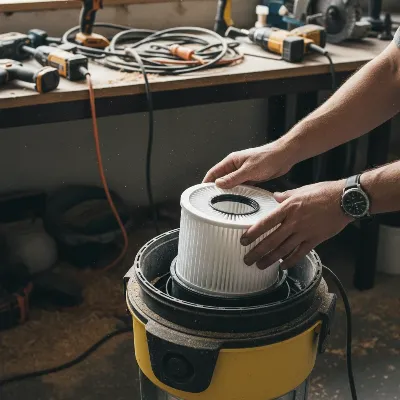
Working with a table saw is incredibly rewarding, but it also generates a significant amount of sawdust that can quickly turn your workshop into a hazy, unhealthy mess. Breathing in fine wood dust isn’t just unpleasant; it poses serious health risks, from respiratory irritation to long-term lung conditions. Moreover, a dusty environment can damage your tools and create an increased fire hazard. The good news is that achieving effective dust collection for your table saw doesn’t require an expensive, elaborate system. With a few common parts and some straightforward DIY ingenuity, you can easily attach a shop vacuum to your table saw, transforming your workspace into a cleaner, safer, and more enjoyable environment. This comprehensive guide will walk you through everything you need to know, from assessing your equipment to making the perfect connection.
Why You Need Effective Dust Collection for Your Table Saw
Effective dust collection is a non-negotiable aspect of any woodworking shop, regardless of your skill level. The microscopic particles generated by a table saw can remain airborne for hours, infiltrating your lungs and settling on every surface. This airborne dust is a serious health concern, potentially leading to allergies, asthma, and even more severe respiratory diseases over time. Beyond health implications, a sawdust-filled workshop is less efficient; it reduces visibility, gums up machinery, and necessitates constant cleanup, stealing valuable time from your projects.
A shop vacuum stands out as an excellent solution for many DIYers and small shop owners. Unlike household vacuums, shop vacuums are built to handle large volumes of debris, including wet messes, and their robust motors provide the necessary suction to capture fine wood dust effectively. While a dedicated dust collector system offers superior performance for large shops, a shop vacuum provides a cost-effective and highly portable alternative that can dramatically improve your workshop air quality and reduce cleanup time.
Understanding Your Table Saw and Shop Vacuum
Before you start connecting anything, it’s crucial to understand the dust collection capabilities of your specific table saw and the hose dimensions of your shop vacuum. This knowledge will guide you in selecting or creating the perfect adapter.
Table Saw Dust Ports
Table saws vary widely in their dust collection design.
- Location: Many modern table saws feature a primary dust port located either directly beneath the blade, enclosed within the cabinet, or at the rear of the saw. Some also include an above-the-blade dust port, often integrated into the blade guard.
- Common Sizes: The most common dust port diameters on table saws are typically 2.5 inches (63mm) or 4 inches (100mm). Smaller benchtop or portable saws might have smaller ports, while larger cabinet saws almost exclusively feature 4-inch ports for higher airflow.
- Contractor vs. Cabinet Saws: Contractor-style saws often have open bases, meaning the area beneath the blade is exposed. This design makes effective dust collection more challenging as dust can escape from multiple openings. Cabinet saws, with their fully enclosed bases, inherently offer better dust containment and are easier to connect to a centralized system.
|
Our Picks for the Best Shop Vacuum in 2026
As an Amazon Associate I earn from qualifying purchases.
|
||
| Num | Product | Action |
|---|---|---|
| 1 | Armor All VBV809 0901 8-Gallon 4.5 Peak HP Wet/Dry Vacuum with Detachable Blower, Orange |

|
| 2 | Shop-Vac 5989305 Wet/Dry Vacuum, 5 Gallon, 4.5 Peak HP Stainless Steel Vacuum, 1.25 Inch Diameter x 7 Foot Hose, 6 Ft Cord Length, Ideal for Jobsite, Garage, Car & Workshop |
|
| 3 | Armor All VO408S 0901 4 Gallon 3 Peak HP Stainless Steel Wet/Dry Vacuum, Orange |
|
| 4 | Shop-Vac 5985005 6 Gallon Wet/Dry Vacuum, 3.5 Peak HP, 1.25 Inch Diameter x 7 Foot Hose, 6 Foot Cord, Ideal for Home, Garage, and Workshop Cleaning |
|
| 5 | DEWALT DXV16PA 16 Gallon Poly Wet/Dry Vac/Acc, 6.5HP Shop Vacuum Wet/Dry for Jobsite/Workshop, Yellow |
|
| 6 | Vacmaster Wet/Dry Vacuum with Detachable Blower 6 Gallon 5 Peak HP-VBVB611PF 1101 |
|
| 7 | Vacmaster VF408 4 Gallon Wet/Dry Vacuum Cleaner with 2-Stage Motor |
|
| 8 | Kärcher Shop Vacuum WD 4, 5.3 Gal, 3.8 Peak HP, 33 ft Reach, Wet Dry Vacuum Cleaner, Heavy Duty, Blower Function, Crevice Tool, Floor Nozzle, Great for DIY Projects and Workshops |
|
| 9 | Stanley - SL18129 Wet/Dry Vacuum, 4 Gallon, 4 Horsepower, Stainless Steel Tank Silver+yellow |
|
| 10 | Shop-Vac 9522205 5 Gallon 5.5 Peak HP Hangup Wet/Dry Vacuum, 1.25 Inch Diameter x 18 Foot Hose, 6 Foot Cord, Wall Mount Included, Ideal for Garage, Workshop & Home |
|
Shop Vacuum Hoses
Shop vacuums are designed for versatility, and their hoses reflect this.
- Common Sizes: The most common shop vacuum hose diameters are 1.25 inches (32mm) and 2.5 inches (63mm). Larger, more powerful shop vacuums might come with 2.5-inch hoses, which are generally better for dust collection due to their increased airflow capacity.
- Importance of Suction: While the hose size is important for connection, the overall suction power (measured in CFM – Cubic Feet per Minute) and static pressure of your shop vacuum directly impact its ability to capture fine dust. A good shop vacuum will provide strong, consistent suction.
Essential Tools and Materials for the DIY Connection
With a clear understanding of your equipment’s specifications, gathering the right tools and materials is the next step. Most of these items are readily available at home improvement stores or online.
- Measuring Tools: A tape measure is essential, but a caliper can provide more precise inner and outer diameter measurements for both your table saw’s dust port and your shop vacuum hose.
- Adapters: This is often the most critical component.
- Rubber Reducers/Couplings: These flexible, ribbed connectors are typically found in the plumbing department and are ideal for bridging gaps between different pipe sizes. They come in various configurations, such as 4-inch to 2-inch or 3-inch to 2-inch, and are secured with hose clamps.
- PVC Fittings: Various PVC reducers, elbows, and straight pipes can be combined to create a rigid adapter solution. These are often glued together for a permanent, airtight fit.
- Universal Tool Adapters: Many tool brands and aftermarket manufacturers offer multi-size adapters designed to connect power tools to shop vacuum hoses. These often feature stepped designs that can be cut to fit.
- (Optional DIY Materials): For a custom solution, you might need plywood scraps, rigid plastic sheeting, hot glue, or even heavy-duty duct tape for sealing.
- Hoses: You’ll need your shop vacuum hose, and in some cases, a short length of dedicated dust collection hose if your shop vac hose isn’t flexible enough or if you need a specific diameter to meet an adapter.
- Securing Mechanisms: Hose clamps (for rubber couplings), zip ties, or even strong duct tape are necessary to ensure a tight, secure connection.
- Sealing Agents: Weatherstripping, silicone caulk, or high-quality duct tape can be used to seal any gaps or cracks around your connections or the table saw cabinet itself.
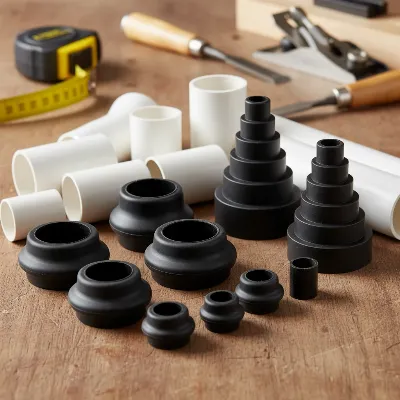 A collection of various adapters for connecting a shop vacuum to a table saw, including rubber reducers, PVC fittings, and flexible hoses arranged on a workbench with woodworking tools.
Step-by-Step Guide: Attaching Your Shop Vacuum to a Table Saw
Connecting your shop vacuum to your table saw is a straightforward process when you approach it systematically.
Assess Your Equipment: Dust Port and Shop Vac Hose Size
Begin by precisely measuring the inner and outer diameters of your table saw’s dust port and your shop vacuum’s hose. Use a tape measure or, for greater accuracy, a set of calipers. Pay close attention to both the fitting on the saw and the end of your vacuum hose. This crucial step will reveal any size discrepancies you need to address with an adapter. For instance, you might find your table saw has a 4-inch dust port, while your shop vac uses a 2.5-inch hose, indicating a need for a 4-inch to 2.5-inch reducer.
Choose the Right Adapter: Commercial vs. DIY Solutions
Based on your measurements, you can now select the appropriate adapter.
-
Commercial Adapters: Head to the plumbing section of your local home improvement store. Look for flexible rubber couplings or reducers. These are often used for connecting different sized pipes and come with hose clamps for a secure fit. For example, a “3-inch x 2-inch flexible coupling” could connect a table saw’s 3-inch port to a 2-inch shop vac hose. If you need a more rigid connection, various PVC fittings like reducing couplings or bell reducers can be glued together to create the desired transition. Many tool accessory brands also offer universal stepped adapters specifically designed for power tools, which you can trim to fit your specific hose and port sizes. These commercial options are usually the quickest and most durable solutions.
-
DIY Adapters: If you can’t find a perfect commercial fit, or if you prefer a custom solution, you can create one. For a difference in diameter, you might cut two circles from plywood or hard plastic—one matching the saw port, one matching the hose—then connect them with a tapered section made from thinner material or even by layering cut circles to gradually bridge the gap. Flexible materials like heavy-duty plastic sheeting or even old shower curtain material can be used to seal irregular openings, secured with duct tape or zip ties. The goal is an airtight transition from your saw’s dust port to your shop vac hose.
Make the Connection: Securing the Hose
Once you have your adapter, it’s time to connect everything.
- Attach the Adapter to the Table Saw: Slide the larger end of your chosen adapter onto the table saw’s dust port. If using a rubber coupling, loosen the hose clamps, slide it over the port, and then tighten the clamps securely. For PVC fittings, you might use glue or simply ensure a tight friction fit.
- Connect the Shop Vac Hose: Slide the smaller end of the adapter over your shop vacuum hose. Again, if using a rubber coupling, tighten the clamps to create an airtight seal. For other adapters, a snug friction fit is often sufficient, but you can reinforce it with duct tape for extra security. Ensure the hose is routed in a way that doesn’t interfere with the saw’s operation or create a tripping hazard.
Test and Refine Your Setup
With the connections made, it’s time for a trial run.
- Run the Saw and Vac: Turn on your shop vacuum, then briefly turn on your table saw.
- Check for Dust Escape: Observe where dust is being generated and, more importantly, where it might be escaping. Look for visible plumes of dust or feel for airflow around your connections.
- Adjust and Seal: If you notice any leaks, tighten clamps, apply more duct tape, or use weatherstripping or silicone caulk to seal gaps. The tighter the seal, the more effective your dust collection will be. You want to maximize the airflow directly into the shop vacuum.
Common Challenges and Troubleshooting
Even with careful planning, you might encounter a few hurdles. Here’s how to address common issues:
- Poor Suction: If your shop vac isn’t collecting dust effectively, first check all connections for leaks. A small gap can drastically reduce suction. Also, ensure your shop vac filter is clean and the bag (if using one) isn’t full. The power of your shop vac also plays a role; smaller, less powerful units may struggle with the volume of dust a table saw produces.
- Hose Compatibility: If your shop vac hose still doesn’t fit your chosen adapter, double-check your initial measurements. You might need a different size adapter or a universal multi-stepped adapter that can be cut to fit more precisely.
- Adapters Not Fitting Tightly: For rubber couplings that are too stiff, try heating them slightly with a hair dryer or heat gun to make them more pliable for easier installation. For very tight fits, a small relief cut on the edge of the adapter might help, or a thin layer of Vaseline can aid in sliding the connection.
- Above-Blade Dust: Even with a perfect connection to the lower dust port, table saws often eject a significant amount of dust from above the blade. This requires a separate solution, such as an overarm dust collector, which captures dust directly from the blade guard.
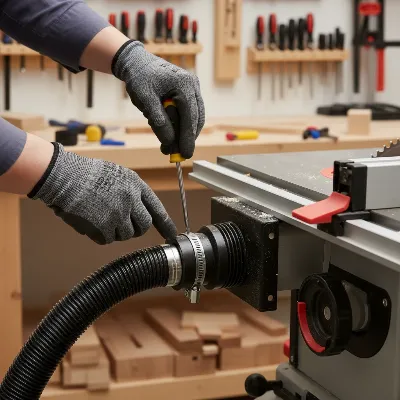 A person's hands tightening a hose clamp on a flexible rubber adapter connecting a shop vacuum hose to a table saw dust port in a well-lit workshop.
Beyond the Basics: Improving Your Table Saw Dust Collection
While directly connecting a shop vacuum is a huge step, you can further enhance your dust collection system for maximum cleanliness and safety.
-
Sealing the Cabinet: For contractor-style table saws with open bases, sealing the cabinet is one of the most impactful upgrades you can make. Use plywood, MDF, or even heavy plastic sheeting to enclose the bottom and sides of the blade area. Seal all seams and gaps with caulk or weatherstripping to create an almost airtight chamber, forcing air and dust directly into your connected vacuum. This significantly increases the effectiveness of your shop vac by concentrating suction.
-
Cyclone Separator: A cyclone separator, often placed between your table saw and your shop vacuum, is an excellent investment. This device uses centrifugal force to separate larger dust particles from the air stream before they reach your shop vacuum’s filter. This prevents your shop vac filter from clogging quickly, maintaining consistent suction and extending the life of your filter. You’ll also spend less time cleaning or replacing filters.
-
Overarm Dust Collection: To tackle the dust generated above the blade, consider an overarm dust collector. These systems typically consist of an arm that extends over the saw blade, ending in a hood that captures dust as it’s flung upwards. Many can be connected to a separate shop vacuum or integrated into a larger dust collection setup via a wye connector.
-
Air Filtration: While source-specific dust collection is primary, an ambient air filtration unit can capture remaining airborne particles. A simple DIY air filter can be made by strapping a furnace filter to a box fan. These units help keep the overall shop air cleaner, especially after cutting operations.
“A well-sealed table saw cabinet combined with a shop vacuum and a cyclone separator is a game-changer for any home woodworker. It’s often overlooked how much simple modifications can improve both safety and efficiency.”
Conclusion
Successfully attaching a shop vacuum to your table saw is a fundamental step toward creating a healthier, more organized, and productive woodworking environment. By accurately assessing your equipment, choosing the right adapters (whether commercial or DIY), and ensuring secure, airtight connections, you can dramatically reduce the amount of sawdust in your shop. Remember, effective dust collection isn’t just about cleanliness; it’s an investment in your health and the longevity of your tools. Don’t let sawdust control your workshop any longer—take charge with these simple DIY solutions. What small improvement will you make to your dust collection setup today?
Frequently Asked Questions
How much suction (CFM) do I need for my table saw?
For a typical table saw, a shop vacuum with at least 150-200 CFM (Cubic Feet per Minute) is generally recommended for effective dust collection, especially if you’ve sealed the saw cabinet. Higher CFM will provide better performance, particularly for larger dust ports.
Can I use a regular household vacuum cleaner for dust collection?
It’s generally not recommended. Household vacuums are not designed to handle fine wood dust, which can quickly clog their filters and potentially damage the motor. They also typically lack the robust suction and filtration needed for effective woodworking dust collection.
What if my table saw doesn’t have a dust port?
If your table saw lacks a built-in dust port, you can often add one. This typically involves modifying the saw’s cabinet or creating a custom enclosure beneath the blade and then installing a standard dust port fitting (e.g., 2.5-inch or 4-inch) to connect your shop vacuum.
How often should I clean my shop vac filter when using it for a table saw?
When using a Shop Vacuum for woodworking dust, its filter can clog rapidly. It’s advisable to check and clean your filter after every extended woodworking session, or even more frequently depending on the volume of dust. Using a cyclone separator can significantly extend filter life.