Is your garage a warzone of sawdust, metal shavings, and unexpected spills? If your household vacuum cowers at the thought of such heavy-duty cleanups, it’s time to upgrade. A robust shop vacuum is an indispensable tool for any garage, workshop, or DIY enthusiast, designed to tackle the toughest messes that regular vacuums simply can’t handle. In 2026, the market offers an impressive array of heavy duty shop vacuums, each promising unparalleled power and versatility. This guide cuts through the noise to help you understand what truly makes a great garage shop vacuum and reveals the top models that will keep your workspace spotless and efficient.
What is a Shop Vacuum and Why Do You Need One?
A shop vacuum, often called a wet/dry vac, is a specialized cleaning machine built for environments where standard household vacuums fail. Unlike typical home cleaners, shop vacuums are engineered to pick up both dry debris—like sawdust, wood chips, nails, and construction waste—and liquids, such as spills, water from leaks, or even wet mud. Their rugged construction and powerful motors allow them to tackle messes that would clog, damage, or simply overwhelm a residential vacuum.
The applications for a shop vacuum in a garage are extensive. They are perfect for cleaning up after woodworking projects, tidying up vehicle maintenance areas, managing spills, or even detailing your car’s interior. For anyone regularly engaged in DIY projects, auto repair, or simply maintaining a clean and functional garage, a heavy duty shop vacuum offers unmatched performance and durability. It’s an investment that ensures your workspace remains safe, organized, and ready for your next project.
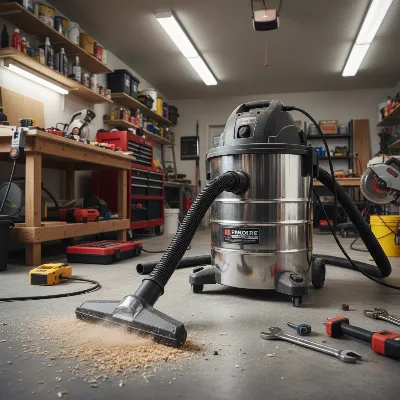 A heavy duty shop vacuum in a well-organized garage, capturing sawdust and debris from a woodworking project. Dynamic angle, bright workshop lighting, realistic style.
Types of Shop Vacuums
Understanding the different types of shop vacuums is crucial to selecting the right model for your garage. They are typically categorized by their power metrics, capacity, features, and construction materials.
By Power (HP, CFM, Water Lift)
Shop vacuum power isn’t solely defined by “horsepower” (HP), which can often be a peak or instantaneous rating. More important metrics are CFM (Cubic Feet per Minute) and Water Lift (inches of water).
- CFM measures the volume of air the vacuum moves and is critical for quickly picking up large quantities of light, bulky debris like sawdust, wood shavings, or insulation. A higher CFM means faster cleanup of these types of messes.
- Water Lift indicates the vacuum’s suction strength, or its ability to lift heavy, stubborn materials like nuts, bolts, wet sludge, or standing water. A higher water lift rating signifies superior brute force for heavy-duty tasks.
- Air Watts (AP) combines both airflow and suction power, providing a more comprehensive measure of overall cleaning efficiency, especially for mixed debris.
|
Our Picks for the Best Shop Vacuum in 2026
As an Amazon Associate I earn from qualifying purchases.
|
||
| Num | Product | Action |
|---|---|---|
| 1 | Stanley - SL18129 Wet/Dry Vacuum, 4 Gallon, 4 Horsepower, Stainless Steel Tank Silver+yellow |

|
| 2 | Armor All VBV809 0901 8-Gallon 4.5 Peak HP Wet/Dry Vacuum with Detachable Blower, Orange |
|
| 3 | Shop-Vac 5985005 6 Gallon Wet/Dry Vacuum, 3.5 Peak HP, 1.25 Inch Diameter x 7 Foot Hose, 6 Foot Cord, Ideal for Home, Garage, and Workshop Cleaning |
|
| 4 | DEWALT DXV16PA 16 Gallon Poly Wet/Dry Vac/Acc, 6.5HP Shop Vacuum Wet/Dry for Jobsite/Workshop, Yellow |
|
| 5 | Shop-Vac 9522205 5 Gallon 5.5 Peak HP Hangup Wet/Dry Vacuum, 1.25 Inch Diameter x 18 Foot Hose, 6 Foot Cord, Wall Mount Included, Ideal for Garage, Workshop & Home |
|
| 6 | Kärcher Shop Vacuum WD 4, 5.3 Gal, 3.8 Peak HP, 33 ft Reach, Wet Dry Vacuum Cleaner, Heavy Duty, Blower Function, Crevice Tool, Floor Nozzle, Great for DIY Projects and Workshops |
|
| 7 | Shop-Vac 5989305 Wet/Dry Vacuum, 5 Gallon, 4.5 Peak HP Stainless Steel Vacuum, 1.25 Inch Diameter x 7 Foot Hose, 6 Ft Cord Length, Ideal for Jobsite, Garage, Car & Workshop |
|
| 8 | Vacmaster Wet/Dry Vacuum with Detachable Blower 6 Gallon 5 Peak HP-VBVB611PF 1101 |
|
| 9 | Vacmaster VF408 4 Gallon Wet/Dry Vacuum Cleaner with 2-Stage Motor |
|
| 10 | Armor All VO408S 0901 4 Gallon 3 Peak HP Stainless Steel Wet/Dry Vacuum, Orange |
|
For heavy-duty garage use, look for models with 4 to 6.5 Peak HP or higher, combined with strong CFM (e.g., 150+ CFM) and substantial water lift (e.g., 60+ inches).
By Capacity
The tank capacity of a shop vacuum dictates how much debris or liquid it can hold before needing to be emptied.
- Small (1-5 gallons): Ideal for quick cleanups, small spills, or car detailing. They are highly portable and easy to store.
- Medium (6-12 gallons): A popular choice for most garage owners, offering a good balance between capacity, power, and portability. They handle general workshop tasks and moderate messes well.
- Large (14+ gallons): Designed for extensive projects, large workshops, or commercial use where frequent emptying is impractical. These models are typically the most powerful and handle the biggest jobs, but require more storage space.
By Features
Modern shop vacuums come with a range of features that enhance their utility:
- Wet/Dry Capability: The hallmark of a shop vacuum, allowing it to transition seamlessly between dry debris and liquid spills.
- Fine Dust Filtration (HEPA): Essential for capturing microscopic particles like drywall dust, concrete dust, or allergens, protecting air quality.
- Blower Function: Many models include a detachable motor or a dedicated port that converts the vacuum into a powerful leaf blower, useful for clearing driveways or drying surfaces.
- Corded vs. Cordless: Corded models offer continuous, unwavering power, while cordless versions provide ultimate portability for smaller, quick tasks, often powered by rechargeable battery systems.
By Construction Material
Shop vac tanks are primarily made from two materials:
- Plastic: The most common choice, offering durability, lighter weight, and resistance to rust.
- Metal (Stainless Steel): Often found in heavy-duty or industrial models, providing enhanced robustness and an appealing aesthetic. Metal tanks are more resistant to punctures and damage but are heavier.
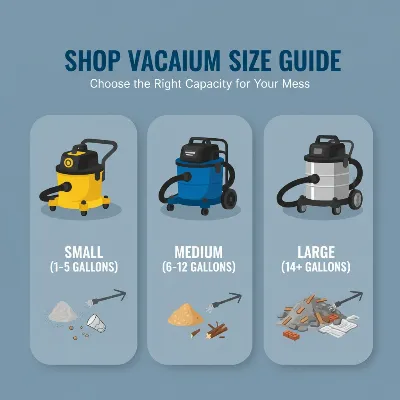 An illustrative graphic comparing three different sizes of shop vacuums (small, medium, large capacity) with labels for their typical gallon ranges.
Factors to Consider When Buying a Shop Vacuum (Buying Guide)
Choosing the best heavy duty shop vacuum involves more than just picking the largest or most powerful one. Consider these key factors to match a model to your specific garage needs.
Power and Airflow (CFM & Water Lift)
As discussed, prioritize CFM for light, bulky debris and water lift for heavy, wet messes. A balanced combination is ideal for general garage work. For intense applications like concrete dust or large water removal, higher water lift is paramount. Don’t be swayed by peak HP alone; look for detailed specifications on CFM and water lift.
Canister Capacity
Assess the typical volume of debris you generate. For occasional DIY and vehicle cleaning, a 6-12 gallon model might suffice. If you frequently undertake large woodworking projects or auto restorations, a 14-gallon or larger unit will save you time by reducing how often you need to empty it. Remember to balance capacity with available storage space.
Filtration System (HEPA, Foam, Cartridge)
The quality of the filter system significantly impacts air quality and vacuum performance.
- Cartridge filters are standard for dry debris, and many are washable.
- Foam filters are essential for wet pickups, protecting the motor from moisture.
- HEPA filters provide the highest level of filtration, trapping 99.97% of particles down to 0.3 microns, crucial for fine dust (like drywall dust) and allergen control. Using the correct filter for the job prevents clogging and ensures efficient operation.
Noise Level
Heavy duty shop vacuums can be notoriously loud, often exceeding 85 dB, which warrants hearing protection during extended use. Some modern designs, like DeWalt’s Stealthsonic series, focus on quieter operation, a significant advantage for prolonged projects or shared workspaces.
Durability and Build Quality
A heavy duty shop vacuum needs to withstand the harsh garage environment. Look for models with robust motor housings, strong plastic or metal tanks, and durable hoses and attachments. Heavy-duty rubber casters are vital for easy mobility across rough garage floors.
Hose and Attachments
The hose is your primary interface with the mess. Look for a wide-diameter hose (e.g., 2.5 inches) for efficient pickup of large debris. Longer hoses (7+ feet) and power cords (10-20+ feet) offer greater reach, reducing the need to frequently move the unit or use extension cords. A good selection of attachments—such as crevice tools, floor nozzles, utility nozzles, and squeegees—enhances versatility. On-board storage for these accessories is a convenient feature.
Portability and Storage
Even large shop vacuums need to be moved around. Sturdy wheels and casters are non-negotiable. Consider wall-mounted units for space-saving in smaller garages, which often come with extra-long hoses. For ultimate portability, cordless options are available, though they trade power and runtime for freedom.
Additional Features
Convenience features can greatly improve the user experience:
- Drain Plug: Simplifies emptying liquids without lifting the entire tank.
- Blower Port: Allows the vacuum to double as a blower.
- Remote On/Off Switch: Handy for controlling the unit when working far from the main power switch.
- Integrated Tool Storage: Keeps attachments organized and readily accessible.
Price and Warranty
Shop vacuums range widely in price based on their power, capacity, and features. Set a budget, but view it as an investment in a durable tool. Check the manufacturer’s warranty for peace of mind, as some brands offer extensive coverage.
Comparing Popular Heavy Duty Shop Vacuum Brands
The market for heavy duty shop vacuums is dominated by several reputable brands, each with its own strengths:
Ridgid: Known for robust build quality, strong suction, and often a lifetime warranty. Ridgid models are a favorite among professionals and serious DIYers for their reliability and performance, especially in medium to large capacities (e.g., 12-14 gallons). They offer excellent filtration and a good range of attachments.
Craftsman: A long-standing name in tools, Craftsman shop vacuums are praised for their raw power and high CFM, making them excellent for quickly clearing large volumes of dry debris. Their 16-gallon models, in particular, are frequently highlighted for exceptional suction, though some users note plastic components can feel less premium.
DeWalt: Often associated with professional-grade power tools, DeWalt’s shop vacuums carry a similar reputation for durability and performance. Their “Stealthsonic” series stands out for significantly quieter operation while still delivering strong suction and large capacities, ideal for busy workshops where noise is a concern.
Stanley: Positioned as a strong value option, Stanley shop vacuums deliver commendable performance and a good array of features at a more accessible price point. Their medium-capacity models (e.g., 6-gallon) are frequently recommended as excellent budget-friendly choices for general garage use.
Vacmaster: Offers a diverse range, from compact and versatile units to powerful large-capacity options. Vacmaster models are often recognized for strong suction, innovative features like detachable blowers, and competitive pricing, making them a solid choice for various needs.
Milwaukee: Primarily known for its cordless power tool ecosystem, Milwaukee offers battery-powered shop vacuums that leverage their M18 FUEL battery platform. These cordless models excel in portability and are ideal for quick cleanups where an outlet isn’t readily available, offering surprising power for their size.
> “Choosing the right shop vacuum isn’t just about raw power; it’s about matching its capabilities to the specific challenges of your workspace. Consider the type of debris, frequency of use, and your need for portability.” – John Davis, Master Mechanic & Workshop Consultant
Top Heavy Duty Shop Vacuums for Garage Use in 2026
Based on performance, features, and user feedback in 2026, these heavy duty shop vacuums consistently rise to the top for garage applications:
Craftsman 16-Gallon Wet/Dry Shop Vacuum
The Craftsman 16-Gallon Wet/Dry Shop Vacuum stands out as an Editors’ Choice for overall performance and large-capacity cleanup. Boasting immense suction power and high airflow, it effortlessly tackles heavy rocks, metal chunks, and substantial sawdust piles. Its wide-diameter hose prevents clogs, and the 16-gallon canister minimizes emptying frequency during large projects. While it can be loud (around 96 dB), its cleaning prowess is undeniable, making it an excellent choice for serious DIYers and professionals who demand maximum power for the biggest garage messes.
DeWalt Stealthsonic Quiet 12-Gallon Wet/Dry Shop Vacuum
For those who value power without excessive noise, the DeWalt Stealthsonic Quiet 12-Gallon Wet/Dry Shop Vacuum is a game-changer. It combines a robust 5.5-HP motor and a 2.5-inch diameter hose with significantly reduced operating noise. This 12-gallon unit quickly vacuums up large debris like sawdust and rapidly drains water, covering an entire two-car garage with its 20-foot cord. Its heavy-duty rubber casters ensure smooth mobility, making it ideal for extended use in workshops or residential settings where noise control is appreciated.
Stanley 6-Gallon Wet/Dry Vacuum
The Stanley 6-Gallon Wet/Dry Vacuum earns top marks as the best value and a versatile medium-capacity option. It offers strong suction and high airflow typically found in more expensive models, despite its budget-friendly price. Perfect for general garage cleanups, it capably handles sand, gravel, and construction debris. Its 6-gallon capacity provides a good balance between size and storage, and users appreciate its low noise level and ease of maneuverability, making it an excellent all-around choice for the average garage owner.
Vacmaster Professional Wet Dry Beast Series 5-Gallon Shop Vacuum
The Vacmaster Professional Wet Dry Beast Series 5-Gallon Shop Vacuum is celebrated for its impressive power in a compact form factor. Its 5.5-HP motor delivers suction far superior to many other 5-gallon units, making it highly effective for both wet and dry messes. Its small footprint and lightweight design make it easy to carry and store, perfect for smaller garages or for jobs requiring high portability. With an 18-foot cord and 7-foot hose, it offers ample reach for most applications.
Milwaukee M18 FUEL 6-Gallon Wet/Dry Vacuum
For cordless convenience, the Milwaukee M18 FUEL 6-Gallon Wet/Dry Vacuum is unmatched. As part of Milwaukee’s extensive M18 battery system, it offers excellent portability and powerful suction for a battery-operated unit. While its runtime is limited by battery capacity (approximately 17 minutes on high with a 4Ah battery), it’s perfect for quick cleanups, reaching remote areas without power outlets, or for professionals already invested in the Milwaukee ecosystem. Its robust build and decent capacity make it a strong performer in its category.
Tips for Using and Maintaining Your Shop Vacuum
To maximize the performance and lifespan of your heavy duty shop vacuum, proper usage and diligent maintenance are key.
Safe and Effective Usage
- Read the Manual: Always familiarize yourself with your specific model’s instructions and safety guidelines.
- Use the Right Filter: Ensure you have the correct filter installed for the type of mess you’re tackling. Use foam filters for liquids and dry cartridge or HEPA filters for dry debris.
- Wear Protection: Given the high noise levels of many shop vacs, wear hearing protection. If dealing with fine dust, a dust mask is also advisable to protect your lungs.
- Clear Large Obstacles: While powerful, avoid vacuuming extremely large or sharp objects that could damage the hose or impeller.
- Empty Regularly: Don’t let the canister overfill, especially with liquids, as this can strain the motor and reduce suction. Use a drain plug for easy liquid disposal if available.
- Mind the Cord/Hose: Prevent tripping hazards by managing the cord and hose. A longer cord and hose reduce the need for extensions and moving the unit.
Cleaning and Maintenance to Extend Lifespan
- Clean/Replace Filters: Filters are the heart of your vacuum’s performance. Clean washable filters regularly according to manufacturer guidelines, and replace disposable ones when performance drops or they are heavily soiled. Clogged filters drastically reduce suction.
- Empty and Clean Canister: After each significant use, empty the canister. For wet messes, rinse the tank thoroughly and allow it to air dry to prevent mold and mildew.
- Check Hose and Attachments: Inspect the hose and attachments for blockages, cracks, or damage. Clear any obstructions promptly to maintain airflow.
- Store Properly: Store your shop vacuum in a dry, protected area. Utilize on-board storage for attachments to keep them organized and prevent loss.
- Inspect Power Cord: Regularly check the power cord for any cuts, fraying, or damage that could pose an electrical hazard.
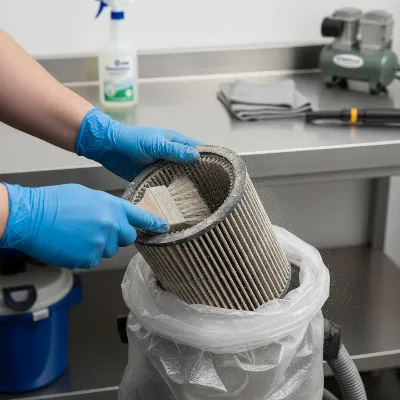 A person cleaning the filter of a heavy duty shop vacuum, emphasizing proper maintenance for extended lifespan. Clean, well-lit workshop setting, detailed hands-on shot, realistic style.
Common Issues and Troubleshooting
- Loss of Suction: Most commonly caused by a clogged filter, a full tank, or a blockage in the hose or attachments. Check these areas first.
- Motor Overheating: Can be due to prolonged use, a severely clogged filter, or a full tank. Allow the motor to cool down, and address any blockages or filter issues.
- Dust Escaping: Indicates a faulty or improperly installed filter, or a crack in the hose or tank. Inspect and replace/seal as necessary.
- Won’t Turn On: Check the power cord, outlet, and any circuit breakers. If battery-powered, ensure the battery is charged and properly inserted.
Conclusion
A heavy duty shop vacuum is an indispensable tool for maintaining a clean, safe, and efficient garage. It offers the power and versatility to tackle the toughest dry debris and liquid spills that would overwhelm a regular household vacuum. By understanding key factors like CFM, water lift, capacity, and filtration, you can make an informed decision tailored to your specific needs. The 2026 market presents outstanding options from brands like Craftsman, DeWalt, Stanley, Vacmaster, and Milwaukee, each bringing unique strengths to the table. Investing in the right heavy duty shop vacuum will not only keep your workspace pristine but also empower you to tackle any project with confidence. What kind of challenging messes are you hoping your new shop vacuum will conquer first?
Câu Hỏi Thường Gặp
What’s the difference between CFM and water lift?
CFM (Cubic Feet per Minute) measures the volume of air a shop vacuum moves, indicating its efficiency at picking up large quantities of light debris like sawdust. Water lift, measured in inches of water, represents the vacuum’s suction strength for lifting heavy objects, wet messes, or standing liquids. Both are crucial for different types of garage messes.
Do I really need a HEPA filter for my garage shop vac?
While not always necessary for general debris like wood chips, a HEPA filter is highly recommended if you frequently deal with fine dust (e.g., drywall dust, concrete dust) or if you or others in your household suffer from allergies. It significantly improves air quality by capturing microscopic particles that coarser filters miss.
How much horsepower (HP) is good for a heavy-duty shop vac?
For heavy-duty garage use, look for a shop vacuum with 4 to 6.5 Peak HP or higher. However, remember that Peak HP can be a marketing term. It’s more critical to assess the vacuum’s actual performance based on its CFM (airflow) and water lift (suction strength) ratings, which provide a clearer picture of its capabilities.
Can I use a shop vac to clean my car?
Absolutely! Shop Vacuums are excellent for car detailing. Their powerful suction can lift stubborn dirt and debris from carpets and upholstery, and their wet/dry capability makes quick work of spills. Smaller, more portable models or those with long hoses and specialized attachments are particularly convenient for vehicle interiors.
How often should I clean my shop vac filter?
The frequency of filter cleaning depends on how often you use your shop vac and the type of debris you’re cleaning. For heavy use or fine dust, you may need to clean it after every few uses. For lighter debris and less frequent use, checking and cleaning the filter monthly or quarterly might suffice. A noticeable drop in suction is a clear sign that your filter needs attention.