A shop vacuum blowing dust is typically caused by a clogged or damaged filter, incorrect filter type or installation, a full or damaged dust bag, leaky hose or gasket connections, or an overfilled collection drum. These issues disrupt the vacuum’s filtration system, allowing fine particles to escape back into your workspace. Addressing these common problems with simple DIY fixes can restore your shop vacuum’s performance and maintain a cleaner environment.
Understanding Your Shop Vacuum and Why It Blows Dust
A shop vacuum, or wet/dry vacuum, is designed for heavy-duty cleaning tasks, handling everything from sawdust and construction debris to liquid spills. It operates by creating powerful suction that pulls air and particles into a collection drum. Inside, a filter traps the solid debris, allowing clean air to exhaust. When functioning correctly, it’s an indispensable tool for workshops, garages, and job sites.
However, when dust starts blowing out, it signals a disruption in this fundamental process. Essentially, the dust isn’t being effectively contained or filtered, finding an escape route back into your environment. This typically points to an issue with the filtration system, a blockage, or compromised seals, preventing the vacuum from trapping debris as intended.
The Core Culprits: Common Reasons for Dust Leaks
Understanding the common causes of dust blowing from your shop vacuum can help you diagnose and fix the problem efficiently.
Clogged or Damaged Filter
The filter is the frontline defense against airborne dust. Over time, as it captures more and more particles, it can become clogged, restricting airflow. When airflow is impeded, the vacuum struggles to pull air through the filter, and dust can be forced around or even through the filter’s material if it’s too fine for the filter type. A damaged filter, with rips, tears, or degraded material, directly compromises its ability to trap dust, allowing particles to escape into the exhaust.
Incorrect Filter Type or Installation
Not all filters are created equal, and using the wrong type for your task can lead to dust blowing. For instance, standard filters may not be effective against very fine dust, like drywall or concrete dust, which requires specialized HEPA or high-efficiency cartridge filters. Additionally, if the filter isn’t properly seated and secured within its housing, gaps can form, creating bypass routes for unfiltered air and dust to escape.
Full or Damaged Dust Bag (If Applicable)
Many shop vacuums can use disposable dust bags inside the collection drum, especially when dealing with fine particulate matter. If this bag becomes overfilled, it can restrict airflow just like a clogged filter, reducing suction and potentially causing dust to blow past the bag and filter. A damaged or torn dust bag will also fail to contain debris, allowing it to circulate within the drum and eventually escape.
Leaky Hose or Gasket Connections
|
Our Picks for the Best Shop Vacuum in 2026
As an Amazon Associate I earn from qualifying purchases.
|
||
| Num | Product | Action |
|---|---|---|
| 1 | Vacmaster VF408 4 Gallon Wet/Dry Vacuum Cleaner with 2-Stage Motor |

|
| 2 | Armor All VBV809 0901 8-Gallon 4.5 Peak HP Wet/Dry Vacuum with Detachable Blower, Orange |
|
| 3 | Armor All VO408S 0901 4 Gallon 3 Peak HP Stainless Steel Wet/Dry Vacuum, Orange |
|
| 4 | Stanley - SL18129 Wet/Dry Vacuum, 4 Gallon, 4 Horsepower, Stainless Steel Tank Silver+yellow |
|
| 5 | Shop-Vac 5989305 Wet/Dry Vacuum, 5 Gallon, 4.5 Peak HP Stainless Steel Vacuum, 1.25 Inch Diameter x 7 Foot Hose, 6 Ft Cord Length, Ideal for Jobsite, Garage, Car & Workshop |
|
| 6 | DEWALT DXV16PA 16 Gallon Poly Wet/Dry Vac/Acc, 6.5HP Shop Vacuum Wet/Dry for Jobsite/Workshop, Yellow |
|
| 7 | Kärcher Shop Vacuum WD 4, 5.3 Gal, 3.8 Peak HP, 33 ft Reach, Wet Dry Vacuum Cleaner, Heavy Duty, Blower Function, Crevice Tool, Floor Nozzle, Great for DIY Projects and Workshops |
|
| 8 | Shop-Vac 9522205 5 Gallon 5.5 Peak HP Hangup Wet/Dry Vacuum, 1.25 Inch Diameter x 18 Foot Hose, 6 Foot Cord, Wall Mount Included, Ideal for Garage, Workshop & Home |
|
| 9 | Vacmaster Wet/Dry Vacuum with Detachable Blower 6 Gallon 5 Peak HP-VBVB611PF 1101 |
|
| 10 | Shop-Vac 5985005 6 Gallon Wet/Dry Vacuum, 3.5 Peak HP, 1.25 Inch Diameter x 7 Foot Hose, 6 Foot Cord, Ideal for Home, Garage, and Workshop Cleaning |
|
The entire shop vacuum system relies on a tight seal to maintain suction and prevent leaks. If the hose has cracks, or if the connections between the hose, attachments, or the vacuum lid are loose or compromised, air can escape. This loss of seal can reduce suction power and allow dust-laden air to bypass the filtration system, exiting through these leaks. The main gasket around the lid of the collection drum is particularly critical for maintaining a sealed environment.
Overfilling the Collection Drum
While shop vacuums are built for large volumes of debris, overfilling the collection drum can still lead to issues. When the drum is too full, there’s less space for air to circulate efficiently, and the debris itself can interfere with the filter, reducing its effectiveness. In extreme cases, debris can come into direct contact with the filter, potentially damaging it or being pushed past it into the exhaust.
5 Quick DIY Fixes for Your Dust-Blowing Shop Vacuum
When your shop vacuum starts blowing dust, most issues can be resolved with a few simple, hands-on fixes. Always unplug your vacuum before performing any inspection or maintenance to ensure safety.
Fix 1: Clean or Replace the Filter
A dirty or damaged filter is the most frequent culprit.
- Cleaning: For reusable filters, carefully remove it from the vacuum. Depending on the type, you can gently tap it against a trash can to dislodge dry dust, or wash it with water if it’s designed for wet cleaning. Ensure it’s completely dry before reinstalling. For very fine dust, sometimes cleaning isn’t enough to restore full efficiency.
- Replacing: If the filter is ripped, torn, or heavily caked with dust that won’t come off, it’s time for a replacement. Always use a filter that matches your vacuum model and the type of debris you’re typically cleaning. For fine dust, invest in a HEPA or high-efficiency filter.
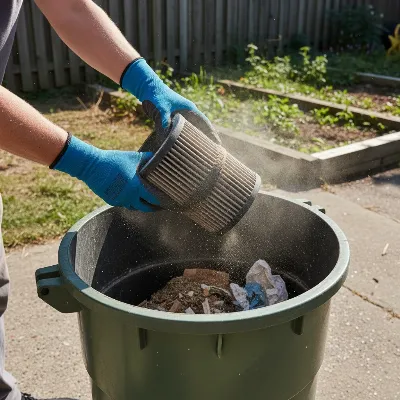 A person cleaning a clogged shop vacuum filter, tapping it gently to remove dry dust outdoors, with safety gloves
Fix 2: Check and Secure All Connections
Loose connections provide an easy escape route for dust.
- Hose Inspection: Carefully inspect the entire length of your shop vacuum hose for any cracks, punctures, or loose cuffs. Even small damage can significantly reduce suction and allow dust to escape. If damaged, consider replacing the hose.
- Lid and Gasket: Ensure the shop vacuum lid is securely latched down. Check the rubber gasket or seal around the rim of the collection drum. If it’s cracked, worn, or missing, it will create air leaks, and dust will blow out. Replace a damaged gasket promptly.
- Attachments: Confirm that all attachments are firmly seated onto the hose. A wobbly or loose attachment can cause air and dust to bypass the collection system.
Fix 3: Empty or Replace the Dust Bag
If your shop vacuum uses a disposable dust bag, its capacity is crucial.
- Emptying/Replacing: If the bag is full or nearly full, remove it and dispose of its contents responsibly, preferably outdoors to minimize dust exposure. Replace it with a new, correctly sized bag.
- Proper Installation: When installing a new bag, ensure it’s securely attached to the inlet port and properly unfolded inside the drum to allow for maximum capacity and airflow.
Fix 4: Clear Any Blockages
Clogs are a common cause of reduced suction and dust expulsion.
- Hose and Attachments: Disconnect the hose and attachments from the vacuum. Look through them for any visible blockages. You can often dislodge clogs with a broom handle, a long stick, or by using another vacuum (if you have one) to suck out the obstruction.
- Inlet Port: Check the inlet port on the vacuum drum where the hose connects. Sometimes larger debris can get stuck right at this entry point.
- Reverse Airflow (Caution): Some shop vacuums have a blower port. You can carefully connect the hose to the blower port (if your model has one and it’s safe to do so) and try to blow air back through the hose and attachments to dislodge stubborn clogs. Always exercise caution and ensure no one is in the path of potential flying debris.
Fix 5: Ensure Correct Filter Type and Installation
Using the right filter for the job and installing it correctly is paramount.
- Filter Type: Reconfirm that the filter you are using is appropriate for the type of debris you are cleaning. For general dry pickup, a standard cartridge filter might suffice, but for very fine particles like drywall dust, a high-efficiency or HEPA-rated filter is essential to prevent dust from blowing out.
- Proper Seating: After cleaning or replacing, double-check that the filter is installed correctly and seated tightly. There should be no gaps around the filter housing where air can escape. Many filters have specific locking mechanisms or rings; ensure these are engaged. If your vacuum is a wet/dry model and you’ve recently vacuumed liquids, remember to remove the dry filter or install a foam filter specifically for wet pickup, and ensure the dry filter is completely dry before using it again for dry debris.
Maintaining Your Shop Vacuum to Prevent Future Dust Issues
Preventative maintenance is key to keeping your shop vacuum working efficiently and preventing dust from blowing out in the future.
- Regular Filter Checks: Make it a habit to check your filter before and after each significant use. Clean or replace it as soon as you notice a reduction in suction or visible dust accumulation.
- Timely Drum Emptying: Don’t wait until the collection drum or dust bag is completely full. Empty it regularly to maintain optimal airflow and prevent strain on the motor.
- Inspect Seals and Hoses: Periodically inspect all seals, gaskets, and hoses for any signs of wear, cracks, or damage. Replace worn components proactively to maintain a tight seal throughout the system.
- Use Dust Bags for Fine Debris: Even if your vacuum doesn’t require a dust bag, using one for fine dust (like drywall or concrete dust) can significantly extend the life of your main filter and improve overall filtration, reducing the chance of blow-out.
- Match Filter to Task: Always ensure you’re using the correct filter type for the material you’re vacuuming. Switching between a standard filter for general debris and a HEPA filter for fine dust will provide the best results and protect your air quality.
Conclusion
A shop vacuum blowing dust can turn a cleaning task into a frustrating, messy ordeal, undermining your efforts to maintain a clean workspace. However, by understanding the common culprits—clogged filters, loose connections, full bags, or blockages—you can quickly identify and implement effective DIY fixes. Regularly cleaning or replacing your filter, ensuring all connections are secure, emptying the collection drum, and clearing any obstructions are essential steps to restore your shop vacuum’s performance. With a little preventative maintenance and attention to detail, you can ensure your shop vacuum remains a powerful ally against dirt and debris, keeping your environment clean and your air clear. What’s the most unusual thing you’ve ever found clogging your shop vacuum?
Frequently Asked Questions
Can I wash a shop vacuum filter?
Yes, many shop vacuum filters are washable, but always check your specific model’s manual for instructions. If washable, ensure the filter is completely dry before reinstalling it to prevent mold growth and maintain filtration effectiveness for dry pickup.
How often should I change my shop vacuum filter?
The frequency depends on how often you use your shop vacuum and the type of debris you’re cleaning. For heavy use or fine dust, you might need to clean or replace the filter more often. A good rule of thumb is to inspect it after every few uses and replace it when it shows signs of wear, damage, or significant clogging that cleaning can’t resolve.
What kind of filter do I need for drywall dust?
For very fine particles like drywall dust, you need a high-efficiency filter. Look for filters rated as HEPA or designed specifically for fine particulate collection, often made from specialized pleated materials. These filters are crucial for trapping the tiny particles that standard filters might let through.
Frequently Asked Questions
Why does my shop vacuum blow dust when I turn it on?
Your shop vacuum blows dust when turned on primarily due to a compromised filtration system. This can be caused by a clogged or damaged filter, an incorrect filter type for the debris, or loose seals and connections that allow unfiltered air to escape.
Can I wash a shop vacuum filter to reuse it?
Yes, many shop vacuum filters are designed to be washable and reusable. Always consult your specific model's user manual for proper cleaning instructions. It is crucial to ensure the filter is completely dry before reinstallation to prevent mold and maintain effective dry filtration.
How frequently should I replace the filter in my shop vacuum?
The replacement frequency for your shop vacuum filter depends on usage intensity and the type of debris collected. For heavy use or fine dust, more frequent cleaning or replacement is necessary. A general guideline is to inspect the filter after every few uses and replace it if cleaning doesn't restore efficiency or if there's visible damage.
What type of filter is best for capturing fine drywall dust?
For capturing very fine particles like drywall dust, a high-efficiency filter is essential. Look for filters specifically rated as HEPA or those designed for fine particulate collection, often featuring specialized pleated materials. These filters are critical for trapping microscopic particles that standard filters might miss.
What are the main reasons a shop vacuum loses suction and blows dust?
A shop vacuum loses suction and blows dust primarily due to five common issues: a clogged or damaged filter, using the wrong filter type, a full or torn dust bag, leaky hose or gasket connections, or an overfilled collection drum. Addressing these issues will restore optimal performance.
Fix a Dust-Blowing Shop Vacuum
Resolve common issues causing your shop vacuum to blow dust with these five simple DIY steps, ensuring a cleaner workspace.
Inspect your shop vacuum's filter for clogs or damage. For reusable filters, tap out dry dust or wash if designed for wet cleaning, ensuring it's completely dry before reinstalling. If the filter is ripped, torn, or heavily caked, replace it with a new filter matching your vacuum model and debris type, opting for a HEPA filter for fine dust.
Examine the entire hose for cracks or loose cuffs, replacing it if damaged. Ensure the shop vacuum lid is securely latched and check the rubber gasket around the collection drum for wear, replacing it if cracked or missing. Confirm all attachments are firmly seated onto the hose to prevent air and dust leaks.
If your shop vacuum uses a disposable dust bag, remove and dispose of a full or nearly full bag responsibly, preferably outdoors. Install a new, correctly sized bag, ensuring it's securely attached to the inlet port and properly unfolded inside the drum for maximum capacity and airflow.
Disconnect the hose and attachments to inspect for visible blockages, using a broom handle or another vacuum to dislodge clogs. Check the inlet port on the vacuum drum for stuck debris. If your model has a blower port, you can carefully connect the hose to it to blow air back through and clear stubborn obstructions, exercising caution.
Verify that the filter you are using is appropriate for the debris type; use a high-efficiency or HEPA-rated filter for fine particles like drywall dust. Double-check that the filter is installed correctly and seated tightly without gaps around the housing. If vacuuming liquids, remove the dry filter or install a foam filter, ensuring the dry filter is completely dry before reuse for dry debris.

I appreciate the tips, especially about the overfilled collection drum. That’s definitely been an issue for me. However, I still get some fine particles escaping even after cleaning the filter and emptying the drum. Maybe my filter is just too old, or I need a higher-quality one for drywall dust. It helped a little, but not a complete fix for my specific problem.
My old shop vac has been a workhorse, but lately, it’s been kicking up more dust than it collects. I followed the advice on checking the hose and gasket connections. Found a small tear in one of the gaskets that was letting air escape. A quick fix with some electrical tape for now, and it’s definitely improved the filtration. Good practical advice.
I was about to buy a new shop vac because mine was blowing dust everywhere, making my garage a total mess after every project. The tip about checking the filter type and installation was a game-changer. Turns out I had the wrong filter for fine sawdust. Swapped it out and now it works like new. Saved me a bunch of money!
This was super helpful! My shop vac started blowing dust like crazy, and I thought it was broken. The part about a clogged or damaged filter really resonated. I pulled mine out, and it was completely caked. A good cleaning and it’s back to full power. No more sawdust clouds in my workshop!