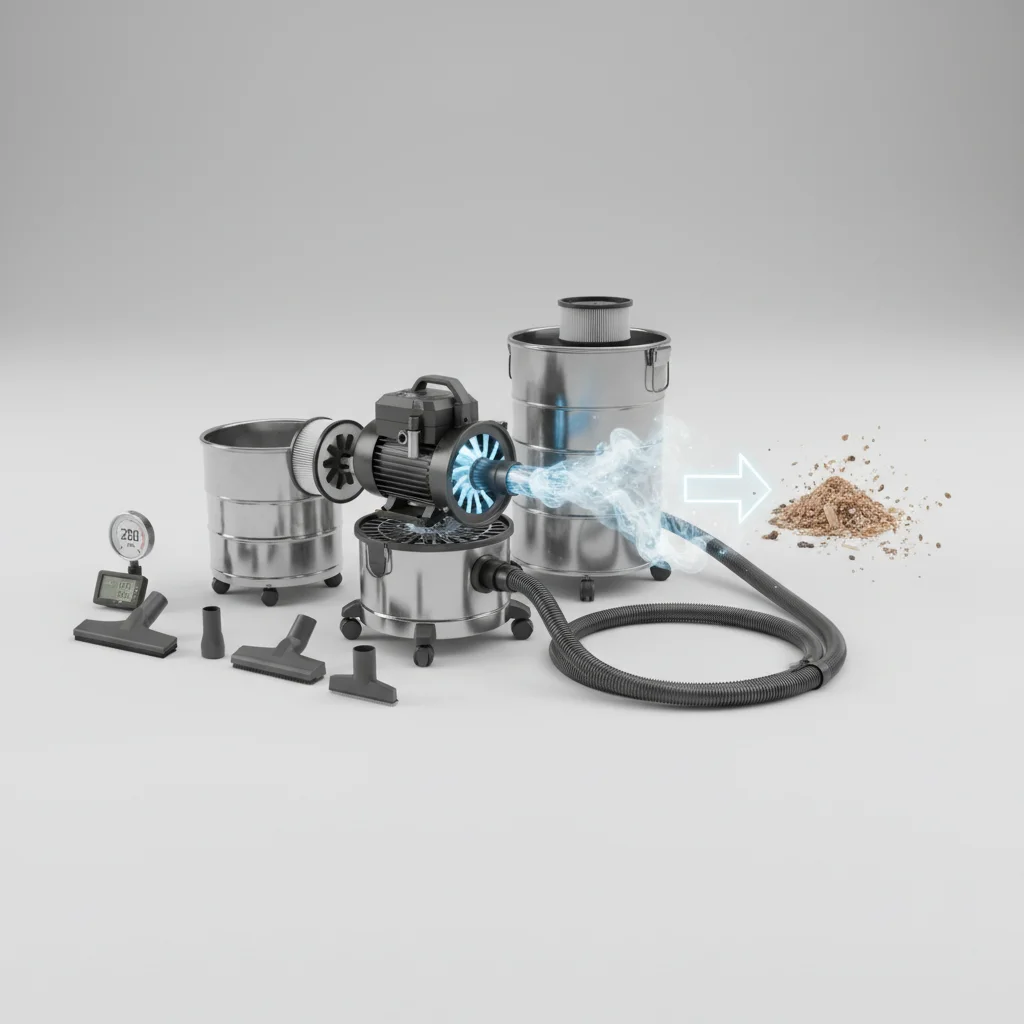
When considering shop vacuum suction power, you generally need between 150 and 200 CFM (Cubic Feet per Minute) for most demanding home and light professional tasks. This range provides ample power for picking up sawdust, wood chips, and even small debris, ensuring efficient cleanup without excessive energy consumption. Understanding CFM is crucial because it directly relates to how quickly and effectively your shop vacuum can move air and, consequently, debris.
Understanding CFM and Its Importance
CFM, or Cubic Feet per Minute, is a measurement of airflow, indicating the volume of air a shop vacuum can move in one minute. A higher CFM rating means the vacuum can move more air, which translates to greater suction power for larger debris and faster cleanup. While horsepower often gets the spotlight, CFM is a more accurate indicator of a shop vacuum’s actual cleaning capability, especially for dry applications like woodworking or garage cleanup. For wet spills, water lift (inches of water) becomes a more relevant metric, but for general dry debris, CFM is king.
Matching CFM to Your Specific Needs
The ideal CFM for your shop vacuum depends heavily on the type of work you’ll be doing. For light-duty tasks such as cleaning a small workshop, a shop vacuum with 100-150 CFM might suffice. However, for more intensive projects like connecting to power tools for dust extraction, or cleaning up construction debris, a unit with 175-220 CFM will provide superior performance. Professional contractors or those with large workshops might even look for models exceeding 220 CFM to handle very heavy loads and continuous use. Always consider the primary use case before making a purchase.
The Role of Hose Diameter and Length
|
Our Picks for the Best Shop Vacuum in 2026
As an Amazon Associate I earn from qualifying purchases.
|
||
| Num | Product | Action |
|---|---|---|
| 1 | Shop-Vac 5985005 6 Gallon Wet/Dry Vacuum, 3.5 Peak HP, 1.25 Inch Diameter x 7 Foot Hose, 6 Foot Cord, Ideal for Home, Garage, and Workshop Cleaning |

|
| 2 | Kärcher Shop Vacuum WD 4, 5.3 Gal, 3.8 Peak HP, 33 ft Reach, Wet Dry Vacuum Cleaner, Heavy Duty, Blower Function, Crevice Tool, Floor Nozzle, Great for DIY Projects and Workshops |
|
| 3 | Vacmaster VF408 4 Gallon Wet/Dry Vacuum Cleaner with 2-Stage Motor |
|
| 4 | Stanley - SL18129 Wet/Dry Vacuum, 4 Gallon, 4 Horsepower, Stainless Steel Tank Silver+yellow |
|
| 5 | Shop-Vac 5989305 Wet/Dry Vacuum, 5 Gallon, 4.5 Peak HP Stainless Steel Vacuum, 1.25 Inch Diameter x 7 Foot Hose, 6 Ft Cord Length, Ideal for Jobsite, Garage, Car & Workshop |
|
| 6 | Shop-Vac 9522205 5 Gallon 5.5 Peak HP Hangup Wet/Dry Vacuum, 1.25 Inch Diameter x 18 Foot Hose, 6 Foot Cord, Wall Mount Included, Ideal for Garage, Workshop & Home |
|
| 7 | DEWALT DXV16PA 16 Gallon Poly Wet/Dry Vac/Acc, 6.5HP Shop Vacuum Wet/Dry for Jobsite/Workshop, Yellow |
|
| 8 | Vacmaster Wet/Dry Vacuum with Detachable Blower 6 Gallon 5 Peak HP-VBVB611PF 1101 |
|
| 9 | Armor All VBV809 0901 8-Gallon 4.5 Peak HP Wet/Dry Vacuum with Detachable Blower, Orange |
|
| 10 | Armor All VO408S 0901 4 Gallon 3 Peak HP Stainless Steel Wet/Dry Vacuum, Orange |
|
The diameter and length of your shop vacuum hose significantly impact the effective CFM at the nozzle. A wider hose (e.g., 2.5 inches) allows for greater airflow compared to a narrower hose (e.g., 1.25 inches), even if the motor produces the same CFM. Similarly, longer hoses can reduce suction power due to increased friction and air resistance. For optimal performance, especially with higher CFM units, it’s advisable to use the shortest practical hose length and the widest diameter compatible with your tools and accessories. This ensures that the power generated by the motor is efficiently delivered to the cleaning surface.
Key Factors Affecting Shop Vacuum Suction
- Motor Horsepower: While not the sole indicator, higher horsepower generally correlates with greater potential for CFM and water lift.
- Filter Condition: Clogged or dirty filters severely restrict airflow, drastically reducing effective suction power. Regular cleaning or replacement is essential.
- Hose and Attachment Size: As mentioned, wider hoses and appropriately sized attachments maintain better airflow.
- Seals and Gaskets: Leaks in the system, even small ones, can compromise suction. Ensure all connections are tight and seals are intact.
- Debris Type: Very fine dust can clog filters quickly, while large, bulky debris might require higher CFM to move efficiently.
Recommended CFM Ranges for Common Tasks
Here’s a quick guide to help you determine the CFM range suitable for various applications:
- Light Workshop Cleanup (sawdust, small debris): 100-150 CFM
- Connecting to Power Tools (saws, sanders): 175-200 CFM
- Heavy-Duty Garage/Construction Cleanup (wood chips, drywall dust): 200-250 CFM
- Wet Pickup (water, spills): While CFM is less critical here, higher CFM can help move water faster; focus more on water lift.
- Car Detailing: 150-180 CFM for effective interior cleaning.
Choosing the right shop vacuum suction power, primarily measured in CFM, is essential for efficient and effective cleaning. Don’t just look at horsepower; delve into the CFM ratings and consider how hose diameter and filter maintenance play a role. For most users, a shop vacuum offering 150-200 CFM will provide a versatile and powerful solution for a wide range of tasks.Investing in a unit that matches your specific needs will save you time and effort in the long run, ensuring your workspace remains clean and safe.

Finally, someone explains shop vac suction power in a way that makes sense! I always thought more horsepower meant better, but understanding that CFM is the real indicator of how effectively it moves debris changed my whole perspective. I upgraded to a model with 200 CFM and it’s a night and day difference for my light professional tasks. No more clogged filters or slow cleanups.
The info on CFM was good, but I found that even with a vacuum around 190 CFM, it still struggles a bit with really fine drywall dust. It’s great for the bigger stuff like wood chips, but for very fine particles, I feel like I might need something even higher or a different filtration system. Still, it’s a solid guide for general use.
I was always confused about shop vac specs, but the explanation of CFM here really cleared things up. I used to just look at horsepower, but now I understand why airflow is so much more important for picking up sawdust and wood chips. My old vac struggled, but after getting one in the 180 CFM range, my workshop cleanup is a breeze. Highly recommend paying attention to that metric!
This was super helpful for figuring out what I actually needed. I do a lot of DIY projects and was debating between a few models. Knowing that 150-200 CFM is the sweet spot for home tasks made my decision much easier. It’s great to have a clear guideline instead of just guessing. My garage floor has never been cleaner after a woodworking session.