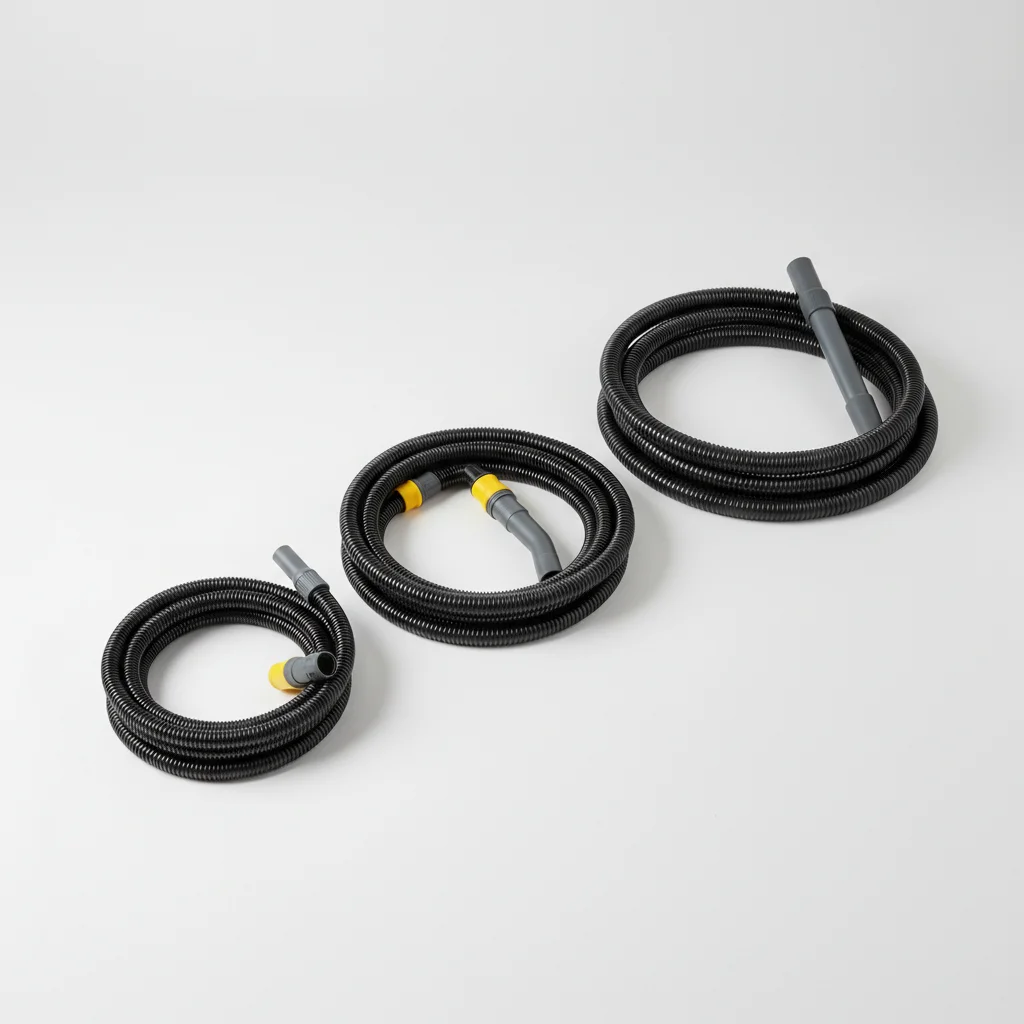
Choosing the right length for your shop vacuum hose is crucial for efficient cleaning and maneuverability. The ideal length typically ranges from 7 to 20 feet, depending on your specific needs and workspace size. A shorter hose (7-10 feet) is excellent for compact areas and tasks requiring close proximity to the vacuum, while longer hoses (15-20 feet) offer greater reach for larger workshops or vehicle detailing without constantly moving the unit.
Understanding Your Workspace and Reach Needs
Before selecting a hose length, assess your primary use cases. For small garages, home workshops, or quick cleanups around a single workstation, a 7-foot or 10-foot hose often suffices. This length minimizes tangles and provides ample suction power due to less air resistance. If you frequently clean vehicles, large workshops, or need to reach high ceilings and distant corners, a 15-foot or 20-foot hose will save you significant time and effort by reducing the need to reposition the shop vacuum. Consider the maximum distance from your power outlet and the areas you need to cover.
Impact of Hose Length on Suction Power
It’s a common misconception that longer hoses drastically reduce suction power. While there is a slight decrease in CFM (cubic feet per minute) and static pressure with increased hose length due to greater friction and air resistance, for most residential and light commercial applications, this difference is negligible up to about 20 feet. High-powered shop vacuums are designed to maintain effective suction even with extended hoses. However, excessively long hoses (e.g., over 25 feet) can indeed lead to a noticeable drop in performance, especially with smaller, less powerful units. Always match the hose length to your vacuum’s motor strength.
Maneuverability and Storage Considerations
|
Our Picks for the Best Shop Vacuum in 2026
As an Amazon Associate I earn from qualifying purchases.
|
||
| Num | Product | Action |
|---|---|---|
| 1 | Stanley - SL18129 Wet/Dry Vacuum, 4 Gallon, 4 Horsepower, Stainless Steel Tank Silver+yellow |

|
| 2 | Shop-Vac 5985005 6 Gallon Wet/Dry Vacuum, 3.5 Peak HP, 1.25 Inch Diameter x 7 Foot Hose, 6 Foot Cord, Ideal for Home, Garage, and Workshop Cleaning |
|
| 3 | Vacmaster Wet/Dry Vacuum with Detachable Blower 6 Gallon 5 Peak HP-VBVB611PF 1101 |
|
| 4 | Kärcher Shop Vacuum WD 4, 5.3 Gal, 3.8 Peak HP, 33 ft Reach, Wet Dry Vacuum Cleaner, Heavy Duty, Blower Function, Crevice Tool, Floor Nozzle, Great for DIY Projects and Workshops |
|
| 5 | Shop-Vac 5989305 Wet/Dry Vacuum, 5 Gallon, 4.5 Peak HP Stainless Steel Vacuum, 1.25 Inch Diameter x 7 Foot Hose, 6 Ft Cord Length, Ideal for Jobsite, Garage, Car & Workshop |
|
| 6 | DEWALT DXV16PA 16 Gallon Poly Wet/Dry Vac/Acc, 6.5HP Shop Vacuum Wet/Dry for Jobsite/Workshop, Yellow |
|
| 7 | Vacmaster VF408 4 Gallon Wet/Dry Vacuum Cleaner with 2-Stage Motor |
|
| 8 | Armor All VO408S 0901 4 Gallon 3 Peak HP Stainless Steel Wet/Dry Vacuum, Orange |
|
| 9 | Armor All VBV809 0901 8-Gallon 4.5 Peak HP Wet/Dry Vacuum with Detachable Blower, Orange |
|
| 10 | Shop-Vac 9522205 5 Gallon 5.5 Peak HP Hangup Wet/Dry Vacuum, 1.25 Inch Diameter x 18 Foot Hose, 6 Foot Cord, Wall Mount Included, Ideal for Garage, Workshop & Home |
|
A longer hose provides superior reach but can be more challenging to store and manage. Coiling a 20-foot hose neatly requires more space and effort than a 7-foot one. Conversely, a short hose might limit your movement, forcing you to drag the vacuum around more frequently, which can be inconvenient and potentially damage the unit or your workspace. Evaluate your storage capacity and how often you’ll be moving the vacuum. Some users opt for a medium-length hose (10-12 feet) as a versatile compromise, offering a good balance of reach and manageability.
- 7-10 feet: Ideal for small spaces, benchtop work, and quick, localized cleanups.
- 12-15 feet: A versatile option for medium-sized workshops, garages, and general home use.
- 18-20 feet: Best for large workshops, car detailing, and reaching distant areas without moving the vacuum.
- Over 20 feet: Generally not recommended for optimal suction unless paired with a very high-powered industrial unit.
Hose Diameter and Compatibility
Beyond length, the diameter of your shop vacuum hose also plays a critical role. Common diameters include 1-1/4 inches, 1-7/8 inches, and 2-1/2 inches. A larger diameter hose generally allows for better airflow and is less prone to clogging, especially when picking up larger debris. Ensure that any replacement or extension hose you purchase is compatible with your shop vacuum’s inlet port and existing attachments. Many manufacturers offer adapter kits to bridge different hose sizes, providing greater flexibility.
When to Consider an Extension Hose
If your current hose is too short for specific tasks, an extension hose can be a cost-effective solution rather than buying an entirely new, longer hose. Extension hoses typically connect securely to your existing hose, providing the extra reach you need. This approach is particularly useful if you only occasionally require a longer reach and prefer the compactness of a shorter hose for daily use. Always check for a tight, secure connection to prevent air leaks, which can compromise suction.
