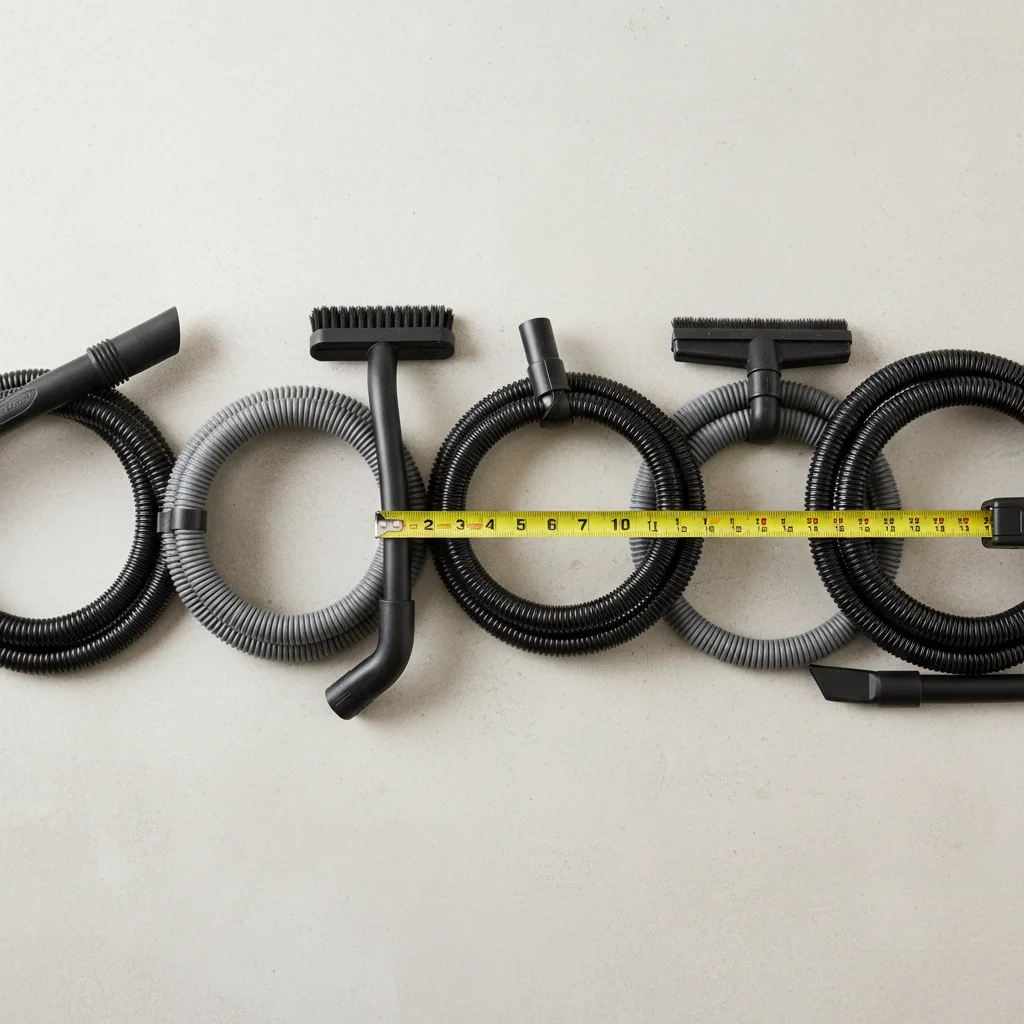
Choosing the correct shop vacuum hose size is crucial for optimal performance, and generally, a 2.5-inch diameter hose offers the best balance for most workshop and home garage tasks. While smaller hoses are more flexible, they restrict airflow, reducing suction power, especially with larger debris. Conversely, larger hoses provide superior airflow but can be cumbersome and less adaptable for intricate work.
Understanding Shop Vacuum Hose Diameters
Shop vacuum hoses typically come in several standard diameters: 1.25 inches, 1.5 inches, and 2.5 inches. The 1.25-inch hose is often found on smaller, portable shop vacuums and is suitable for light-duty cleaning, such as car interiors or fine dust collection from small power tools. Its flexibility makes it easy to maneuver in tight spaces. However, it’s prone to clogging when dealing with wood chips, larger debris, or wet materials.
The 1.5-inch diameter hose offers a slight improvement in airflow over the 1.25-inch, making it a versatile option for general workshop cleanup and connecting to some smaller stationary tools. It strikes a balance between flexibility and suction power, reducing the likelihood of clogs compared to its smaller counterpart.
The Versatility of 2.5-Inch Hoses
For most serious DIYers and professionals, the 2.5-inch shop vacuum hose is the workhorse. This larger diameter significantly increases airflow, allowing for more powerful suction and efficient collection of a wider range of debris, including wood shavings, drywall dust, and larger workshop scraps. It’s ideal for connecting to larger power tools like table saws, miter saws, and planers, where a high volume of dust and chips is generated. While less flexible than smaller hoses, its superior performance often outweighs this minor inconvenience.
- 1.25-inch: Best for car detailing, small spills, and fine dust from handheld tools.
- 1.5-inch: Good for general workshop cleanup and light-duty tool connection.
- 2.5-inch: Optimal for heavy-duty workshop tasks, large debris, and connecting to major power tools.
- Larger than 2.5-inch: Reserved for industrial applications or dedicated dust collection systems.
Impact of Hose Length on Performance
|
Our Picks for the Best Shop Vacuum in 2026
As an Amazon Associate I earn from qualifying purchases.
|
||
| Num | Product | Action |
|---|---|---|
| 1 | Vacmaster VF408 4 Gallon Wet/Dry Vacuum Cleaner with 2-Stage Motor |

|
| 2 | Armor All VO408S 0901 4 Gallon 3 Peak HP Stainless Steel Wet/Dry Vacuum, Orange |
|
| 3 | Shop-Vac 5989305 Wet/Dry Vacuum, 5 Gallon, 4.5 Peak HP Stainless Steel Vacuum, 1.25 Inch Diameter x 7 Foot Hose, 6 Ft Cord Length, Ideal for Jobsite, Garage, Car & Workshop |
|
| 4 | Stanley - SL18129 Wet/Dry Vacuum, 4 Gallon, 4 Horsepower, Stainless Steel Tank Silver+yellow |
|
| 5 | Shop-Vac 9522205 5 Gallon 5.5 Peak HP Hangup Wet/Dry Vacuum, 1.25 Inch Diameter x 18 Foot Hose, 6 Foot Cord, Wall Mount Included, Ideal for Garage, Workshop & Home |
|
| 6 | Shop-Vac 5985005 6 Gallon Wet/Dry Vacuum, 3.5 Peak HP, 1.25 Inch Diameter x 7 Foot Hose, 6 Foot Cord, Ideal for Home, Garage, and Workshop Cleaning |
|
| 7 | Vacmaster Wet/Dry Vacuum with Detachable Blower 6 Gallon 5 Peak HP-VBVB611PF 1101 |
|
| 8 | Armor All VBV809 0901 8-Gallon 4.5 Peak HP Wet/Dry Vacuum with Detachable Blower, Orange |
|
| 9 | Kärcher Shop Vacuum WD 4, 5.3 Gal, 3.8 Peak HP, 33 ft Reach, Wet Dry Vacuum Cleaner, Heavy Duty, Blower Function, Crevice Tool, Floor Nozzle, Great for DIY Projects and Workshops |
|
| 10 | DEWALT DXV16PA 16 Gallon Poly Wet/Dry Vac/Acc, 6.5HP Shop Vacuum Wet/Dry for Jobsite/Workshop, Yellow |
|
Beyond diameter, the length of your shop vacuum hose also plays a significant role in performance. Longer hoses, while offering greater reach, can reduce suction power due to increased friction and air resistance. For optimal performance, aim for the shortest hose length that still allows you to comfortably reach your work area. If you require extended reach, consider a larger diameter hose to compensate for the potential loss in suction.
Choosing the Right Hose for Specific Applications
When selecting a hose, consider your primary use cases. If you frequently clean up fine sawdust from a random orbital sander, a 1.5-inch hose might suffice. However, if you’re regularly clearing wood chips from a planer or large debris from a construction site, a 2.5-inch hose is indispensable. Many shop vacuums come with a standard 2.5-inch hose, but investing in an additional hose of a different size can greatly enhance the versatility of your unit.
Maintenance and Compatibility
Regularly inspect your shop vacuum hose for cracks, tears, or blockages, as these can significantly impair suction. Clear any obstructions promptly to maintain peak performance. When purchasing replacement hoses or accessories, ensure compatibility with your shop vacuum’s inlet port. Adapters are available for connecting hoses of different diameters to your vacuum or tools, offering greater flexibility.
