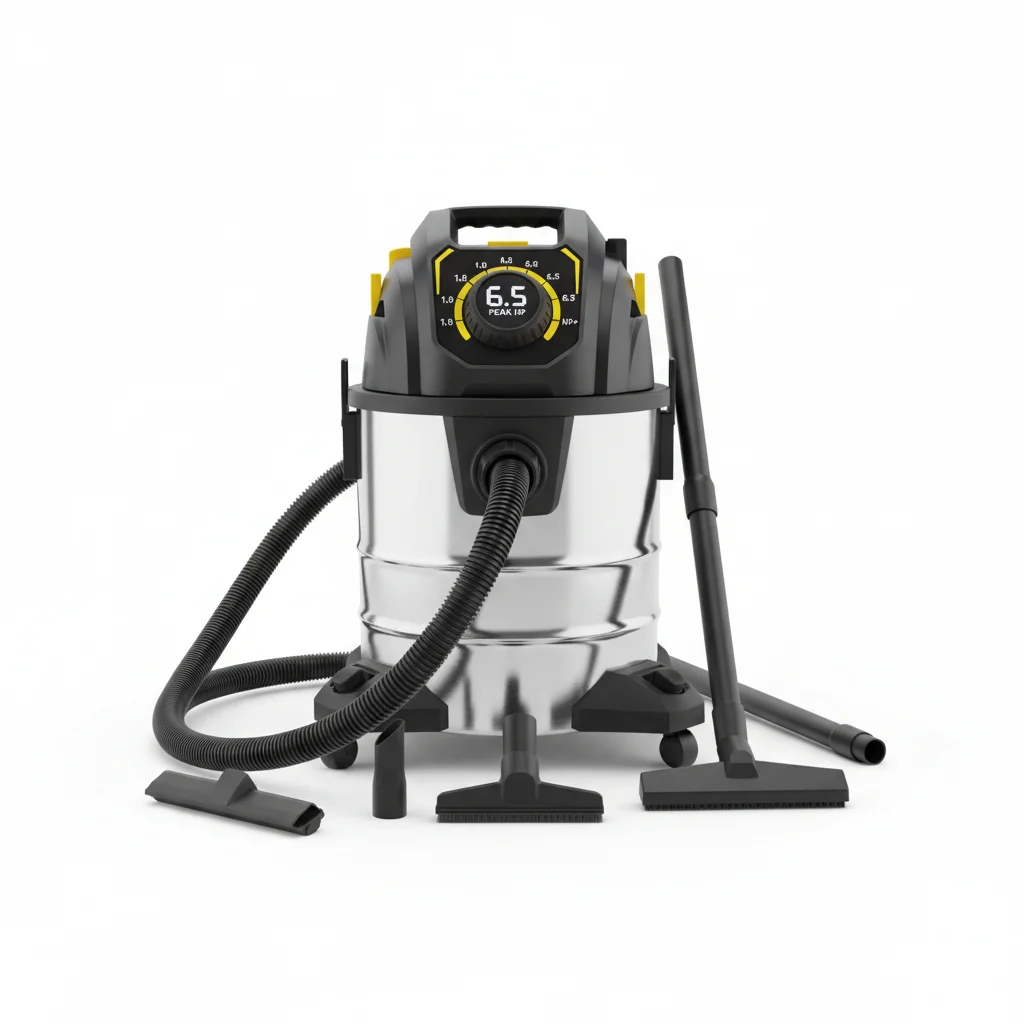
Determining the ideal shop vacuum horsepower depends largely on the tasks you plan to tackle. For most DIY enthusiasts and light workshop use, a shop vacuum with 3 to 5 peak horsepower is more than sufficient. This range provides ample suction for sawdust, wood chips, and general debris without being overkill. However, for heavy-duty professional applications or extensive wet pickup, you might consider models with 6.0 peak horsepower or higher to ensure robust performance and longevity.
Understanding Peak Horsepower vs. Running Horsepower
When evaluating shop vacuums, you’ll often see ‘peak horsepower’ advertised. This figure represents the maximum power output the motor can achieve for a brief period, typically during startup. Running horsepower, on the other hand, indicates the continuous power the motor can sustain during operation. While peak horsepower can be a useful comparative metric, it’s important to understand that a higher peak HP doesn’t always directly translate to superior sustained suction. Factors like airflow (CFM) and sealed suction (inches of water lift) are equally, if not more, critical for real-world performance.
For general home use, a 3-4 peak HP unit offers a good balance of power and efficiency. These models are typically lighter, more compact, and consume less energy. They are perfectly capable of handling spills, car interiors, and workshop cleanup after small projects. If your tasks involve more substantial debris or frequent use, stepping up to a 5-6 peak HP model will provide a noticeable increase in suction and durability.
Horsepower for Different Applications
The specific application dictates the necessary horsepower. For instance, a small 2.5-gallon shop vacuum designed for quick cleanups in a car or apartment might only have 1.5-2.0 peak HP, which is perfectly adequate for its intended purpose. Conversely, a large 16-gallon industrial shop vacuum used for construction site cleanup or flood restoration will likely feature 6.5 peak HP or more to handle large volumes of heavy debris and water efficiently.
Consider the type of debris you’ll be cleaning. Fine dust, like drywall dust or concrete dust, requires not just high suction but also excellent filtration. While horsepower contributes to suction, the filter system is paramount here. For larger, heavier debris like wood scraps, nails, or wet leaves, higher horsepower directly translates to better lifting power and faster cleanup.
When More Horsepower is Beneficial
|
Our Picks for the Best Shop Vacuum in 2026
As an Amazon Associate I earn from qualifying purchases.
|
||
| Num | Product | Action |
|---|---|---|
| 1 | Armor All VO408S 0901 4 Gallon 3 Peak HP Stainless Steel Wet/Dry Vacuum, Orange |

|
| 2 | DEWALT DXV16PA 16 Gallon Poly Wet/Dry Vac/Acc, 6.5HP Shop Vacuum Wet/Dry for Jobsite/Workshop, Yellow |
|
| 3 | Armor All VBV809 0901 8-Gallon 4.5 Peak HP Wet/Dry Vacuum with Detachable Blower, Orange |
|
| 4 | Kärcher Shop Vacuum WD 4, 5.3 Gal, 3.8 Peak HP, 33 ft Reach, Wet Dry Vacuum Cleaner, Heavy Duty, Blower Function, Crevice Tool, Floor Nozzle, Great for DIY Projects and Workshops |
|
| 5 | Stanley - SL18129 Wet/Dry Vacuum, 4 Gallon, 4 Horsepower, Stainless Steel Tank Silver+yellow |
|
| 6 | Shop-Vac 5989305 Wet/Dry Vacuum, 5 Gallon, 4.5 Peak HP Stainless Steel Vacuum, 1.25 Inch Diameter x 7 Foot Hose, 6 Ft Cord Length, Ideal for Jobsite, Garage, Car & Workshop |
|
| 7 | Shop-Vac 9522205 5 Gallon 5.5 Peak HP Hangup Wet/Dry Vacuum, 1.25 Inch Diameter x 18 Foot Hose, 6 Foot Cord, Wall Mount Included, Ideal for Garage, Workshop & Home |
|
| 8 | Vacmaster VF408 4 Gallon Wet/Dry Vacuum Cleaner with 2-Stage Motor |
|
| 9 | Shop-Vac 5985005 6 Gallon Wet/Dry Vacuum, 3.5 Peak HP, 1.25 Inch Diameter x 7 Foot Hose, 6 Foot Cord, Ideal for Home, Garage, and Workshop Cleaning |
|
| 10 | Vacmaster Wet/Dry Vacuum with Detachable Blower 6 Gallon 5 Peak HP-VBVB611PF 1101 |
|
There are specific scenarios where investing in a higher horsepower shop vacuum pays off significantly. If you frequently work with power tools that generate a lot of chips and dust, such as planers, jointers, or table saws, a 5.0+ peak HP unit will keep your workspace cleaner and your tools running more efficiently. Similarly, for extensive wet pickup, like draining a clogged sink or cleaning up a basement flood, the extra power helps move large volumes of water quickly and effectively, reducing the risk of motor strain.
Professional contractors or those with large workshops will almost always benefit from the most powerful shop vacuums available. These units are built for continuous, demanding use and often come with larger capacities and more robust components. They can handle everything from fine construction dust to heavy demolition debris, making them indispensable tools on a job site.
Key Factors Beyond Horsepower
While horsepower is a primary consideration, it’s not the only one. Always look at the complete picture:
- CFM (Cubic Feet per Minute): This measures airflow, indicating how much air the vacuum moves. Higher CFM is crucial for picking up light, bulky debris.
- Water Lift (Sealed Suction): Measured in inches of water, this indicates the maximum suction power. Higher water lift is essential for heavy debris and wet pickup.
- Tank Capacity: A larger tank means less frequent emptying, especially for big jobs.
- Hose Diameter and Length: Wider hoses (2.5 inches or more) are less prone to clogging with large debris.
- Filtration System: HEPA filters are vital for capturing fine dust and allergens.
Ultimately, the best shop vacuum for you is one that matches its power and features to your specific needs. Don’t overspend on excessive horsepower if your tasks are light, but don’t undersize if you anticipate heavy-duty use.
