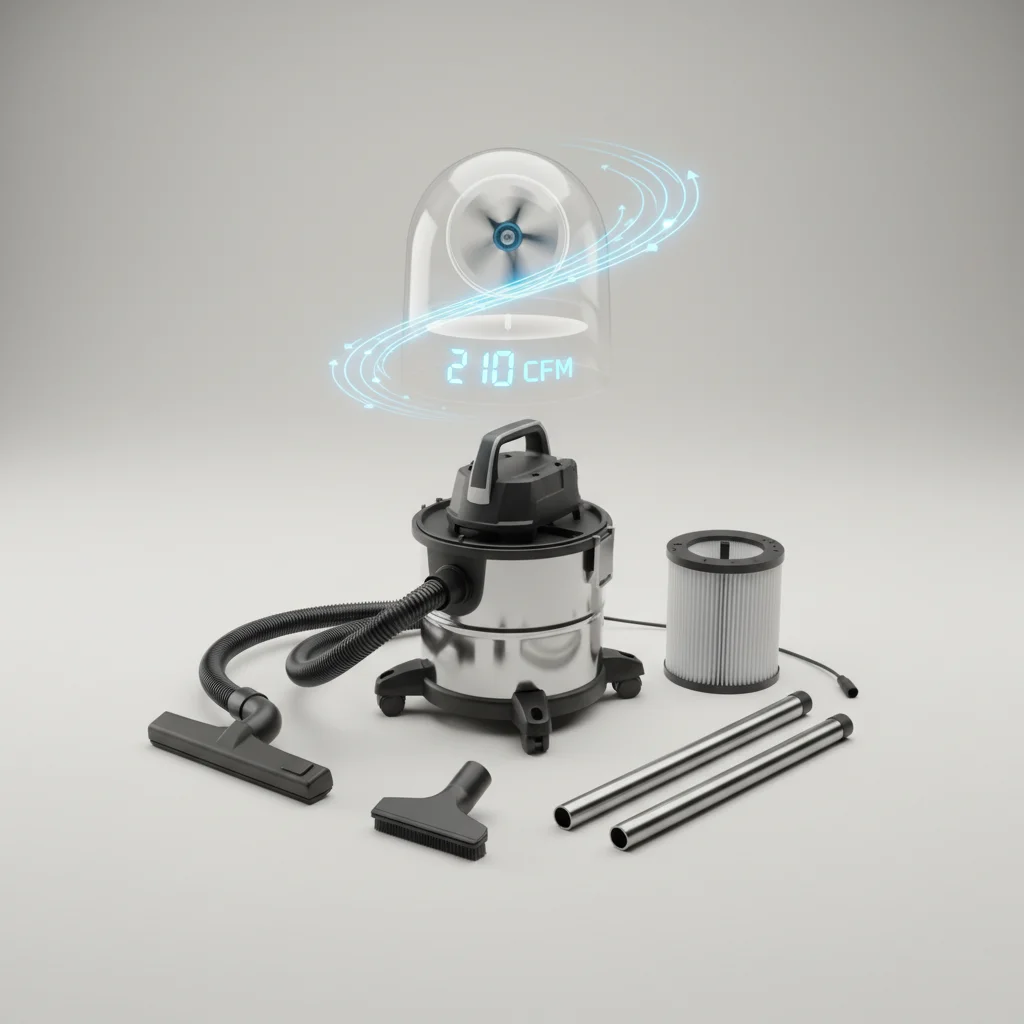
Determining the ideal shop vacuum CFM (Cubic Feet per Minute) depends largely on the specific tasks you’ll be performing, but for most general workshop and home use, a shop vacuum with 150-200 CFM provides ample suction for effective debris and dust collection. This range offers a good balance between power and efficiency, handling everything from sawdust and wood chips to drywall dust and liquid spills without being overkill or underpowered.
Understanding CFM and Its Importance
CFM measures the volume of air a shop vacuum can move in one minute. A higher CFM generally indicates greater suction power, which is crucial for picking up larger debris or for applications requiring rapid dust extraction. However, CFM isn’t the only factor; static pressure (measured in inches of water lift) also plays a significant role, indicating the vacuum’s ability to lift heavy materials or overcome resistance in hoses and filters. For general cleanup, a strong CFM is often the primary consideration.
When selecting a shop vacuum, consider the types of materials you’ll be cleaning. Fine dust, like that from sanding or drywall, benefits from higher CFM to prevent particles from becoming airborne. Larger, heavier debris, such as wood scraps or metal shavings, also requires a robust CFM to ensure efficient pickup and prevent clogs in the hose.
Matching CFM to Your Workshop Needs
The size and type of your workshop or work area heavily influence the CFM requirements. A small home garage or a hobbyist’s woodworking space might be well-served by a shop vacuum in the 150-180 CFM range. These models are typically more compact and easier to maneuver, making them ideal for occasional use or smaller projects. For professional workshops or those with extensive dust-producing tools, a shop vacuum offering 200 CFM or more will provide the necessary power for continuous, heavy-duty operation.
Consider the tools you’ll be connecting your shop vacuum to. Many power tools, such as table saws, miter saws, and sanders, have dust ports designed to work with shop vacuums. Matching the shop vacuum’s CFM to the dust collection needs of these tools is essential for maintaining a clean and safe working environment. An undersized vacuum will struggle to keep up, leading to dust accumulation and potential health hazards.
Factors Affecting Shop Vacuum Performance
|
Our Picks for the Best Shop Vacuum in 2026
As an Amazon Associate I earn from qualifying purchases.
|
||
| Num | Product | Action |
|---|---|---|
| 1 | Vacmaster VF408 4 Gallon Wet/Dry Vacuum Cleaner with 2-Stage Motor |

|
| 2 | Shop-Vac 5989305 Wet/Dry Vacuum, 5 Gallon, 4.5 Peak HP Stainless Steel Vacuum, 1.25 Inch Diameter x 7 Foot Hose, 6 Ft Cord Length, Ideal for Jobsite, Garage, Car & Workshop |
|
| 3 | Kärcher Shop Vacuum WD 4, 5.3 Gal, 3.8 Peak HP, 33 ft Reach, Wet Dry Vacuum Cleaner, Heavy Duty, Blower Function, Crevice Tool, Floor Nozzle, Great for DIY Projects and Workshops |
|
| 4 | Shop-Vac 9522205 5 Gallon 5.5 Peak HP Hangup Wet/Dry Vacuum, 1.25 Inch Diameter x 18 Foot Hose, 6 Foot Cord, Wall Mount Included, Ideal for Garage, Workshop & Home |
|
| 5 | Stanley - SL18129 Wet/Dry Vacuum, 4 Gallon, 4 Horsepower, Stainless Steel Tank Silver+yellow |
|
| 6 | Armor All VO408S 0901 4 Gallon 3 Peak HP Stainless Steel Wet/Dry Vacuum, Orange |
|
| 7 | DEWALT DXV16PA 16 Gallon Poly Wet/Dry Vac/Acc, 6.5HP Shop Vacuum Wet/Dry for Jobsite/Workshop, Yellow |
|
| 8 | Vacmaster Wet/Dry Vacuum with Detachable Blower 6 Gallon 5 Peak HP-VBVB611PF 1101 |
|
| 9 | Armor All VBV809 0901 8-Gallon 4.5 Peak HP Wet/Dry Vacuum with Detachable Blower, Orange |
|
| 10 | Shop-Vac 5985005 6 Gallon Wet/Dry Vacuum, 3.5 Peak HP, 1.25 Inch Diameter x 7 Foot Hose, 6 Foot Cord, Ideal for Home, Garage, and Workshop Cleaning |
|
Several factors can impact the effective CFM of your shop vacuum. The diameter and length of the hose play a crucial role; longer or narrower hoses can reduce airflow and suction power. Using the correct hose size for your application is vital for maximizing performance. Additionally, the condition of your filter significantly affects CFM. A clogged or dirty filter restricts airflow, leading to a noticeable drop in suction. Regular cleaning or replacement of filters is essential for maintaining optimal performance.
The type of attachments and nozzles you use can also influence how effectively your shop vacuum operates. Wide nozzles are great for covering large areas quickly, while narrower crevice tools provide concentrated suction for tight spaces. Experimenting with different attachments can help you achieve the best results for various cleaning tasks.
Recommended CFM Ranges for Common Tasks
To help you choose the right shop vacuum, here are some recommended CFM ranges for common applications:
- Light-Duty Cleanup (e.g., car interiors, small spills): 100-150 CFM
- General Workshop Use (e.g., sawdust, wood chips): 150-200 CFM
- Heavy-Duty Dust Collection (e.g., drywall dust, concrete dust): 200-250+ CFM
- Wet Pickup (e.g., flooded basements, large liquid spills): 180-220+ CFM
For a versatile option that handles most home and workshop tasks, consider a model like the, which offers a robust 180 CFM and excellent wet/dry capabilities. If you’re dealing with significant fine dust or require continuous operation in a professional setting, a higher CFM unit such as themight be a better investment.
Maximizing Your Shop Vacuum’s CFM
Even with a high-CFM shop vacuum, proper maintenance and usage are key to maximizing its performance. Regularly check and clean your filter to prevent airflow restrictions. If your vacuum uses bags, ensure they are not overfilled, as this can also impede suction. Inspect hoses and attachments for any blockages or damage that could reduce efficiency. By following these simple tips, you can ensure your shop vacuum consistently delivers its rated CFM and provides powerful cleaning for all your projects.
