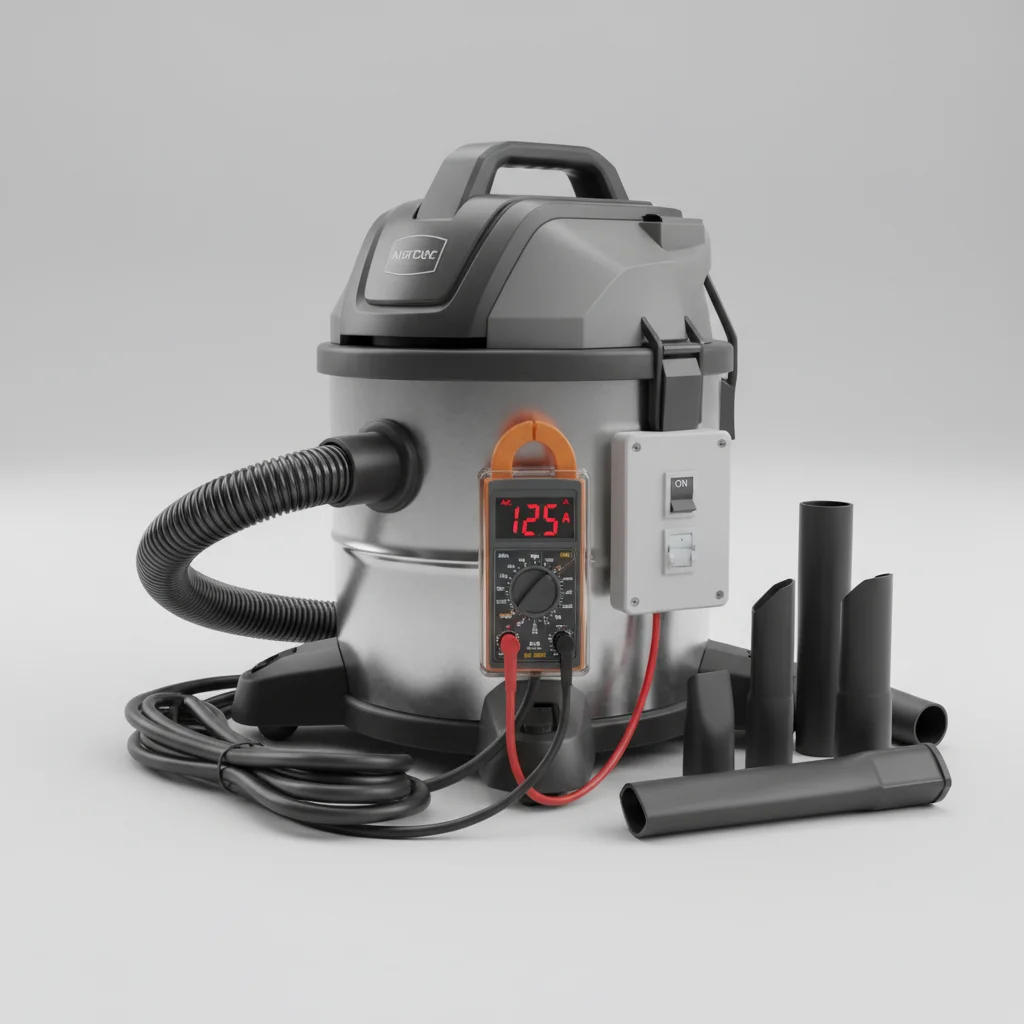
Understanding shop vacuum amps is crucial for ensuring safe and efficient operation, especially when considering your electrical circuit capacity. Most standard shop vacuums designed for home and light professional use typically draw between 8 to 12 amps. However, larger, more powerful industrial models can exceed 15 amps, requiring dedicated circuits to prevent tripping breakers.
Factors Influencing Shop Vacuum Amperage Draw
Several factors contribute to the amperage a shop vacuum consumes. The motor’s horsepower (HP) is a primary determinant; higher HP motors generally require more amps to operate. Additionally, the vacuum’s design, such as the efficiency of its fan and the size of its intake, can impact power draw. Wet/dry capabilities don’t inherently increase amperage, but the motor size associated with these more robust units often does.
Consider the type of work you’ll be doing. Continuous heavy-duty use, like extended wet pickup or vacuuming dense debris, will keep the motor working harder and drawing closer to its maximum rated amperage. Intermittent light use, such as quick cleanups, will result in lower average amperage draw.
Calculating Your Circuit Capacity for Shop Vacuums
Before plugging in a new shop vacuum, it’s essential to know your circuit’s capacity. Standard household circuits are typically rated for 15 or 20 amps. To avoid overloading, the total amperage of all devices plugged into a single circuit should not exceed 80% of its rating. For a 15-amp circuit, this means a maximum of 12 amps; for a 20-amp circuit, it’s 16 amps. Always check the label on your shop vacuum for its specific amperage rating.
- Identify the circuit breaker’s amperage rating in your electrical panel.
- List all devices currently connected to that circuit.
- Sum the amperage draw of all devices, including your shop vacuum.
- Ensure the total amperage is below 80% of the circuit’s rating.
- If the total exceeds the limit, move some devices to another circuit or use a lower-amp shop vacuum.
Tips for Safe Shop Vacuum Operation and Power Management
|
Our Picks for the Best Shop Vacuum in 2026
As an Amazon Associate I earn from qualifying purchases.
|
||
| Num | Product | Action |
|---|---|---|
| 1 | Shop-Vac 5985005 6 Gallon Wet/Dry Vacuum, 3.5 Peak HP, 1.25 Inch Diameter x 7 Foot Hose, 6 Foot Cord, Ideal for Home, Garage, and Workshop Cleaning |

|
| 2 | DEWALT DXV16PA 16 Gallon Poly Wet/Dry Vac/Acc, 6.5HP Shop Vacuum Wet/Dry for Jobsite/Workshop, Yellow |
|
| 3 | Kärcher Shop Vacuum WD 4, 5.3 Gal, 3.8 Peak HP, 33 ft Reach, Wet Dry Vacuum Cleaner, Heavy Duty, Blower Function, Crevice Tool, Floor Nozzle, Great for DIY Projects and Workshops |
|
| 4 | Vacmaster Wet/Dry Vacuum with Detachable Blower 6 Gallon 5 Peak HP-VBVB611PF 1101 |
|
| 5 | Armor All VBV809 0901 8-Gallon 4.5 Peak HP Wet/Dry Vacuum with Detachable Blower, Orange |
|
| 6 | Vacmaster VF408 4 Gallon Wet/Dry Vacuum Cleaner with 2-Stage Motor |
|
| 7 | Shop-Vac 5989305 Wet/Dry Vacuum, 5 Gallon, 4.5 Peak HP Stainless Steel Vacuum, 1.25 Inch Diameter x 7 Foot Hose, 6 Ft Cord Length, Ideal for Jobsite, Garage, Car & Workshop |
|
| 8 | Stanley - SL18129 Wet/Dry Vacuum, 4 Gallon, 4 Horsepower, Stainless Steel Tank Silver+yellow |
|
| 9 | Armor All VO408S 0901 4 Gallon 3 Peak HP Stainless Steel Wet/Dry Vacuum, Orange |
|
| 10 | Shop-Vac 9522205 5 Gallon 5.5 Peak HP Hangup Wet/Dry Vacuum, 1.25 Inch Diameter x 18 Foot Hose, 6 Foot Cord, Wall Mount Included, Ideal for Garage, Workshop & Home |
|
To ensure safe and effective use of your shop vacuum, especially high-amperage models, always plug it directly into a wall outlet whenever possible. Avoid using long extension cords, especially thin-gauge ones, as they can cause voltage drop and increase amperage draw, leading to overheating and potential damage to the vacuum’s motor or the cord itself. If an extension cord is necessary, use a heavy-duty, appropriately rated cord (e.g., 12-gauge for longer runs or higher amperage vacuums).
Regularly inspect your shop vacuum’s power cord for any signs of damage, such as fraying or cuts. A damaged cord can be a fire hazard and lead to inefficient operation. Also, ensure your vacuum’s filter is clean; a clogged filter makes the motor work harder, potentially increasing its amperage draw and reducing its lifespan.
Common Amperage Ranges for Popular Shop Vacuum Sizes
The amperage draw often correlates with the shop vacuum’s tank size and intended use. Smaller, portable shop vacuums (1-5 gallons) typically draw 5-8 amps, making them suitable for most household circuits. Mid-sized units (6-14 gallons), popular for garage and workshop use, usually fall in the 8-12 amp range. Larger, heavy-duty shop vacuums (15+ gallons) designed for professional or extensive cleanup tasks can draw 12-15+ amps, often necessitating a dedicated 20-amp circuit. Always consult the manufacturer’s specifications for precise amperage information for your specific model.
