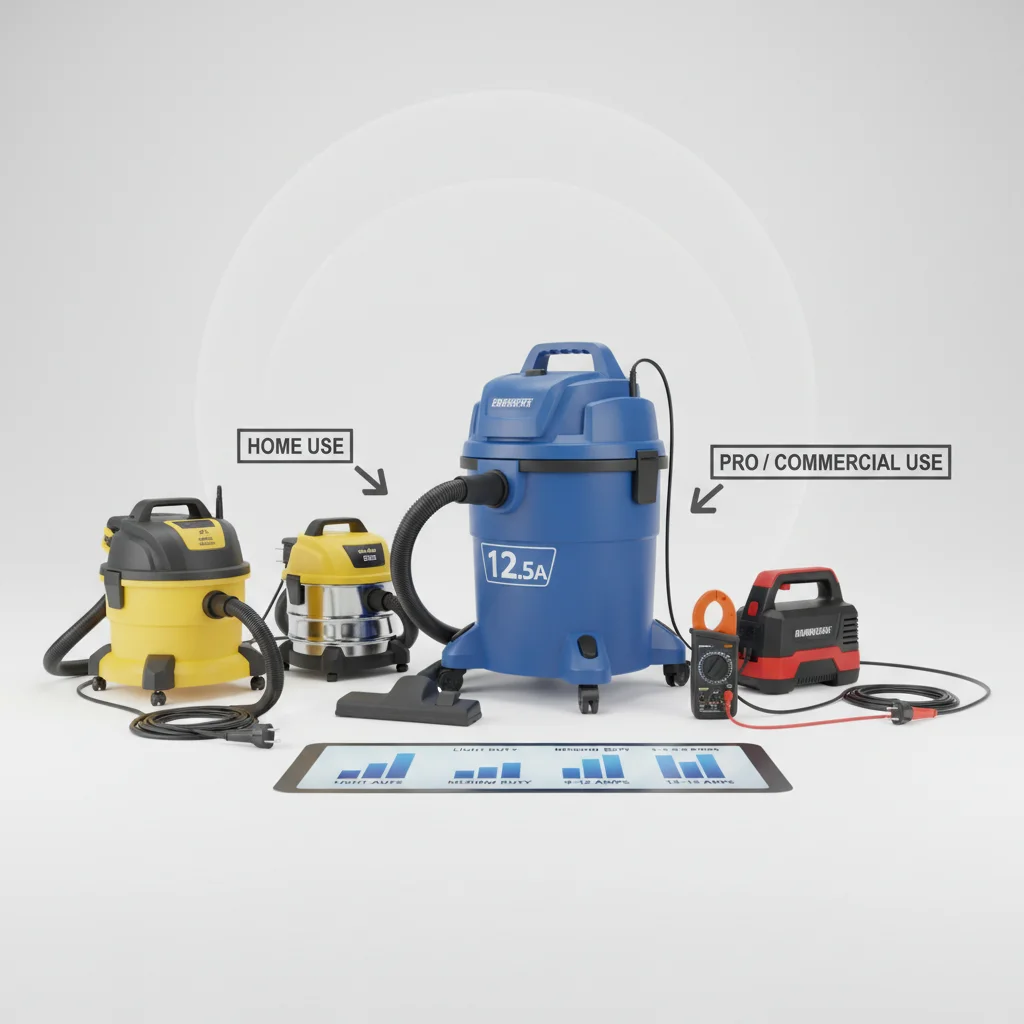
Understanding shop vacuum amperage is crucial for selecting the right model for your needs and ensuring electrical safety. Most standard shop vacuums for home use draw between 8 to 12 amps, while heavy-duty professional models can range from 12 to 15 amps or even higher. This amperage directly impacts the motor’s power and, consequently, the suction and airflow capabilities of the unit. Matching the vacuum’s amperage to your electrical circuit’s capacity is essential to prevent tripped breakers and potential hazards.
What Amperage Means for Your Shop Vacuum’s Performance
Amperage, or amps, is a measure of electrical current. In the context of a shop vacuum, it indicates how much electricity the motor requires to operate. A higher amperage generally correlates with a more powerful motor, which translates to greater suction power (measured in CFM – cubic feet per minute) and water lift (measured in inches of water). For light-duty tasks like cleaning up sawdust from a small DIY project, a lower amperage unit (8-10 amps) might suffice. However, for demanding jobs such as wet pickup of large volumes of liquid or continuous use with fine dust, a higher amperage model (12-15 amps) will offer superior and more consistent performance.
Matching Amperage to Your Electrical Circuits
It’s vital to consider the electrical circuit you’ll be using your shop vacuum on. Most household circuits are rated for either 15 or 20 amps. Plugging a 15-amp shop vacuum into a circuit that’s already powering other appliances and exceeding its 15-amp limit will likely trip the breaker. Always check the circuit breaker’s rating before operating a high-amperage shop vacuum. For professional-grade vacuums with very high amperage, a dedicated 20-amp circuit is often recommended to ensure safe and uninterrupted operation. Using an extension cord can also impact performance and safety; always use a heavy-gauge, outdoor-rated extension cord that can handle the vacuum’s amperage requirements.
Amperage vs. Horsepower: What’s the Difference?
While often used interchangeably by manufacturers to indicate power, amperage and horsepower are distinct measurements. Amperage refers to the electrical current drawn by the motor, whereas horsepower (HP) is a measure of the motor’s mechanical output power. Generally, a higher amperage will result in higher horsepower, but the relationship isn’t always linear due to motor efficiency and design. Some manufacturers might advertise

I picked up a new shop vac that was advertised as ‘heavy-duty professional,’ but it only draws 10 amps. I was expecting more power based on the description, especially after reading that professional models can go up to 15 amps or higher. It’s okay for general cleanup, but it struggles with really fine dust and heavier debris. Wish I’d paid closer attention to the actual amperage before buying.
I found the breakdown of how amperage relates to suction power and water lift really helpful. I needed something for a lot of wet messes in my workshop, and understanding that higher amps mean better water lift helped me choose a more powerful unit. It’s been great for cleaning up spills and even some minor flooding. My only minor gripe is that it’s a bit louder than I expected.
I was always tripping breakers in my garage when using my old shop vac, and I couldn’t figure out why. This explanation of matching the vacuum’s amperage to the circuit capacity was a game-changer. I upgraded to a 12-amp model, and now I can run it without any issues, even with other tools on the same circuit. Huge difference in performance too!
This really clarified why my old shop vac felt so weak. I had no idea that 8-12 amps was standard for home use, and mine was probably on the lower end. I invested in a new 12-amp model, and the difference in airflow and suction is incredible. My garage has never been cleaner, and I haven’t had a single tripped breaker since.