The relentless accumulation of dust, debris, and unforeseen spills in workshops, garages, and job sites is a universal challenge. Traditional household vacuums often fall short, struggling with the heavy-duty demands of construction debris, sawdust, or liquid messes. This is where a robust shop vacuum becomes an indispensable tool, transforming daunting cleanups into manageable tasks. With the increasing demand for versatility and freedom of movement, cordless shop vacuums have emerged as game-changers, and Milwaukee’s M18 line stands at the forefront.
This comprehensive guide delves into the world of shop vacuums, highlighting why these powerful machines are essential for any serious DIYer or professional. We’ll explore the Milwaukee M18 Cordless Shop Vacuum range in detail, from its compact portable models to the heavy-duty M18 FUEL systems, dissecting their performance, features, and ideal applications. By the end, you’ll have a clear understanding of the M18’s capabilities and how to select the perfect model to revolutionize your cleanup routine.
What is a Shop Vacuum and Why Do You Need One?
A shop vacuum, often referred to as a wet/dry vacuum, is a heavy-duty cleaning appliance designed to tackle messes that would overwhelm a standard household vacuum cleaner. Unlike their domestic counterparts, shop vacuums are built to handle not only dry debris like sawdust, wood shavings, and drywall dust but also liquids, sharp objects like nails and screws, and even mud. Their robust construction and powerful motors make them essential tools for maintaining cleanliness and safety in demanding environments. For more shop vacuum guides on this site.
The primary applications for a shop vacuum are vast and varied. They are indispensable in woodworking shops for dust collection, construction sites for post-project cleanup, and automotive garages for detailing interiors or cleaning up oil spills. Beyond these professional settings, homeowners find them invaluable for DIY projects, basement flood remediation, fireplace cleaning, or simply keeping a messy garage in pristine condition. The benefits of owning a shop vacuum extend beyond mere cleaning; they offer unmatched versatility, superior suction power for challenging materials, and exceptional durability to withstand harsh working conditions. This makes them a fundamental investment for anyone serious about efficient and thorough cleanup.
Understanding Shop Vacuum Types and Key Specifications
Choosing the right shop vacuum requires an understanding of the various types and their core performance metrics. These machines are not one-size-fits-all, and matching the right specifications to your cleaning needs is crucial for optimal results.
By Power and Performance Metrics
The true strength of a shop vacuum is often quantified by several key performance indicators:
- Peak Horsepower (HP): This metric indicates the motor’s raw output. While a higher HP generally suggests more power, it’s not the sole determinant of cleaning effectiveness. Manufacturers typically measure this under laboratory conditions.
- Cubic Feet per Minute (CFM): CFM measures the volume of air moved through the vacuum per minute. A higher CFM is essential for picking up large quantities of lightweight debris like sawdust or wood chips, as it indicates excellent airflow.
- Sealed Pressure (inches of water lift): This metric quantifies the vacuum’s suction power, specifically its ability to lift heavy objects or extract water. Measured by how many inches a vacuum can lift a column of water, a higher sealed pressure is vital for tackling heavy debris or substantial liquid spills.
- Air Watts (AP): Air watts offer a comprehensive measure by combining both airflow (CFM) and suction (sealed pressure), indicating the amount of power effectively converted into cleaning force at the inlet. A good rule of thumb for balanced performance is a 2:1 ratio of CFM to static pressure.
Furthermore, the hose diameter and length significantly impact performance. A wider hose (e.g., 2.5 inches) allows larger debris to pass without clogging and improves airflow for lighter materials, while a narrower hose (e.g., 1.25 inches) provides more concentrated suction for heavy, small objects. A longer hose offers greater reach but can reduce overall suction due to increased friction.
By Tank Capacity
|
Our Picks for the Best Shop Vacuum in 2026
As an Amazon Associate I earn from qualifying purchases.
|
||
| Num | Product | Action |
|---|---|---|
| 1 | DEWALT DXV16PA 16 Gallon Poly Wet/Dry Vac/Acc, 6.5HP Shop Vacuum Wet/Dry for Jobsite/Workshop, Yellow |

|
| 2 | Vacmaster VF408 4 Gallon Wet/Dry Vacuum Cleaner with 2-Stage Motor |
|
| 3 | Armor All VO408S 0901 4 Gallon 3 Peak HP Stainless Steel Wet/Dry Vacuum, Orange |
|
| 4 | Kärcher Shop Vacuum WD 4, 5.3 Gal, 3.8 Peak HP, 33 ft Reach, Wet Dry Vacuum Cleaner, Heavy Duty, Blower Function, Crevice Tool, Floor Nozzle, Great for DIY Projects and Workshops |
|
| 5 | Armor All VBV809 0901 8-Gallon 4.5 Peak HP Wet/Dry Vacuum with Detachable Blower, Orange |
|
| 6 | Stanley - SL18129 Wet/Dry Vacuum, 4 Gallon, 4 Horsepower, Stainless Steel Tank Silver+yellow |
|
| 7 | Shop-Vac 9522205 5 Gallon 5.5 Peak HP Hangup Wet/Dry Vacuum, 1.25 Inch Diameter x 18 Foot Hose, 6 Foot Cord, Wall Mount Included, Ideal for Garage, Workshop & Home |
|
| 8 | Vacmaster Wet/Dry Vacuum with Detachable Blower 6 Gallon 5 Peak HP-VBVB611PF 1101 |
|
| 9 | Shop-Vac 5989305 Wet/Dry Vacuum, 5 Gallon, 4.5 Peak HP Stainless Steel Vacuum, 1.25 Inch Diameter x 7 Foot Hose, 6 Ft Cord Length, Ideal for Jobsite, Garage, Car & Workshop |
|
| 10 | Shop-Vac 5985005 6 Gallon Wet/Dry Vacuum, 3.5 Peak HP, 1.25 Inch Diameter x 7 Foot Hose, 6 Foot Cord, Ideal for Home, Garage, and Workshop Cleaning |
|
Shop vacuums are available in various tank capacities, each suited for different scales of messes:
- Small (2-6 Gallons): These compact and highly portable units are perfect for quick cleanups in vehicles, small workshops, or for tackling minor spills around the house. Their lighter weight makes them easy to transport and store.
- Medium (8-14 Gallons): Ideal for home workshops, garages, and moderate DIY projects, these offer a good balance of capacity and maneuverability. They can handle most everyday workshop debris without requiring frequent emptying.
- Large (14-18+ Gallons): Designed for heavy-duty commercial applications, large construction sites, or extensive workshop cleaning, these vacuums can collect substantial amounts of both wet and dry debris before needing to be emptied. However, their size and weight (especially when full) can impact portability.
By Features and Filtration
Modern shop vacuums come equipped with a range of features that enhance their utility:
- Wet/Dry Capability: Most shop vacuums are inherently designed to handle both wet and dry materials, but it’s always good to confirm. Switching between modes often involves changing or adding a filter.
- Blower Port: Many models include a blower port, allowing the vacuum to double as a powerful blower for clearing leaves, dirt, or debris from pathways.
- Onboard Storage: Integrated compartments for hoses, nozzles, and power cords improve organization and portability.
- Automatic Filter Cleaning: Some advanced models feature systems that automatically clear debris from the filter, maintaining optimal suction.
- Remote Control: A convenience feature found on some higher-end models, allowing users to turn the vacuum on/off from a distance.
Filtration is critical for both performance and health.
- General Household Filters: Suitable for larger debris.
- High-Efficiency Particulate Air (HEPA) Filters: Essential for capturing fine dust, allergens, and microscopic particles, crucial for woodworking or drywall dust to maintain air quality.
- Foam Sleeves: Used specifically for wet pickup to protect the motor from liquids and larger debris.
- Fleece Dust Bags: Can be used inside the canister to simplify dry debris disposal and protect the main filter from heavy buildup. Using the correct filter for the job prevents dust or water from being blown back into the environment.
Corded vs. Cordless Shop Vacuums
The choice between a corded and a cordless shop vacuum largely depends on your specific needs for power, portability, and runtime.
Corded Shop Vacuums:
- Pros: Offer continuous, consistent power and suction as long as they are plugged in, making them ideal for prolonged, heavy-duty cleaning tasks and larger areas. They typically have larger capacities and are often more budget-friendly upfront.
- Cons: Limited by cord length, can create tripping hazards, and lack the portability for remote or outdoor jobs where power outlets are unavailable.
Cordless Shop Vacuums:
- Pros: Provide unmatched portability and freedom of movement. They are perfect for quick cleanups, working in areas without direct power access (like car interiors or remote job sites), and small to medium tasks. Modern cordless models, especially those in professional tool ecosystems, offer impressive power.
- Cons: Limited by battery life and runtime, which can vary significantly with battery size and power settings. They often have smaller capacities and can be more expensive, especially when factoring in batteries and chargers. Suction may diminish as the battery drains, though advanced models mitigate this.
Ultimately, while corded units remain the go-to for extensive, sustained cleaning, cordless shop vacuums excel in convenience and flexibility for quick tasks and mobile applications.
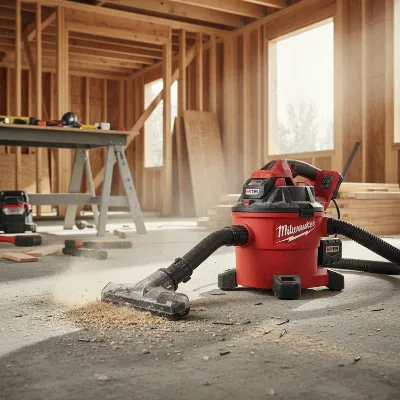 A cordless shop vacuum in action on a construction site, picking up sawdust and debris.
Choosing the Right Shop Vacuum: A Comprehensive Buying Guide
Selecting the ideal shop vacuum involves weighing several factors against your specific requirements. Here’s a detailed guide to help you make an informed decision:
Power and Airflow: Matching to Your Mess
For heavy-duty tasks involving large volumes of fine dust (like drywall or concrete dust), prioritize a model with a high CFM rating. This ensures efficient air movement to capture airborne particles. If your work primarily involves picking up heavy debris such as nails, screws, or wet sludge, focus on models with high sealed pressure (inches of water lift), which indicates superior suction force. Professionals often look for a balance, ideally with a good air watt rating, to handle diverse job site challenges effectively.
Tank Capacity: Size for the Job
Consider the typical size of your messes and the frequency of emptying.
- For car detailing or quick spill cleanups, a 2 to 6-gallon portable unit is sufficient and easy to store.
- For a home workshop or medium-sized garage, an 8 to 14-gallon tank provides a practical balance.
- For large-scale renovation projects or commercial use, 14-gallon or larger models reduce interruptions but require more storage space and can be heavy when full.
Filtration System: Health and Efficiency
The type of filter is crucial, especially for health. If you’re dealing with fine dust from woodworking, sanding, or drywall, a HEPA-certified filter is non-negotiable for capturing microscopic particles and maintaining air quality. For wet pickup, a foam sleeve is essential to protect the motor. Consider models that offer fleece dust bags for dry debris, as they make disposal cleaner and can prolong the life of your main filter. Always ensure the vacuum supports the right filter type for your common tasks.
Durability and Build Quality: Long-Term Investment
Shop vacuums operate in demanding environments, so robust construction is key. Look for models with durable, impact-resistant tanks (often made of tough plastic or stainless steel), crush-resistant hoses, and reinforced casters or wheels that can withstand rough terrain and frequent movement. Covered power switches and sturdy latches also contribute to longevity by protecting internal components from dust and damage.
Noise Level: Comfort in the Workspace
Shop vacuums can be notoriously loud. While power often correlates with noise, some manufacturers have developed quieter motors. If you work indoors frequently or for extended periods, checking the decibel (dB) rating is wise. Lower dB levels contribute significantly to user comfort and can reduce hearing fatigue.
Essential Features and Accessories
Evaluate what additional features will enhance your productivity:
- Blower Port: Useful for clearing debris from surfaces or inflating objects.
- Onboard Accessory Storage: Keeps attachments organized and readily accessible.
- Hose Diameter and Length: Ensure these are appropriate for the debris you typically handle. Wider hoses are better for larger debris; longer hoses offer reach but may reduce suction slightly.
- Drain Port: For larger wet/dry vacuums, a drain port makes emptying liquids much easier.
Price and Warranty: Value for Money
Shop vacuum prices vary widely based on size, power, features, and brand reputation. Invest in a model that offers the best balance of performance and durability within your budget. Always check the warranty offered on both the tool and its batteries (if cordless). A strong warranty indicates manufacturer confidence in the product’s longevity and provides peace of mind.
Spotlight Review: Milwaukee M18 Cordless Shop Vacuum
Milwaukee has established itself as a leader in professional-grade power tools, and its M18 cordless shop vacuum lineup continues this tradition, offering impressive performance and versatility for a range of users. The M18 ecosystem provides the convenience of cordless operation across multiple tools, making these vacuums a popular choice for those already invested in Milwaukee batteries.
Overview of the Milwaukee M18 Ecosystem
The Milwaukee M18 platform is renowned for its extensive range of tools powered by a single battery system. Their shop vacuum offerings typically span from highly portable, compact units like the original M18 0880-20 to the more robust and powerful M18 FUEL series, which includes larger capacity wet/dry vacuums and specialized PACKOUT-compatible models. These machines are designed for demanding job sites and workshops, offering wet/dry capabilities, robust construction, and integration with the brand’s battery technology.
Milwaukee M18 0880-20 (2-Gallon) Wet/Dry Vacuum
The Milwaukee M18 0880-20 is a popular compact, 2-gallon cordless wet/dry vacuum, often praised for its design and portability. It resembles a small toolbox, with all its accessories and hose storing neatly inside the unit, making it incredibly easy to transport and stack.
- Pros:
- Extreme Portability: Its compact, toolbox-like design with internal storage for the hose and attachments makes it exceptionally easy to carry and store.
- Wet/Dry Capability: Capable of handling both liquid spills and dry debris effectively, offering versatility for various cleanup tasks.
- Onboard Accessory Storage: Keeps the 6-foot flexible hose, crevice tool, and utility nozzle organized and ready for use.
- Blower Port: Adds functionality for clearing light debris.
- HEPA Filter: Comes with a certified HEPA filter, important for filtering fine dust particles, and it’s washable for easy maintenance.
- Good for Quick Cleanups: Ideal for vehicle interiors, small jobsite cleanups, and rapid spills in a workshop.
- Cons:
- Battery Runtime: Can “eat batteries,” providing approximately 30 minutes of runtime with a large M18 REDLITHIUM HIGH DEMAND 9.0 Battery Pack, and significantly less with smaller batteries (e.g., 15 minutes with a 5.0 or 6.0 Ah).
- Suction Power: While powerful for its size, its suction may not compare to that of full-sized corded shop vacuums, which can clear larger messes in a single pass.
- Floor Tool Design: Some users report the floor tool isn’t optimally designed for rapidly cleaning up large water puddles.
- Lack of Standard Adapters: May require creative solutions for connecting to some power tool dust ports.
- Ideal User: This model is perfect for car detailers, field technicians, DIY enthusiasts needing a portable solution for small projects, or anyone requiring quick, convenient cleanup without being tethered to an outlet.
Milwaukee M18 FUEL Wet/Dry Vacuums (6, 9, 12-Gallon & PACKOUT 2.5-Gallon)
The M18 FUEL line represents Milwaukee’s commitment to delivering professional-grade performance in their cordless tools. These wet/dry vacuums integrate advanced technologies to provide superior power, durability, and versatility.
- Key Upgrades (FUEL):
- POWERSTATE Brushless Motor: Delivers significantly more power and a longer motor life compared to brushed motors.
- Increased CFM/Suction: These models outperform many 3.5 to 4.25 Peak HP corded wet/dry vacuums, offering robust cleaning power for heavy debris like drywall dust, concrete dust, and wood shavings. For instance, the 12-gallon model boasts 114 CFM and 78 inches of suction.
- Enhanced Durability: Features like reinforced casters, tread design (for up to 8X wheel life), and crush/twist-resistant hoses (for up to 2X hose life) make them exceptionally durable on tough job sites.
- Modular System: Part of the NEXUS Modular Vacuum System, allowing for interchangeable motor heads, tanks, and carts for varied performance, capacity, and mobility.
- Performance: Designed to tackle the toughest jobsite debris, these units deliver consistent high suction, rivaling and often surpassing corded counterparts in their class.
- Runtime: Improved with larger and dual-battery configurations. For example, the 12-gallon dual-battery model can provide up to 49 minutes of continuous cleaning in MAX RUN-TIME MODE with two M18 REDLITHIUM FORGE HD12.0 Battery Packs. The 9-gallon dual-battery model offers up to 36 minutes with two XC8.0 packs.
- M18 FUEL PACKOUT 2.5-Gallon Wet/Dry Vacuum: This specific model integrates seamlessly into Milwaukee’s PACKOUT modular storage system. It’s often highlighted for being one of the quietest vacuums tested and for its excellent water pickup. While not designed for massive debris, its versatility and system compatibility make it highly valuable.
- Ideal User: The M18 FUEL series is engineered for professional contractors, remodelers, and serious workshop owners who require maximum cordless power, extended runtime, and extreme durability for large-scale or continuous job site cleanup, all while benefiting from the M18 battery platform. The PACKOUT version is particularly attractive for those already leveraging the PACKOUT system for tool organization and transport.
What Sets Milwaukee M18 Apart
The Milwaukee M18 line differentiates itself through its deep integration with the M18 battery platform, offering unparalleled portability across a wide ecosystem of tools. Their commitment to durability, particularly with the M18 FUEL series, ensures these vacuums can withstand rigorous job site conditions. The innovative modularity of the FUEL line and the compact, self-contained design of the 0880-20 provide options for virtually any user needing powerful, cordless cleaning.
Comparison of Popular Shop Vacuum Brands
When considering a shop vacuum, Milwaukee isn’t the only player. Here’s a comparative look at some leading brands and their typical offerings:
| Brand | Key Models | Power/Performance (Example) | Capacity Range | Notable Features | Ideal For |
|---|---|---|---|---|---|
| Milwaukee | M18 0880-20, M18 FUEL Series | Good CFM/Suction (FUEL excellent) | 2-12 Gallons | Cordless, M18 ecosystem, modularity (FUEL), durable | Portability, Professionals, Jobsite, Workshop |
| DeWalt | 20V MAX Cordless, Corded Units | High HP/CFM (e.g., 5.5 HP corded) | 1-16 Gallons | Jobsite durability, tool integration, some AC/DC | General Contractors, Workshops, Heavy DIY |
| Ryobi | ONE+ 18V Cordless Series | Good for DIY tasks (e.g., 45 CFM) | 1-10 Gallons | Budget-friendly, ONE+ ecosystem, compact | Homeowners, DIYers, Light Workshop Use |
| Craftsman | Various Corded, V20 Cordless | Strong suction, reliable HP | 6-16 Gallons | Traditional durability, good value | Garage, Heavy DIY, General Home Use |
| Shop-Vac | Wide Range | Broad specs depending on model | 1-18+ Gallons | Established brand, variety of options, accessories | General Purpose, Home Use, Budget-Conscious |
Top Shop Vacuums Rated in 2026
The landscape of shop vacuums is continually evolving, with new models offering enhanced performance and convenience. Based on current market trends and user feedback, here are some top-rated options, with a focus on cordless innovation, including the Milwaukee M18 series.
Milwaukee M18 0880-20 2-Gallon Wet/Dry Vacuum
This compact and highly portable unit remains a favorite for its sheer convenience. It excels at quick cleanups, particularly in vehicles, small home projects, or when you need to quickly vacuum up a localized mess in a remote area without a power outlet. Its integrated storage keeps all accessories tidy. While its battery runtime can be a limitation for extended tasks, its ease of use and ability to tackle both wet and dry messes make it an invaluable tool for on-the-go professionals and homeowners alike.
Milwaukee M18 FUEL PACKOUT 2.5-Gallon Wet/Dry Vacuum
Integrating seamlessly with Milwaukee’s popular PACKOUT modular storage system, this vacuum is a professional’s dream for organized and efficient job site transport. Users consistently praise its quiet operation compared to many other shop vacuums, making it more comfortable to use in enclosed spaces. It offers strong suction for its compact size and is particularly effective at picking up water. While it may not be the most powerful for very large, chunky debris, its versatility, durability, and unmatched compatibility with the PACKOUT system make it a top choice for those invested in the Milwaukee ecosystem, looking for a truly portable and professional-grade solution.
DeWalt 20V Max Cordless Hand Shop Vacuum
For users prioritizing extreme portability and one-handed operation, the DeWalt 20V Max Cordless Hand Shop Vacuum stands out. While smaller in capacity and power than a traditional shop vac, it’s an excellent companion for small spills, quick vehicle cleanups, or as an adjunct to a larger system. Its cordless design allows for ultimate flexibility, making it a highly convenient option for impromptu messes anywhere on the job site or around the home.
Maximizing Your Shop Vacuum: Usage and Maintenance Tips
To ensure your shop vacuum delivers consistent performance and a long lifespan, proper usage and diligent maintenance are crucial.
Safe and Efficient Operation
- Read the Manual: Always start by familiarizing yourself with your specific model’s instructions, especially regarding wet/dry transitions and filter changes.
- Use the Right Filter: For dry debris, ensure the appropriate dry filter (e.g., HEPA for fine dust) is in place. For wet pickup, replace the dry filter with a foam sleeve to prevent motor damage.
- Empty Regularly: Don’t wait for the tank to be completely full. Overfilling, especially with liquids, can strain the motor and reduce efficiency.
- Check for Clogs: If suction drops, check the hose and attachments for blockages before assuming a motor issue.
- Secure Attachments: Ensure all hoses and nozzles are securely connected to prevent suction loss.
- Mind the Cord/Battery: If corded, be aware of the power cord to prevent tripping hazards. If cordless, monitor battery life and keep spare batteries charged for extended tasks.
Cleaning and Maintaining Your Shop Vacuum to Extend Lifespan
- Empty and Clean the Tank: After each use, especially wet pickup, empty the tank and rinse it thoroughly to prevent mold, mildew, and odors. Allow it to air dry completely.
- Clean/Replace Filters:
- Dry Filters: Tap or brush off dry debris from cartridge filters. Washable filters should be rinsed with water and allowed to dry fully before reinstallation. Replace filters as recommended by the manufacturer, or sooner if performance degrades significantly.
- Foam Sleeves: Rinse thoroughly after wet use and allow to air dry.
- Fleece Dust Bags: Dispose of full bags and replace them.
- Inspect Hose and Accessories: Check the hose for cracks or tears and ensure all attachments are clean and free of blockages.
- Clean Exterior: Wipe down the exterior of the vacuum with a damp cloth to remove dirt and dust.
- Store Properly: Store the vacuum in a dry, protected area. For models with onboard storage, utilize it to keep accessories organized and protected.
Troubleshooting Common Issues
- Loss of Suction:
- Check for Clogs: The most common culprit. Inspect the hose, attachments, and intake port.
- Full Tank: Empty the tank.
- Clogged/Improper Filter: Clean or replace the filter. Ensure the correct filter is used for the type of debris.
- Loose Connections: Tighten all hose and accessory connections.
- Motor Not Starting:
- Corded: Check power outlet, cord, and circuit breaker.
- Cordless: Ensure the battery is charged and properly seated. Test with a different battery if available.
- Excessive Noise:
- Often indicates a blockage or a worn motor component. Check for obstructions first.
> “Investing a few minutes in maintenance after each use can double the lifespan of your shop vacuum. It’s not just about cleaning; it’s about protecting your investment.” – John Davis, Industrial Equipment Technician
Conclusion
From the fine dust of a woodworking shop to the inevitable spills on a job site, the right shop vacuum is an invaluable asset. We’ve explored the robust capabilities of these heavy-duty cleaners, highlighted essential buying considerations, and put a spotlight on the versatile Milwaukee M18 Cordless Shop Vacuum series. Whether you opt for the ultra-portable M18 0880-20 for quick cleanups on the go or the powerful M18 FUEL models for professional, extended use, Milwaukee offers innovative cordless solutions that prioritize performance, durability, and the freedom of movement.
Understanding the metrics like CFM, sealed
