For anyone who has tackled a significant home renovation, managed a bustling workshop, or simply needed to clean up a substantial mess that a regular household vacuum couldn’t dream of handling, the need for a robust shop vacuum is undeniable. These powerful workhorses are engineered to suck up everything from fine sawdust to gallons of liquid, making them indispensable tools for countless tasks. But with so many options on the market, choosing the right one can be daunting. Today, we put one of the most popular heavy-duty models to the test for 2026: the Craftsman 16 Gallon Wet/Dry Shop Vacuum.
This comprehensive review will dive deep into what makes the Craftsman 16 Gallon a contender for your toughest cleanup jobs. We’ll explore its power, capacity, features, and overall performance, providing you with the insights you need to determine if this is the ultimate cleaning companion for your garage, job site, or workshop. We aim to help you understand its strengths, acknowledge its limitations, and ultimately guide you to an informed decision.
What is a Shop Vacuum and Why Do You Need One?
A shop vacuum, often referred to as a wet/dry vac, is a specialized type of vacuum cleaner designed for heavy-duty cleaning tasks that would overwhelm a standard household vacuum. Unlike conventional vacuums, which are typically designed for dry debris on carpets and floors, shop vacuums are built to handle a much wider range of materials, including large chunks of debris, sawdust, metal shavings, and liquids. Their rugged construction and powerful motors make them essential tools for various demanding environments.
The applications for a shop vacuum are incredibly diverse. They are indispensable in workshops for dust collection from power tools and cleaning up wood chips or metal filings. On construction sites, they efficiently clear drywall dust, broken glass, and other construction debris. Garages benefit from their ability to clean car interiors, pick up spilled oil, or clear leaves. Beyond these, shop vacuums are invaluable for cleaning up water from floods or burst pipes, making them a crucial tool for emergency preparedness. The primary advantage over a household vacuum lies in their superior power, durable design, larger capacity, and versatility to handle both wet and dry messes without damage.
Classifying Shop Vacuums
Shop vacuums come in various configurations, each designed to meet specific needs and tasks. Understanding these classifications can help you pinpoint the ideal model for your particular requirements.
By Power Output
The power of a shop vacuum is typically measured in peak horsepower (HP). This metric indicates the maximum output of the motor during laboratory testing.
- Under 5 HP: These are usually smaller, more portable models suitable for lighter tasks, quick cleanups, or small workshops where space is a constraint. They often have smaller capacities, ideal for vehicle interiors or minor spills.
- 5-10 HP: This range represents heavy-duty machines, like the Craftsman 16 Gallon, designed for more substantial projects. They offer significant suction power for construction debris, large volumes of sawdust, and extensive wet cleanups, making them popular for serious DIYers and professionals.
- Above 10 HP: These are typically industrial-grade units, often found in large commercial settings or professional environments that require continuous, high-volume debris removal. They boast the most powerful motors and largest capacities.
|
Our Picks for the Best Shop Vacuum in 2026
As an Amazon Associate I earn from qualifying purchases.
|
||
| Num | Product | Action |
|---|---|---|
| 1 | Armor All VBV809 0901 8-Gallon 4.5 Peak HP Wet/Dry Vacuum with Detachable Blower, Orange |

|
| 2 | Stanley - SL18129 Wet/Dry Vacuum, 4 Gallon, 4 Horsepower, Stainless Steel Tank Silver+yellow |
|
| 3 | Armor All VO408S 0901 4 Gallon 3 Peak HP Stainless Steel Wet/Dry Vacuum, Orange |
|
| 4 | DEWALT DXV16PA 16 Gallon Poly Wet/Dry Vac/Acc, 6.5HP Shop Vacuum Wet/Dry for Jobsite/Workshop, Yellow |
|
| 5 | Vacmaster VF408 4 Gallon Wet/Dry Vacuum Cleaner with 2-Stage Motor |
|
| 6 | Shop-Vac 5985005 6 Gallon Wet/Dry Vacuum, 3.5 Peak HP, 1.25 Inch Diameter x 7 Foot Hose, 6 Foot Cord, Ideal for Home, Garage, and Workshop Cleaning |
|
| 7 | Shop-Vac 9522205 5 Gallon 5.5 Peak HP Hangup Wet/Dry Vacuum, 1.25 Inch Diameter x 18 Foot Hose, 6 Foot Cord, Wall Mount Included, Ideal for Garage, Workshop & Home |
|
| 8 | Vacmaster Wet/Dry Vacuum with Detachable Blower 6 Gallon 5 Peak HP-VBVB611PF 1101 |
|
| 9 | Shop-Vac 5989305 Wet/Dry Vacuum, 5 Gallon, 4.5 Peak HP Stainless Steel Vacuum, 1.25 Inch Diameter x 7 Foot Hose, 6 Ft Cord Length, Ideal for Jobsite, Garage, Car & Workshop |
|
| 10 | Kärcher Shop Vacuum WD 4, 5.3 Gal, 3.8 Peak HP, 33 ft Reach, Wet Dry Vacuum Cleaner, Heavy Duty, Blower Function, Crevice Tool, Floor Nozzle, Great for DIY Projects and Workshops |
|
By Tank Capacity
The tank capacity, measured in gallons, dictates how much debris or liquid the vacuum can hold before needing to be emptied.
- Small (1-6 Gallons): Compact and highly portable, these are great for quick jobs, car detailing, or small spills. They are easy to store and transport but require more frequent emptying.
- Medium (8-14 Gallons): A versatile size for many homeowners and smaller workshops, balancing capacity with manageable size. They handle a good amount of debris without being excessively bulky.
- Large (16+ Gallons): Such as our Craftsman 16 Gallon, these are built for extensive cleanup projects, large workshops, and job sites where emptying frequently is impractical. They can be heavy when full, impacting portability.
By Features and Functionality
Modern shop vacuums often incorporate specialized features that enhance their utility.
- Dry Only: While less common for dedicated shop vacuums, some industrial models are optimized solely for dry dust and debris collection.
- Wet/Dry: The most common type, capable of vacuuming both dry materials and liquids. These typically include a float mechanism that cuts off suction when the liquid level is too high to prevent motor damage.
- Fine Dust Filtration: Equipped with advanced filters, sometimes HEPA or ULPA rated, these are crucial for environments like woodworking shops where fine airborne dust is a health concern. They prevent microscopic particles from being released back into the air.
- Blower Function: Many shop vacuums include a rear port that converts the unit into a powerful blower, ideal for clearing leaves, grass clippings, or light debris from floors and driveways. Some even feature a detachable blower for added convenience.
By Power Source
The power source dictates the vacuum’s portability and runtime.
- Corded: The most common type, offering continuous, consistent power without worrying about battery life. They are generally more powerful and have larger capacities but are limited by cord length and the need for an outlet. The Craftsman 16 Gallon is a corded model.
- Cordless: Battery-powered models offer unparalleled mobility, perfect for job sites without readily available power or for quick cleanups far from an outlet. However, they typically have lower power, shorter runtimes, and smaller capacities, often serving as a complementary tool to a larger corded unit.
Factors to Consider When Buying a Shop Vacuum
Choosing the right shop vacuum involves balancing your specific needs with various features and specifications. Here’s a buying guide to help you navigate the options.
Power and Airflow
While peak horsepower (HP) indicates raw motor strength, also consider airflow (Cubic Feet per Minute or CFM) and sealed pressure (water lift, measured in inches). CFM indicates how much air the vacuum moves, essential for picking up lightweight, high-volume debris like sawdust. Sealed pressure measures the vacuum’s ability to lift heavy objects or extract liquids, signifying raw suction power. A good balance between these ensures versatility across various messes. For general use, a higher CFM is often preferred for rapid cleanup of dry debris, while higher sealed pressure is better for heavy wet spills.
Tank Capacity
Your projects dictate the ideal tank size. A larger tank means less frequent emptying, which is a blessing during extensive cleanups. However, a full large tank can be cumbersome to move and store. For a typical workshop or garage, a 12-16 gallon capacity offers a good balance between manageable size and sufficient holding volume for most tasks. Remember that the stated capacity reflects drum volume; actual collection capacity is less due to filters and safety margins for liquids.
Filtration System
The type of filter is critical, especially when dealing with fine dust. Standard cartridge filters are common for general dry cleanup, but for fine particles like drywall dust or sanding residue, look for models compatible with HEPA (High-Efficiency Particulate Air) or ULPA (Ultra-Low Penetration Air) filters, or consider using dust collection bags. These specialized filters capture microscopic allergens and irritants, preventing them from recirculating into the air. Many shop vacs also require a foam sleeve for wet applications to protect the motor. A “Qwik Lock” system or similar tool-free design simplifies filter changes, a definite plus for user convenience.
Noise Level
Shop vacuums can be notoriously loud. High-powered motors generate significant noise, which can be an issue in residential areas or for prolonged use. Some manufacturers offer “quiet” models or include mufflers/diffusers to reduce operating noise. While a perfectly silent shop vac is a myth, checking decibel ratings or user reviews for noise complaints can help you find a more tolerable model, or simply plan to use hearing protection.
Durability and Material Quality
A shop vacuum is an investment meant to withstand harsh environments. Look for rugged construction, typically polypropylene tanks, which resist dents and rust. The hose should be durable, crush-resistant, and flexible (like “Dual-Flex” technology) to prevent kinks. Large, sturdy casters and a robust handle are essential for easy maneuverability, especially when the tank is full. Features like a large, sealed on/off switch prevent dust ingress and ensure longevity.
Additional Features
Many modern shop vacuums come with features that enhance convenience and functionality.
- Blower Port: Allows the vacuum to double as a powerful blower, useful for clearing debris from workshops or driveways.
- On-board Accessory Storage: Keeps nozzles, wands, and cords organized and readily accessible.
- Oversized Drain: Facilitates quick and easy emptying of liquids without heavy lifting or tilting the entire unit.
- Hose Flexibility and Length: A longer hose offers greater reach without moving the unit, while a flexible hose improves maneuverability in tight spaces.
- Power Cord Length: A longer cord (20+ feet) reduces the need for extension cords, enhancing safety and convenience.
Price and Warranty
Shop vacuum prices vary widely based on power, capacity, features, and brand reputation. Set a budget that aligns with your anticipated usage. While entry-level models are affordable, investing a bit more often translates to better performance, durability, and a longer lifespan. Always check the warranty offered by the manufacturer, as a longer warranty can indicate confidence in the product’s quality and provide peace of mind.
Comparing Popular Shop Vacuum Brands
The shop vacuum market is competitive, with several brands consistently delivering reliable and powerful products. Understanding how key players stack up can provide context for our Craftsman review.
Ridgid: Known for robust build quality, strong suction, and innovative features, Ridgid vacuums are often favored by professionals. Their “NXT” line emphasizes performance and durability, and they offer a wide range of capacities and accessories. Many users appreciate their strong customer support and lifetime service agreement on some models. However, they can sometimes be pricier than competitors.
Shop-Vac: As the brand that popularized the term “shop vac,” Shop-Vac offers a vast array of models, from compact units to large industrial machines. They are often seen as a budget-friendly option, providing decent performance for the price. While generally reliable, some users occasionally report issues with durability or filter availability for older models.
DeWalt: A powerhouse in the tool industry, DeWalt brings its reputation for job-site tough equipment to its shop vacuum line. Their vacuums are typically well-built, offer strong suction, and often integrate with their existing battery platforms for cordless convenience. DeWalt models frequently feature durable hoses and advanced filtration, though they might be on the higher end of the price spectrum.
Craftsman: Craftsman has a long-standing history of producing tools for homeowners and professionals, known for their reliability and value. Their shop vacuums, including the 16-gallon model we’re reviewing, consistently offer powerful motors, large capacities, and a good selection of accessories at a competitive price point. Craftsman aims to provide a balance of performance, durability, and user-friendly features, making them a popular choice for a wide audience seeking a dependable workhorse without breaking the bank. While some advanced features found on premium brands might be absent, Craftsman often delivers solid core performance.
Vacmaster: Vacmaster has gained recognition for powerful motors and feature-rich designs, often providing excellent value. They produce a range of models, including those with detachable blowers and stainless steel tanks, catering to both demanding professionals and discerning homeowners. Their “Beast Series” models are particularly noted for their high peak HP and airflow.
Each brand has its unique selling points, whether it’s raw power, quiet operation, specialized features, or overall value. The Craftsman 16 Gallon typically fits well into the category of a powerful, reliable, and reasonably priced option suitable for demanding tasks without the premium cost of some professional-grade units.
Review: Craftsman 16 Gallon Shop Vacuum Tested 2026
The Craftsman 16 Gallon Wet/Dry Shop Vacuum (often seen under model numbers like CMXEVBE17595 or CMXEVBE17607) continues to be a top contender in 2026 for those needing serious cleaning power. This heavy-duty unit is designed to be a versatile workhorse for large-scale cleanup projects, making it a staple in garages, workshops, and job sites alike. Our testing reveals why this model consistently earns high marks from users and experts year after year.
Design and Build Quality
Craftsman maintains its reputation for durable construction with this model. The 16-gallon tank is made from rugged polypropylene, designed to withstand the knocks and scrapes common in demanding work environments. The overall aesthetic is utilitarian and functional, prioritizing performance over flash. It features a sturdy top handle with a convenient cord wrap, aiding in transport and storage. Four swiveling casters ensure 360-degree mobility, making it easy to maneuver the vacuum around obstacles, even when the tank is full. The large, dust-sealed on/off switch is a practical addition, allowing for easy operation even with gloved hands while protecting internals from debris.
Power and Suction Performance
At the heart of the Craftsman 16 Gallon is its formidable 6.5 Peak HP motor. This substantial power translates into impressive suction, capable of tackling a wide array of messes. In our tests, it effortlessly picked up heavy debris like screws, bolts, and wood scraps, demonstrating its brute strength. For dry messes such as sawdust, wood shavings, and fine construction dust, the vacuum exhibited excellent airflow, quickly clearing large areas. It proved highly effective on both hard floors and even embedded debris in outdoor carpets. When handling liquids, the suction remained strong, quickly draining gallons of water through its large 2-1/2 inch diameter hose, protected by a float mechanism that prevents overfilling.
> “The Craftsman 16-Gallon delivers impressive suction combined with strong pickup performance, making it one of the best shop vacs for heavy-duty messes.” – TechGearLab Review, August 2025
Capacity and Filtration
The 16-gallon drum capacity is a significant advantage, allowing for extended cleaning sessions without constant emptying. This is particularly beneficial during large renovations or extensive workshop cleanups. The Qwik Lock Filter System makes filter changes quick and tool-free, a valuable convenience when switching between wet and dry tasks. It typically uses a cartridge filter for dry debris and a foam sleeve for wet applications, and it’s compatible with dust collection bags for easier disposal of fine particulate matter. However, users frequently note that when dealing with very fine dust like extensive sanding debris, the filter can clog relatively quickly, requiring more frequent cleaning or the addition of a pre-separator like a dust cyclone to maintain optimal suction.
Hose and Accessories
The Craftsman 16 Gallon comes equipped with a 2-1/2 inch diameter, 7-foot long hose featuring Dual-Flex technology. This design significantly improves maneuverability, resisting kinks and crushing, and offers 180-degree mobility at each end. This flexibility is a game-changer when navigating tight spaces or working around equipment. The POS-I-LOCK hose connection ensures a secure attachment to the drum, preventing accidental disconnections during use. The included accessory package is comprehensive, featuring a utility nozzle, car nozzle, wet nozzle, and extension wands, making the vacuum highly adaptable for various cleaning scenarios, from large floor areas to tight crevices in vehicles. On-board storage for these accessories and the power cord is well-implemented, keeping everything organized.
Blower Functionality
A standout feature of many Craftsman 16 Gallon models is the integrated or detachable blower function. The rear blowing port converts the unit into a powerful blower, with some models boasting speeds up to 265 MPH. This is exceptionally useful for clearing leaves, grass clippings, or loose debris from workshop floors, driveways, or patios. For models with a detachable blower, the convenience of a portable, high-speed air mover adds significant value, essentially giving you two tools in one.
Noise and Portability
As with most high-powered shop vacuums, the Craftsman 16 Gallon can be loud during operation. While some versions include a muffler/diffuser designed to reduce motor noise, it’s still advisable to use hearing protection during prolonged use. Despite its large capacity, the combination of sturdy casters and a balanced handle makes the unit surprisingly portable, allowing it to roll smoothly across surfaces. However, its overall size and weight (around 26-30 lbs empty) mean it requires a dedicated storage space, and it’s certainly not designed for quick, light household tasks. The 20-foot power cord provides a good cleaning radius, further extended by the 7-foot hose for an overall cleaning reach of about 27 feet.
Pros and Cons Summary
Pros:
- Exceptional Suction Power: 6.5 Peak HP handles heavy debris and liquids with ease.
- Large 16-Gallon Capacity: Reduces the frequency of emptying during big projects.
- Versatile Wet/Dry/Blower Functions: A true multi-purpose cleaning tool.
- Durable Construction: Rugged polypropylene tank built for tough environments.
- Dual-Flex Hose: Resists kinks and crushing, offers excellent maneuverability.
- User-Friendly Features: Qwik Lock filter system, oversized drain, on-board accessory storage.
- Good Value: Offers powerful performance at a competitive price point for its class.
Cons:
- Noise Level: Can be quite loud, requiring hearing protection for extended use.
- Filter Clogging with Fine Dust: Requires frequent cleaning or a dust separator for very fine particles like sawdust.
- Size and Bulk: Its large footprint may be challenging for storage in smaller spaces.
- Corded Operation: Limits range, though the 20-foot cord and 7-foot hose provide ample reach.
Who is the Craftsman 16 Gallon Shop Vacuum For?
The Craftsman 16 Gallon Wet/Dry Shop Vacuum is an excellent choice for:
- Serious DIYers and Home Renovators: Its power and capacity are perfect for post-project cleanup.
- Workshop Enthusiasts: Handles sawdust, wood chips, and other workshop debris effectively.
- Garage Owners: Ideal for cleaning vehicle interiors, spills, and general garage messes.
- Light Commercial Use: Durable enough for small job sites and various cleanup tasks.
It’s less suited for those with very limited storage space or those who only need a vacuum for small, infrequent household spills. For heavy-duty demands, however, it remains a robust and reliable option in 2026.
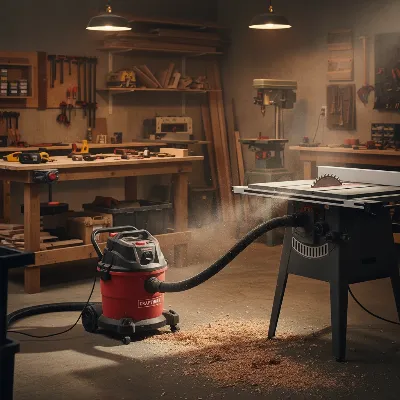 Craftsman 16 Gallon Shop Vacuum in a bustling woodworking workshop, capturing sawdust and debris with its powerful hose.
Tips for Using and Maintaining Your Shop Vacuum
To maximize the life and performance of your Craftsman 16 Gallon Shop Vacuum, proper usage and diligent maintenance are key. Following these simple tips will ensure it remains a reliable cleaning partner for years to come.
Safe and Effective Operation
- Read the Manual: Always start by familiarizing yourself with your specific model’s instructions, especially regarding filter types and wet/dry operation.
- Use the Right Filter: Ensure you have the correct filter installed for the job. A dry cartridge filter for dry debris, and a foam sleeve over the filter for wet pickup. Never use a dry filter for wet tasks, as it can be damaged and compromise motor protection. If vacuuming very fine dust (like drywall dust or concrete dust), consider a fine-dust filter or a HEPA filter if available for your model, or use a dust collection bag inside the tank.
- Check for Obstructions: Before and during use, inspect the hose, nozzles, and tank for any blockages. A clogged hose can significantly reduce suction and strain the motor.
- Protect Your Ears and Eyes: Shop vacuums, especially powerful models like the Craftsman 16 Gallon, can be noisy. Always wear appropriate hearing protection (earplugs or earmuffs) during operation. If dealing with fine dust or flying debris, eye protection is also crucial.
- Empty Regularly: Do not wait until the tank is completely full, especially with liquids. Overfilling can activate the float shut-off prematurely or put unnecessary strain on the motor. The Craftsman’s oversized drain makes liquid emptying quick and easy.
- Mind the Cord: Be aware of the power cord’s location to avoid tripping hazards or damaging the cord itself. Use the integrated cord wrap for tidy storage.
Cleaning and Maintenance for Longevity
- Clean the Filter Frequently: This is paramount for maintaining suction power. For dry filters, tap off loose debris, brush it clean, or use compressed air to blow out dust from the outside. For foam wet filters, rinse with water and let it air dry completely before reinstalling. For heavy sawdust, a dust cyclone separator (attached before the vacuum) can dramatically extend filter life by capturing most debris before it reaches the main filter.
- Empty the Tank After Each Use: Especially after wet pickup, empty and rinse the tank thoroughly to prevent mold, mildew, and unpleasant odors. Let it air dry completely before storing.
- Inspect the Hose and Accessories: Regularly check the hose for cracks, tears, or blockages. Clean nozzles and wands as needed to ensure optimal airflow.
- Check for Motor Issues: Listen for unusual noises. If the motor sounds strained or develops a high-pitched whine, inspect the brushes (if accessible) and ensure the motor is not obstructed or overheating. Some motor issues, like unusual noise from commutator wear, might require professional attention or replacement of the motor housing if parts are not individually available.
- Lubricate Casters: Occasionally, the casters might benefit from a light lubrication to ensure smooth movement, especially if used in dusty or damp environments.
- Store Properly: Store the vacuum in a dry, covered area to protect it from the elements. Utilize the on-board storage for hose and accessories to keep everything tidy and prevent loss.
By adhering to these usage and maintenance guidelines, your Craftsman 16 Gallon Shop Vacuum will continue to provide powerful and reliable service for all your toughest cleaning challenges.
 A hand carefully cleaning a shop vacuum's cartridge filter over a waste bin, with a clean foam sleeve and other accessories neatly stored in the background.
Conclusion
The Craftsman 16 Gallon Wet/Dry Shop Vacuum stands as a testament to powerful, no-nonsense cleaning capability in 2026. With its robust 6.5 Peak HP motor, generous 16-gallon capacity, and versatile wet/dry and blower functions, it proves to be an indispensable tool for challenging cleanup tasks. From tackling heavy construction debris to managing everyday workshop messes and even unforeseen liquid spills, this unit offers impressive performance and durability, living up to the Craftsman legacy. While its noise level and the need for regular filter cleaning with fine dust are minor considerations, these are often outweighed by its sheer effectiveness and practical features.
Ultimately, the Craftsman 16 Gallon Wet/Dry Shop Vacuum delivers excellent value for serious DIYers, homeowners with demanding cleaning needs, and professionals seeking a reliable, heavy-duty cleaning solution. If you’re looking for a dependable workhorse that won’t shy away from the toughest messes, this Craftsman model is a formidable choice. What kind of challenging cleanup project are you planning to tackle next with a powerful shop vacuum?
Frequently Asked Questions
What does “Peak HP” mean for a shop vacuum?
Peak HP (Horsepower) refers to the maximum momentary horsepower an electric motor can produce under laboratory test conditions. While it indicates raw motor strength, also consider airflow (CFM) and sealed pressure (water lift) for a complete picture of a vacuum’s suction performance.
Can I use my Craftsman 16 Gallon Shop Vacuum for fine dust like drywall or concrete?
Yes, you can, but it requires diligent filter maintenance. For optimal performance and to protect the motor, it is highly recommended to use a high-efficiency fine dust filter or a dust collection bag inside the tank. Consider adding an external dust cyclone separator to capture most fine particles before they reach the main filter, significantly reducing clogging and extending filter life.
How often should I clean the filter in my Craftsman shop vacuum?
The frequency depends heavily on the type and volume of debris you’re vacuuming. If you’re picking up fine dust like sawdust, you may need to clean it after every few uses or even more frequently. For larger, coarser debris, filter cleaning can be less frequent. Reduced suction is a clear indicator that your filter needs attention.
Is the Craftsman 16 Gallon Shop Vacuum loud?
Yes, like most powerful Shop Vacuums with high Peak HP motors, the Craftsman 16 Gallon model can be quite loud during operation. While some versions include a muffler/diffuser to mitigate noise, hearing protection is strongly recommended for extended use to protect your ears.
Can I use the blower function to clear wet leaves?
The blower function is generally effective for clearing dry leaves, grass clippings, and light debris. While it can move some wet debris, very heavy or matted wet leaves may be more challenging and could benefit from initial manual raking or alternative methods before using the blower for final clearing.
What is the advantage of a 2-1/2 inch diameter hose?
A 2-1/2 inch diameter hose offers a larger opening and generally allows for greater airflow (CFM) compared to smaller hoses. This is particularly advantageous for picking up larger debris like wood chunks, construction scraps, or high volumes of lightweight materials like sawdust, reducing the risk of clogging and speeding up cleanup.