Unexpected water intrusion can quickly turn a calm day into a frantic cleanup mission. Whether it’s a burst pipe, an overflowing washing machine, a leaky roof, or a flooded basement, standing water poses risks to your property and your safety. While household vacuums are designed for dry messes, a powerful shop vacuum is your go-to ally for tackling liquid challenges. But using it effectively and, more importantly, safely, requires understanding the right steps and precautions.
This guide will walk you through everything you need to know about using a shop vacuum to remove water, transforming a daunting task into a manageable DIY project. We’ll cover essential safety measures, proper preparation, step-by-step water removal techniques, and crucial post-cleanup maintenance, ensuring you protect both your home and yourself.
Why Your Shop Vacuum is the Ultimate Tool for Water Messes
Shop vacuums, often referred to as wet/dry vacuums, are specifically engineered to handle both solid debris and liquids, making them indispensable for heavy-duty cleaning tasks that would overwhelm a standard household vacuum. Their robust design, powerful motors, and large collection tanks set them apart. Unlike traditional vacuums that can suffer catastrophic electrical damage or motor failure from moisture, shop vacuums are built to manage water safely.
They are ideal for a variety of scenarios where water has become an unwelcome guest. Picture a utility sink overflowing in your laundry room, rainwater seeping into your garage during a storm, or even the aftermath of a minor plumbing leak under the kitchen sink. Beyond emergencies, shop vacuums are perfect for routine tasks like draining inflatable pools, drying out damp car interiors after a thorough cleaning, or dealing with construction site spills. Their versatility makes them a household and workshop essential, bridging the gap between everyday cleaning and demanding liquid extraction.
Essential Safety Precautions Before You Start
Working with water and electricity always demands extreme caution. Before you even think about plugging in your shop vacuum, prioritize safety to prevent electrical shocks, injuries, or damage to your equipment. A few moments of preparation can save you from significant risks.
First, electrical safety is paramount. Always plug your shop vacuum into a Ground Fault Circuit Interrupter (GFCI) outlet if one is available. GFCI outlets are designed to trip and cut power immediately if an electrical fault is detected, significantly reducing the risk of shock, especially in wet conditions. Before each use, inspect the power cord, hose, and the vacuum’s body for any signs of damage like cuts, fraying, or cracks. A damaged cord is an immediate electrical hazard and should never be used. Furthermore, ensure the power cord remains dry and away from any puddles or standing water throughout the entire cleaning process. Always unplug the vacuum when you need to change attachments, empty the tank, or perform any maintenance. Never handle the unit while it’s still powered on or plugged in.
Next, consider your personal protective equipment (PPE). When dealing with water, particularly dirty or contaminated water from floods or sewage backups, wearing rubber gloves and safety glasses is highly recommended. Rubber boots can provide an extra layer of protection, especially when wading through deeper water.
Finally, be aware of the liquids you are vacuuming. Never use a shop vacuum to clean up flammable liquids like gasoline, paint thinners, or highly volatile chemicals, as this can cause a fire or explosion. Avoid vacuuming hot materials, live electrical parts, or anything that could pose a chemical hazard. If you are uncertain about the nature of the liquid, it is always best to err on the side of caution and consult a professional.
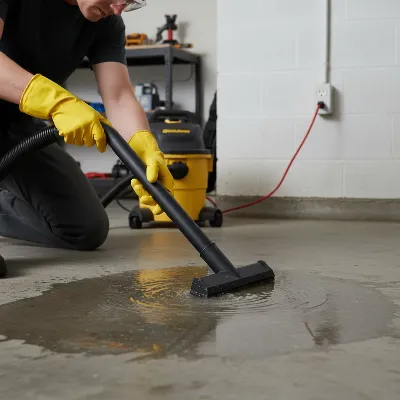 A person safely using a shop vacuum to remove a puddle of water from a garage floor, wearing gloves and safety glasses, with the vacuum plugged into a GFCI outlet.
Preparing Your Shop Vacuum for Wet Pickup
Proper preparation is the key to efficient and safe water removal. Rushing this step can damage your vacuum or hinder its performance. A shop vacuum designed for both wet and dry use typically requires a specific setup for each mode.
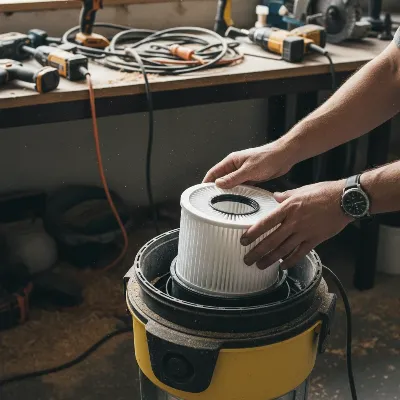
The most critical step is to remove any dry filters or dust bags. Paper cartridge filters and cloth dust bags are designed for dry debris and will be ruined by water, becoming soggy, losing their filtration capability, and blocking airflow. Simply open the canister, unclip or unscrew the dry filter, and set it aside in a safe, dry place for future dry cleaning tasks. If your model uses a disposable dust collection bag, remove and dispose of it.
After removing the dry filter, you’ll need to install a foam sleeve or a specialized wet filter if your vacuum model requires one. Many shop vacuums come with a washable foam sleeve that slides over the filter cage. This foam acts as a preliminary barrier, filtering out larger debris from the water before it reaches the motor, while allowing liquids to pass through. If your particular shop vacuum manual states that no filter is needed for wet pickup, you might proceed without one, but a foam sleeve offers an extra layer of motor protection. Always consult your owner’s manual for specific filter requirements.
Next, select the appropriate nozzle or attachment for the job. A wide floor nozzle is excellent for covering large areas with shallow water. For concentrated puddles or standing water, a round utility nozzle can provide strong suction. Crevice tools are invaluable for reaching water in tight corners, along baseboards, or in narrow spaces. Connecting the hose securely to the suction inlet on the vacuum tank is also important to maintain optimal suction.
Finally, ensure the drain valve (if your model has one) is securely closed before you begin. This prevents premature leakage of the collected water from the tank.
Step-by-Step Guide to Efficient Water Removal
With your shop vacuum prepped and safety precautions in place, you’re ready to tackle the water. This step-by-step process will help you effectively remove standing water and moisture.
-
Power On and Position: Plug the vacuum into a grounded outlet (preferably GFCI). Turn on the power switch, ensuring the vacuum is set to “wet” mode if it has distinct settings. Position the nozzle near the water, ready to begin suction.
-
Start Suction and Clean Up: Slowly move the chosen nozzle over the water surface. For larger areas, begin at the outer edges of the spill and work your way inward, using a smooth, sweeping motion. Keep the nozzle slightly submerged or just ahead of the water level to maximize suction and prevent splashing. Don’t rush; allowing the vacuum time to pull in the liquid will ensure a more thorough cleanup. For deeper puddles, you can hold the nozzle directly into the water.
-
Monitor Tank Level: Keep a close eye on the shop vacuum’s tank. As it fills with water, the suction power will naturally decrease, and the motor’s sound might change. Many models have a float ball mechanism that rises with the water level and automatically shuts off suction when the tank is full to prevent overflow into the motor. If suction stops or you hear a change in the motor’s pitch, turn off the vacuum immediately. Overfilling the tank can lead to water spilling back out or, worse, damaging the motor.
-
Emptying Mid-Job (If Necessary): Once the tank is full, turn off and unplug the shop vacuum. If your model has a drain plug or valve at the bottom, position the vacuum over a floor drain or appropriate disposal container and open the valve to empty the water. If there’s no drain, carefully unlatch the motor head, lift it off, and manually carry the tank to an appropriate disposal location to dump the water. Repeat the process until all standing water is removed.
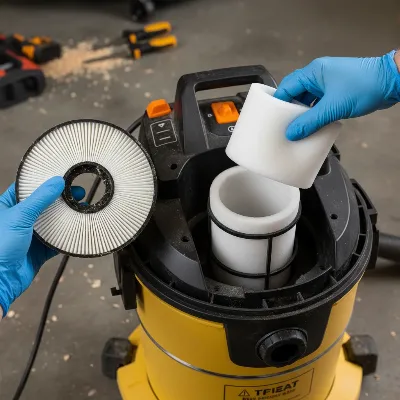 Hands demonstrating the removal of a dry paper filter from a shop vacuum and the installation of a foam sleeve for wet pickup, emphasizing the preparation step.
Post-Cleanup Care: Emptying and Maintaining Your Shop Vacuum
After successfully removing the water, proper post-cleanup care is vital for maintaining your shop vacuum’s longevity and preventing mildew, odors, and corrosion. Neglecting these steps can lead to decreased performance or even permanent damage.
First, empty the tank completely and promptly. Even if the tank wasn’t entirely full, standing water can foster bacterial growth and lead to unpleasant odors. If your shop vacuum has a drain plug, use it to empty the water directly into a floor drain or large bucket. For models without a drain, carefully detach the motor head and manually empty the tank.
Proper disposal of wastewater is also important. If you’ve vacuumed clean water (e.g., from a spilled bathtub), it can often be disposed of down a household drain. However, if the water is dirty, contains chemicals, or is from a sewage backup, it may require special disposal methods according to local regulations. Avoid dumping dirty water into garden beds, as it could harm plants or contaminate the soil.
Next, thoroughly clean the tank, hose, and attachments. Rinse the inside of the tank with clean water to remove any residue, debris, or lingering contaminants. You can use a mild detergent if needed, then rinse again and wipe the tank dry with a clean cloth. Allow the tank to air dry completely before reassembling or storing. Inspect the hose and all attachments for any clogs or debris that might have been sucked in. Rinse them out with water and let them air dry as well.
If you used a foam sleeve for wet pickup, clean it according to the manufacturer’s instructions. Typically, this involves rinsing it under running water until it’s free of debris, then gently squeezing out excess water. Allow the foam sleeve to air dry completely—preferably for 24 hours—before storing it. Reinstalling a damp filter can lead to mold growth and musty odors.
Finally, once all components are clean and thoroughly dry, reassemble your shop vacuum and store it in a cool, dry place. Regular maintenance checks, including inspecting for wear and tear, will ensure your shop vacuum remains in excellent working condition for future tasks.
Common Mistakes to Avoid When Vacuuming Water
While using a shop vacuum for water removal is straightforward, certain mistakes can lead to inefficiency, damage to the vacuum, or even safety hazards. Being aware of these common pitfalls can help you avoid them.
One of the most critical errors is using a standard household vacuum for liquid cleanup. These vacuums are not designed to handle water, and attempting to do so will almost certainly result in severe electrical shock, irreparable damage to the motor, and potentially a fire. Always confirm your vacuum is a wet/dry shop vacuum before proceeding.
Another frequent mistake is forgetting to remove the dry filter or dust bag. Leaving a paper filter or cloth bag in place during wet pickup will cause it to become saturated and clog almost instantly, rendering it useless for future dry cleaning and significantly reducing your vacuum’s suction power for water. This oversight can also strain the motor.
Overfilling the tank is a common issue that reduces efficiency and can create a new mess. As the tank fills, the vacuum’s suction diminishes, and there’s a risk of water spilling out or the float mechanism failing, allowing water to reach the motor. Always monitor the tank level and empty it before it reaches capacity.
Ignoring electrical safety warnings can have serious consequences. Using a damaged power cord, operating the vacuum near water without a GFCI outlet (if available), or failing to unplug the unit before handling internal components puts you at risk of electric shock. Always prioritize unplugging and inspecting your equipment.
Finally, skipping post-use cleaning and drying is a mistake that shortens your vacuum’s lifespan and promotes unpleasant odors. Moisture left in the tank, hose, or filter creates an ideal breeding ground for mold and mildew. Always take the time to thoroughly clean and air dry all components after wet pickup.
> “A shop vacuum is an incredibly versatile tool, but its wet capabilities are often underestimated. Remember, the true power lies not just in its suction, but in understanding the specific setup and safety protocols for liquid tasks.” – Admin, ReviewEliza.com
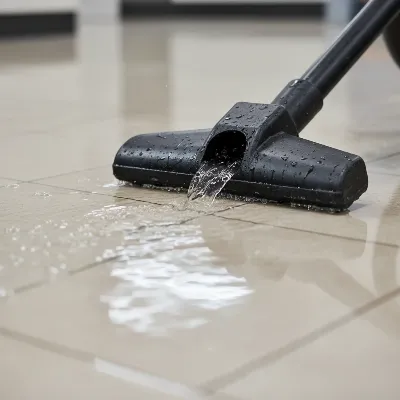 A close-up shot of a shop vacuum's wet nozzle efficiently sucking up a stream of water from a tiled floor, highlighting the effective water removal process.
Conclusion
Mastering the use of your shop vacuum for water removal can empower you to confidently handle unexpected spills, leaks, and floods around your home. By understanding the distinct preparation steps for wet pickup, diligently adhering to electrical safety guidelines, and following a methodical cleaning process, you can efficiently mitigate water damage while protecting your valuable equipment and, most importantly, yourself.
Remember, a properly equipped and safely operated shop vacuum is more than just a tool; it’s a crucial part of your DIY arsenal, ready to tackle even the most daunting liquid messes. With the insights shared here, you are now well-prepared to put your shop vacuum to work safely and effectively. What water challenges will you conquer next with your newly honed skills?
Câu Hỏi Thường Gặp
Can I vacuum hot water with a shop vacuum?
|
Our Picks for the Best Shop Vacuum in 2026
As an Amazon Associate I earn from qualifying purchases.
|
||
| Num | Product | Action |
|---|---|---|
| 1 | Shop-Vac 9522205 5 Gallon 5.5 Peak HP Hangup Wet/Dry Vacuum, 1.25 Inch Diameter x 18 Foot Hose, 6 Foot Cord, Wall Mount Included, Ideal for Garage, Workshop & Home |

|
| 2 | Vacmaster Wet/Dry Vacuum with Detachable Blower 6 Gallon 5 Peak HP-VBVB611PF 1101 |
|
| 3 | Vacmaster VF408 4 Gallon Wet/Dry Vacuum Cleaner with 2-Stage Motor |
|
| 4 | Shop-Vac 5985005 6 Gallon Wet/Dry Vacuum, 3.5 Peak HP, 1.25 Inch Diameter x 7 Foot Hose, 6 Foot Cord, Ideal for Home, Garage, and Workshop Cleaning |
|
| 5 | Shop-Vac 5989305 Wet/Dry Vacuum, 5 Gallon, 4.5 Peak HP Stainless Steel Vacuum, 1.25 Inch Diameter x 7 Foot Hose, 6 Ft Cord Length, Ideal for Jobsite, Garage, Car & Workshop |
|
| 6 | Stanley - SL18129 Wet/Dry Vacuum, 4 Gallon, 4 Horsepower, Stainless Steel Tank Silver+yellow |
|
| 7 | Armor All VBV809 0901 8-Gallon 4.5 Peak HP Wet/Dry Vacuum with Detachable Blower, Orange |
|
| 8 | Armor All VO408S 0901 4 Gallon 3 Peak HP Stainless Steel Wet/Dry Vacuum, Orange |
|
| 9 | Kärcher Shop Vacuum WD 4, 5.3 Gal, 3.8 Peak HP, 33 ft Reach, Wet Dry Vacuum Cleaner, Heavy Duty, Blower Function, Crevice Tool, Floor Nozzle, Great for DIY Projects and Workshops |
|
| 10 | DEWALT DXV16PA 16 Gallon Poly Wet/Dry Vac/Acc, 6.5HP Shop Vacuum Wet/Dry for Jobsite/Workshop, Yellow |
|
While most shop vacuums can handle warm water, avoid extremely hot or boiling water, as it can damage the plastic components, hoses, and seals of the vacuum. Always let very hot water cool down before attempting to vacuum it up to ensure the longevity of your machine and your safety.
What if my shop vac doesn’t have a foam filter for wet pickup?
If your shop vacuum does not come with a specific foam filter for wet pickup and the manual doesn’t specify one, it might be designed to operate without a filter for liquids. However, ensure all dry filters are removed, and be extra cautious about vacuuming large debris that could reach and damage the motor.
How do I know when the shop vacuum tank is full?
Most shop vacuums have an internal float ball mechanism that rises with the water level. When the tank is full, this float will block the suction inlet, causing the vacuum’s motor pitch to change and suction to stop. If this happens, or if you notice a significant drop in suction, it’s time to empty the tank.
Is it safe to vacuum dirty or contaminated water?
A shop vacuum can effectively remove dirty water, such as mud or wastewater from a minor plumbing leak. However, if the water is heavily contaminated (e.g., from raw sewage or hazardous chemicals), it’s best to call a professional. Always wear appropriate PPE, like heavy-duty gloves and eye protection, when dealing with dirty water.
How often should I clean my shop vacuum after wet use?
It is crucial to clean and thoroughly dry your Shop Vacuum’s tank, hose, and any wet filters immediately after every wet use. This prevents mold, mildew, and unpleasant odors from developing, ensuring the machine remains hygienic and performs optimally for its next task.