A clogged shop vacuum hose can significantly reduce suction and performance, but it’s a common and fixable issue. Most clogs can be safely cleared using simple DIY methods like manual extraction, pushing with a rigid object, or employing suction/air pressure, often saving you the cost of a new hose or professional repair. Understanding the signs of a blockage and having the right tools on hand are key to quickly restoring your shop vacuum’s full power.
Recognizing a Blocked Shop Vacuum Hose: Signs and Common Culprits
Before diving into solutions, it’s crucial to confirm that a hose clog is indeed the issue. Several tell-tale signs point to a blockage within your shop vacuum’s hose. The most obvious indicator is a significant loss of suction; your vacuum struggles to pick up debris it once handled with ease. You might also notice unusual noises, such as a strained motor sound, or even your vacuum blowing out dust from areas it shouldn’t, indicating restricted airflow. A particularly unpleasant sign is a foul odor emanating from the hose, suggesting organic material has been trapped and is decomposing.
Shop vacuum hoses are prone to clogs for various reasons, often a combination of debris type and usage habits. Common culprits include:
- Fibrous Materials: Pet hair, dryer lint, string, or fabric scraps can tangle together, forming dense plugs.
- Large Debris: Nails, screws, chunks of wood, broken tiles, plastic packaging, or even small toys can get sucked in and become wedged.
- Fine Dust Buildup: Over time, fine dust and sawdust can accumulate on the interior walls of the hose, narrowing the passage and creating a sticky surface where other debris can snag.
- Wet or Damp Materials (with a dry vac): Attempting to vacuum wet leaves, damp sawdust, or other moist debris with a standard dry shop vacuum can cause materials to clump and stick, leading to significant clogs.
- Hose Bends and Kinks: The flexible nature of a shop vacuum hose can sometimes work against it. Sharp bends or kinks can create pinch points where debris easily snags and collects.
> “Understanding what you’re typically cleaning up helps diagnose clogs faster. Fine dust, wood chips, and stray screws are the usual suspects in a workshop environment.” — Johnathan Miller, Industrial Cleaning Equipment Specialist
Safety First: Essential Preparations and Tools for Unclogging
Before attempting any unclogging procedure, prioritize safety to prevent injury or damage to your equipment.
Essential Safety Steps:
- Unplug the Shop Vacuum: Always disconnect the power cord from the outlet to eliminate any risk of accidental startup. This is the most critical safety step.
- Wear Protective Gear: Gloves can protect your hands from sharp debris or unsanitary clogs. If using compressed air, safety glasses are a must to protect against flying particles.
- Work in a Well-Ventilated Area: If you plan to rinse the hose or use cleaning solutions, ensure good ventilation.
Recommended Tools for Unclogging:
- Long, Rigid Object: A broom handle, mop handle, or a section of PVC pipe are excellent for pushing out clogs. Ensure it’s long enough to reach through the hose.
- Needle-Nose Pliers or Hooked Wire: Useful for grabbing and pulling out visible debris near the ends of the hose or attachments. A straightened coat hanger can work, but be cautious not to scratch or puncture the hose.
- Plumber’s Snake (Drain Auger): For deeper, more stubborn clogs, a flexible plumber’s snake can be fed through the hose to break up or retrieve the blockage.
- Another Powerful Vacuum (e.g., another shop vac): Can be used to create reverse suction or pull the clog out.
- Air Compressor: For blowing out blockages, especially if the vacuum has a blower port, but use with caution to avoid damaging the hose.
- Water Hose or Bathtub: For flushing out debris with water.
- Dish Soap, Baking Soda, and White Vinegar: For breaking down organic buildup and cleaning the hose.
Tools to Avoid:
- Sharp Objects (like unpadded coat hangers): While a hooked wire can be useful, avoid overly sharp or pointed objects that could puncture or tear the hose, compromising its suction capabilities.
- Excessive Force: Shop vacuum hoses are durable but can be damaged if you push or pull too hard. If a clog isn’t budging, try a different method rather than risking damage.
Step-by-Step DIY Guide to Safely Unclog Your Shop Vacuum Hose
Once you’ve prepared your workspace and gathered your tools, follow these steps to systematically clear your clogged shop vacuum hose.
1. Detach and Inspect the Hose
|
Our Picks for the Best Shop Vacuum in 2026
As an Amazon Associate I earn from qualifying purchases.
|
||
| Num | Product | Action |
|---|---|---|
| 1 | DEWALT DXV16PA 16 Gallon Poly Wet/Dry Vac/Acc, 6.5HP Shop Vacuum Wet/Dry for Jobsite/Workshop, Yellow |

|
| 2 | Shop-Vac 9522205 5 Gallon 5.5 Peak HP Hangup Wet/Dry Vacuum, 1.25 Inch Diameter x 18 Foot Hose, 6 Foot Cord, Wall Mount Included, Ideal for Garage, Workshop & Home |
|
| 3 | Vacmaster VF408 4 Gallon Wet/Dry Vacuum Cleaner with 2-Stage Motor |
|
| 4 | Vacmaster Wet/Dry Vacuum with Detachable Blower 6 Gallon 5 Peak HP-VBVB611PF 1101 |
|
| 5 | Armor All VO408S 0901 4 Gallon 3 Peak HP Stainless Steel Wet/Dry Vacuum, Orange |
|
| 6 | Kärcher Shop Vacuum WD 4, 5.3 Gal, 3.8 Peak HP, 33 ft Reach, Wet Dry Vacuum Cleaner, Heavy Duty, Blower Function, Crevice Tool, Floor Nozzle, Great for DIY Projects and Workshops |
|
| 7 | Armor All VBV809 0901 8-Gallon 4.5 Peak HP Wet/Dry Vacuum with Detachable Blower, Orange |
|
| 8 | Shop-Vac 5989305 Wet/Dry Vacuum, 5 Gallon, 4.5 Peak HP Stainless Steel Vacuum, 1.25 Inch Diameter x 7 Foot Hose, 6 Ft Cord Length, Ideal for Jobsite, Garage, Car & Workshop |
|
| 9 | Stanley - SL18129 Wet/Dry Vacuum, 4 Gallon, 4 Horsepower, Stainless Steel Tank Silver+yellow |
|
| 10 | Shop-Vac 5985005 6 Gallon Wet/Dry Vacuum, 3.5 Peak HP, 1.25 Inch Diameter x 7 Foot Hose, 6 Foot Cord, Ideal for Home, Garage, and Workshop Cleaning |
|
First, detach the hose completely from the shop vacuum and any attachments. This provides full access to the hose and helps isolate the clog. Lay the hose out straight on a flat surface. Visually inspect both ends, looking for any visible debris or blockages. Hold the hose up to a light source; if it’s translucent, you might be able to spot the clog within. For opaque hoses, drop a small, heavy object like a marble or coin through one end. If you hear it stop, you’ve located the approximate position of the blockage.
2. Manual Extraction for Visible Clogs
If the clog is near either end of the hose or in an attachment, you might be able to remove it manually.
- Pliers or Hooked Wire: Use needle-nose pliers or a carefully bent, hooked wire (like a straightened coat hanger, but ensure no sharp edges) to grab and pull out the visible debris. Gently work the tool around the clog to get a firm grip before pulling.
3. Pushing the Clog Out
For clogs deeper within the hose, a long, rigid object can be effective.
- Broom Handle or PVC Pipe: From one end of the hose, slowly feed a broom handle, mop handle, or a section of PVC pipe into the hose. Push gently but firmly. The goal is to dislodge the clog and push it out the other end. If you encounter significant resistance, stop and try pushing from the opposite end, as this can sometimes work better. Remember not to force it, as you could damage the hose.
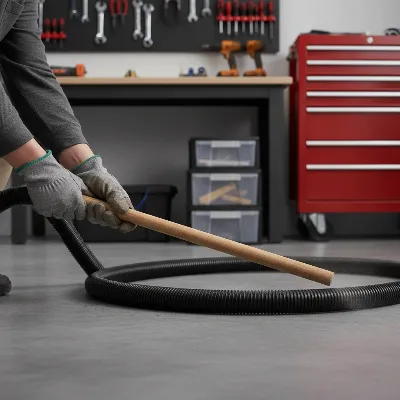 A technician demonstrating how to push a clog out of a shop vacuum hose using a broomstick.
4. Using Suction or Air Pressure
If pushing doesn’t work, leverage air pressure.
- Reverse Suction (with another vacuum): Connect another powerful vacuum (ideally another shop vacuum) to one end of the clogged hose. Turn on the second vacuum to create strong suction, attempting to pull the blockage free.
- Blowing with Compressed Air: If you have an air compressor, tape off the vacuum end of the hose to create a seal and then introduce a burst of compressed air. This can powerfully dislodge stubborn clogs. Use short bursts and wear eye protection.
- Shop Vac Blower Port: Many shop vacuums have a blower port. Detach the hose and connect it to the blower port. This can sometimes blast smaller clogs free.
5. Water and Chemical Flush (for persistent buildup)
For clogs primarily caused by sticky buildup or fine dust, a wet method can be beneficial. Ensure your shop vacuum is completely unplugged and dry before reattaching the hose after this method.
- Dish Soap and Water: Submerge the hose in a bathtub filled with warm water and a few squirts of dish soap. Let it soak for a while, then run water through it to flush out accumulated grime.
- Baking Soda and Vinegar: For a more thorough cleaning or to break down organic matter, pour about half a cup of baking soda into the hose, followed by half a cup of white vinegar. Let it foam for a few minutes to loosen buildup, then rinse thoroughly with hot water.
After any wet method, hang the hose to dry completely for several hours before reattaching it to prevent mold or mildew growth.
Tackling Stubborn Blockages and Advanced Techniques
Sometimes, a single method isn’t enough to clear a truly stubborn clog. This is where combining techniques and knowing when to look elsewhere becomes vital.
Combining Methods for Difficult Clogs:
- Push and Suction/Blow: Try pushing with a broom handle while simultaneously using another vacuum for suction or an air compressor to blow from the opposite end. The combination of physical force and air pressure can be highly effective.
- Plumber’s Snake with Water: For very deep and compacted clogs, a plumber’s snake can be inserted to break up the material. If the clog is organic, following up with a water and chemical flush can help wash away the loosened debris.
When to Seek Professional Help:While most hose clogs are DIY-friendly, there are times when professional assistance might be necessary. If you’ve tried multiple methods without success, suspect damage to the hose, or if the clog is in an inaccessible part of the vacuum itself, a professional technician can diagnose and repair the issue safely. Don’t hesitate to consult the user manual if you’re unsure about detaching components or if you suspect a more complex internal problem.
Identifying Clogs Elsewhere:A loss of suction doesn’t always mean the hose is blocked. If your hose is clear, check other components:
- Attachments and Wands: Debris can get stuck in nozzles, extension wands, or floor heads.
- Filter: A clogged or dirty filter is a common cause of reduced suction. Clean or replace it regularly.
- Canister/Collection Bag: An overfilled canister or bag restricts airflow. Empty it regularly.
- Motor Intake/Cyclone Chamber: In some models, debris can accumulate in the vacuum’s internal pathways or cyclone chamber.
Preventing Future Clogs: Best Practices for Shop Vacuum Longevity
Proactive maintenance and mindful usage are the best defenses against future clogs, ensuring your shop vacuum operates efficiently for years to come.
Regular Maintenance Habits
- Empty the Canister Regularly: Don’t wait until the collection tank or bag is overflowing. Emptying it when it’s about two-thirds full maintains optimal suction and prevents debris from accumulating in the hose.
- Clean and Inspect Filters: Regularly clean or replace your shop vacuum’s filter according to the manufacturer’s guidelines. A clogged filter severely reduces suction and can stress the motor.
- Inspect and Clean Hoses and Attachments: After each significant use, quickly inspect the hose and all attachments for any visible debris. Give them a quick rinse if you’ve picked up anything sticky or dusty.
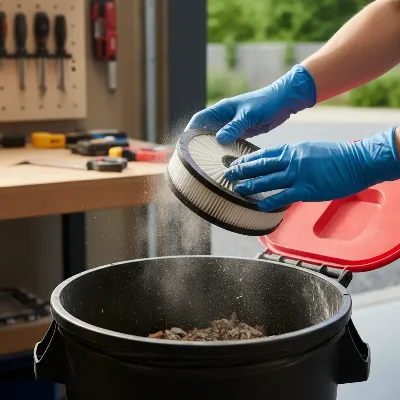 A person cleaning a shop vacuum filter as part of regular maintenance to prevent clogs.
Proper Vacuuming Techniques
- Pre-clean Large Debris: Before firing up your shop vacuum, manually pick up any large objects like wood scraps, large nails, or pieces of plastic. If it looks like it might get stuck, pick it up by hand.
- Avoid Vacuuming Wet Materials (with a dry vac): Unless you have a wet/dry shop vacuum specifically designed for liquids, never vacuum wet or damp materials. These will stick and compact, forming difficult clogs and potentially damaging your machine.
- Use the Right Attachments: Utilize appropriate nozzles and wands for different types of debris. Narrower nozzles can sometimes concentrate suction but are also more prone to clogging with larger items.
- Mind the Hose Route: Avoid sharp bends or kinks in the hose during operation, as these create natural points for clogs to form.
By integrating these practices into your routine, you’ll significantly reduce the likelihood of a frustrating hose blockage, keeping your shop vacuum running at peak performance.
Conclusion
A clogged shop vacuum hose can bring your workflow to a grinding halt, but with the right approach, it’s a problem you can confidently solve yourself. By understanding the common causes, employing safe practices, and utilizing a few simple tools, you can effectively clear most blockages. Remember to always prioritize safety by unplugging your machine and using appropriate protective gear. Regular maintenance, such as emptying the canister and cleaning filters, combined with careful vacuuming habits, will go a long way in preventing future clogs. Keep your shop vacuum in top shape, and it will continue to be an invaluable assistant for all your toughest cleaning tasks. What’s the most unusual item you’ve ever had to retrieve from your shop vacuum’s hose?
Frequently Asked Questions
Why does my shop vacuum lose suction if the hose isn’t visibly clogged?
Even if the hose appears clear, loss of suction can stem from a full dust canister or bag, a dirty or clogged filter, or blockages within the attachments, wands, or the vacuum’s internal intake system. Always check these components thoroughly.
Can I use a regular household vacuum to unclog a shop vacuum hose?
Yes, a powerful household vacuum can sometimes be used to create reverse suction and pull out a smaller clog from a shop vacuum hose. However, another shop vacuum is often more effective due to its higher suction power.
How often should I clean my shop vacuum hose?
The frequency depends on usage. For heavy-duty use or if you frequently vacuum fine dust and fibrous materials, inspect and clean your hose monthly. For lighter use, a visual check and cleaning every few months or whenever suction noticeably drops is sufficient.
Is it safe to use chemical drain cleaners to unclog a shop vacuum hose?
No, it is generally not recommended to use harsh chemical drain cleaners. These chemicals can be corrosive and potentially damage the plastic or rubber materials of your shop vacuum hose, leading to leaks or deterioration. Stick to milder solutions like dish soap, baking soda, and vinegar.
What should I do if the clog is too deep or I can’t reach it?
If a clog is too deep, you’ve tried multiple methods without success, or you’re uncomfortable attempting the removal yourself, it’s best to consult a professional vacuum repair technician. They have specialized tools and expertise to handle stubborn or complex blockages.
Frequently Asked Questions
Why does my shop vacuum lose suction if the hose isn't visibly clogged?
Even if the hose appears clear, loss of suction can stem from a full dust canister or bag, a dirty or clogged filter, or blockages within the attachments, wands, or the vacuum's internal intake system. Always check these components thoroughly before assuming the hose is the sole issue.
Can I use a regular household vacuum to unclog a shop vacuum hose?
Yes, a powerful household vacuum can sometimes be used to create reverse suction and pull out a smaller clog from a shop vacuum hose. However, another shop vacuum is often more effective due to its higher suction power, typically ranging from 150-300 air watts.
How often should I clean my shop vacuum hose?
The frequency depends on usage. For heavy-duty use or if you frequently vacuum fine dust and fibrous materials, inspect and clean your hose monthly. For lighter use, a visual check and cleaning every few months or whenever suction noticeably drops is sufficient to prevent major clogs.
Is it safe to use chemical drain cleaners to unclog a shop vacuum hose?
No, it is generally not recommended to use harsh chemical drain cleaners. These chemicals can be corrosive and potentially damage the plastic or rubber materials of your shop vacuum hose, leading to leaks or deterioration. Stick to milder solutions like dish soap, baking soda, and vinegar for safe cleaning.
What should I do if the clog is too deep or I can't reach it?
If a clog is too deep, you've tried multiple methods without success, or you're uncomfortable attempting the removal yourself, it's best to consult a professional vacuum repair technician. They have specialized tools and expertise to handle stubborn or complex blockages safely and effectively.
How to Safely Unclog Your Shop Vacuum Hose
This guide provides a step-by-step process to safely and effectively clear blockages from your shop vacuum hose using common household tools.
Completely disconnect the hose from the shop vacuum and any attachments. Lay it straight and visually inspect both ends for visible debris. Hold it to a light or drop a small object through to locate the clog's approximate position.
If the clog is near either end or in an attachment, use needle-nose pliers or a carefully bent, hooked wire (like a straightened coat hanger without sharp edges) to gently grab and pull out the visible debris. Work carefully to avoid damaging the hose.
For deeper clogs, slowly feed a long, rigid object like a broom handle or PVC pipe into the hose from one end. Push gently but firmly to dislodge the clog and push it out the other end. If resistance is met, try pushing from the opposite end.
If pushing fails, connect another powerful vacuum to one end of the clogged hose for reverse suction. Alternatively, use an air compressor with eye protection to blow short bursts of compressed air through the hose, or connect the hose to your shop vac's blower port.
For sticky buildup, submerge the hose in warm water with dish soap, then rinse. For organic matter, pour half a cup of baking soda followed by half a cup of white vinegar into the hose, let it foam, then rinse thoroughly with hot water. Ensure the hose dries completely before reattaching.

I was about to buy a new hose because my shop vac had almost no suction left. Following the steps here, especially using a rigid object to push through the blockage, worked like a charm. It was amazing how much sawdust and wood chips were packed in there. My vacuum is back to full power, saving me money and a trip to the store.
My shop vac was struggling to pick up even small debris, and I was getting frustrated. I appreciated the advice on recognizing a blocked hose. I used a long, flexible drain snake I had on hand, and it dislodged a huge amount of pet hair and lint that had accumulated. It’s like having a brand new vacuum again!
I had a really stubborn clog from some wet leaves and mud. The air pressure method didn’t quite clear it completely for me, even with a good compressor. I still had to do a lot of manual work to get it mostly clear. It helped point me in the right direction, but it wasn’t as easy as I hoped for my specific situation.
This was super helpful! I noticed my shop vac making a strained motor sound and knew something was up. I tried the manual extraction method first, and while it took a bit of effort, I managed to pull out a huge wad of drywall dust and insulation. It’s not 100% perfect, but the suction is way better now.