Anyone who has wielded a powerful shop vacuum knows its immense utility in tackling tough messes, from sawdust in the workshop to garage spills. Yet, this indispensable tool often comes with a frustrating Achilles’ heel: its tendency to tip over at the slightest tug or bump. This common issue not only interrupts your workflow but can also damage the unit or its surroundings. Understanding the root causes of this instability and implementing practical solutions can significantly enhance your shop vacuum experience, transforming a clumsy workhorse into a steadfast cleaning companion. This comprehensive guide will equip you with the knowledge and actionable advice to keep your shop vacuum upright and operating efficiently.
What is a Shop Vacuum and Why Do You Need One?
A shop vacuum, often referred to as a wet/dry vac, is a powerful cleaning appliance designed to handle heavy-duty debris and liquids that would quickly overwhelm a standard household vacuum cleaner. Unlike their domestic counterparts, shop vacuums feature robust motors, larger collection canisters, and wider hoses capable of sucking up everything from construction debris, wood chips, and fine dust to water and thick sludge. They are essential tools in workshops, garages, construction sites, and even homes for tackling renovation cleanups, flooded basements, or car detailing. The core benefit lies in their versatility and sheer power, making them indispensable for environments where typical vacuums simply won’t suffice.
Understanding Why Your Shop Vacuum Tips Over
The frustration of a shop vacuum constantly toppling over is a shared experience for many users. The primary culprit often lies in the very design that makes them powerful. Most shop vacuums are built with a tall, cylindrical canister and a motor housing on top, making them inherently top-heavy. This high center of gravity, especially when the canister is empty and thus lighter at the base, creates an unstable structure.
Another significant factor is the casters or wheels. Many entry-level shop vacuums come with small, sometimes flimsy casters that struggle to navigate uneven surfaces, power cords, or even slight thresholds, easily snagging and causing the unit to tilt. The stiffness and length of the hose also play a critical role. A rigid, short hose requires you to pull the entire unit frequently, and any sudden tug or lateral movement can easily pull the top-heavy vacuum off balance. Furthermore, operating on uneven or cluttered surfaces amplifies these inherent design flaws, turning a minor snag into an immediate tip-over incident.
Practical Solutions to Prevent Shop Vacuum Tipping
Addressing the stability issues of your shop vacuum involves a combination of smart usage practices, strategic modifications, and thoughtful upgrades.
Upgrade Your Mobility and Stability
|
Our Picks for the Best Shop Vacuum in 2026
As an Amazon Associate I earn from qualifying purchases.
|
||
| Num | Product | Action |
|---|---|---|
| 1 | Shop-Vac 9522205 5 Gallon 5.5 Peak HP Hangup Wet/Dry Vacuum, 1.25 Inch Diameter x 18 Foot Hose, 6 Foot Cord, Wall Mount Included, Ideal for Garage, Workshop & Home |

|
| 2 | Stanley - SL18129 Wet/Dry Vacuum, 4 Gallon, 4 Horsepower, Stainless Steel Tank Silver+yellow |
|
| 3 | Kärcher Shop Vacuum WD 4, 5.3 Gal, 3.8 Peak HP, 33 ft Reach, Wet Dry Vacuum Cleaner, Heavy Duty, Blower Function, Crevice Tool, Floor Nozzle, Great for DIY Projects and Workshops |
|
| 4 | Vacmaster Wet/Dry Vacuum with Detachable Blower 6 Gallon 5 Peak HP-VBVB611PF 1101 |
|
| 5 | Shop-Vac 5989305 Wet/Dry Vacuum, 5 Gallon, 4.5 Peak HP Stainless Steel Vacuum, 1.25 Inch Diameter x 7 Foot Hose, 6 Ft Cord Length, Ideal for Jobsite, Garage, Car & Workshop |
|
| 6 | Vacmaster VF408 4 Gallon Wet/Dry Vacuum Cleaner with 2-Stage Motor |
|
| 7 | DEWALT DXV16PA 16 Gallon Poly Wet/Dry Vac/Acc, 6.5HP Shop Vacuum Wet/Dry for Jobsite/Workshop, Yellow |
|
| 8 | Shop-Vac 5985005 6 Gallon Wet/Dry Vacuum, 3.5 Peak HP, 1.25 Inch Diameter x 7 Foot Hose, 6 Foot Cord, Ideal for Home, Garage, and Workshop Cleaning |
|
| 9 | Armor All VO408S 0901 4 Gallon 3 Peak HP Stainless Steel Wet/Dry Vacuum, Orange |
|
| 10 | Armor All VBV809 0901 8-Gallon 4.5 Peak HP Wet/Dry Vacuum with Detachable Blower, Orange |
|
One of the most impactful ways to prevent tipping is to enhance the base and mobility of your shop vacuum.
-
Larger, High-Quality Casters: Replacing small, factory-standard casters with larger, more robust, and free-swiveling wheels can dramatically improve stability and maneuverability. Look for casters made from durable materials like polyurethane, which roll smoothly over obstacles and distribute weight more effectively.
-
DIY Carts or Wider Bases: Many users construct custom wooden carts or platforms for their shop vacuums. These typically feature a wider footprint than the vacuum’s original base, lowering its center of gravity and providing a much more stable foundation. Some designs even incorporate storage for accessories and hose management, turning your vacuum into a more organized and tip-resistant mobile workstation.
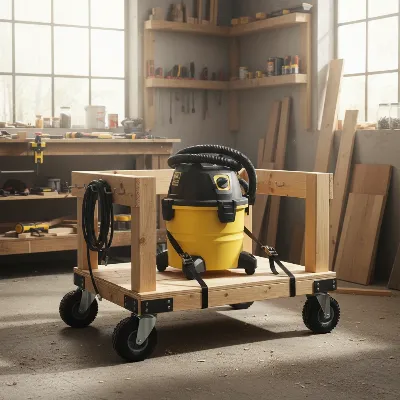 A DIY wooden cart designed to enhance shop vacuum stability, featuring a wider base and larger, heavy-duty casters for improved mobility.
 -
Integrated Dust Separation Systems: For those who frequently use their shop vacuum for fine dust collection (e.g., woodworking), integrating a cyclone dust separator (like a Dust Deputy) on a shared cart can be a game-changer. By having both units mounted on a single, stable platform, you create a more balanced system, and the separator itself pre-filters most debris, keeping the vacuum’s canister lighter and less top-heavy.
Manage Your Hose Effectively
The hose is a primary culprit in tipping incidents. Thoughtful management can make a big difference.
- Longer, More Flexible Hoses: Investing in a longer and more flexible hose allows you to reach a wider area without needing to move the vacuum itself constantly. This reduces the frequency of pulling and tugging, minimizing the chances of tipping. Flexible hoses also resist kinks and have less “memory,” making them easier to maneuver.
- Hose Management Techniques: When working, try to position your shop vacuum centrally within your work area and manage the hose by coiling excess neatly. Avoid letting the hose become a trip hazard or get snagged on obstacles, as a sudden pull can instantly destabilize the unit.
Proper Usage and Placement
Even with upgrades, mindful operation is key to preventing tip-overs.
- Avoid Pulling by the Hose: This is perhaps the most common mistake. Always move your shop vacuum by pushing it or grabbing the handle on the canister, rather than dragging it by the hose. Pulling by the hose puts torque on the unit and can easily flip it.
- Operate on Level Ground: Whenever possible, use your shop vacuum on a flat, even surface. If working on uneven terrain, be extra cautious and consider placing the vacuum on a stable, wide board or platform to create a level base.
- Consider Adding Weight to the Base: For extremely unstable units, adding weight to the base of the canister can lower its center of gravity. This could be as simple as placing a small sandbag or a few bricks inside the empty canister (ensuring they don’t obstruct airflow or moving parts during operation). For wet pickup, the water itself will add weight, making it naturally more stable.
Comparing Shop Vacuum Designs for Stability
When purchasing a new shop vacuum or evaluating an existing one, certain design characteristics inherently offer better stability:
- Horizontal vs. Vertical Designs: While most shop vacuums are vertical canisters, some industrial models feature a more horizontal, low-profile design. These units generally have a much lower center of gravity and wider stance, making them significantly more stable and less prone to tipping.
- Canister Size and Shape: Larger capacity shop vacuums often have a wider base to accommodate their volume, which can contribute to better stability. However, very tall, narrow canisters, even if wide, can still be top-heavy. Units with a wider diameter relative to their height tend to be more stable.
- Wheelbase and Caster Quality: Pay close attention to the wheelbase—the distance between the wheels. A wider wheelbase provides a more stable foundation. Furthermore, vacuums equipped with larger, industrial-grade swiveling casters from the factory will outperform those with small, fixed, or flimsy wheels. Some premium models feature heavy-duty wheels designed to navigate rugged workshop environments with ease.
> “A shop vacuum’s stability isn’t just about convenience; it’s about efficiency and safety. A unit that constantly tips wastes time and can create hazards. Investing in better mobility through casters or a custom cart pays dividends.” – Eliza R., Industrial Vacuum Technician with 10+ years experience.
Top Shop Vacuum Stability Enhancements & Accessories
Beyond basic operation, several accessories and common modifications can drastically improve your shop vacuum’s stability.
DIY Shop Vacuum Carts
The most effective long-term solution for stability is often a custom-built cart. These carts can be tailored to your specific shop vacuum model and workspace, incorporating features like:
-
Wide Base: Extending the footprint well beyond the vacuum’s original dimensions.
-
Large Casters: Using 3-inch or larger swiveling casters that roll effortlessly over shop debris and cords.
-
Integrated Storage: Adding shelves or hooks for hoses, attachments, and power cords, which also helps balance the weight.
-
Dust Separator Integration: Designing the cart to hold a cyclone separator directly on or beside the vacuum, creating a single, stable dust collection unit.
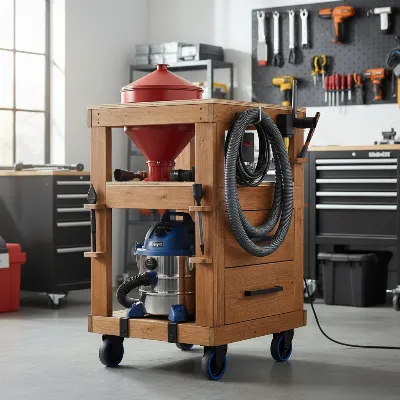 A custom-built shop vacuum cart with an integrated dust separator, demonstrating enhanced stability and organization.
Aftermarket Casters
If a full cart is too much, simply upgrading the casters can provide significant benefits. Look for:
- Heavy-Duty Materials: Polyurethane or rubber wheels are durable and roll quietly.
- Larger Diameter: Taller wheels clear obstacles more easily.
- Brakes: Locking casters add stationary stability when needed.
Longer, Flexible Hoses
A longer hose allows the shop vacuum to remain stationary while you clean a wider area. Look for:
- Increased Length: 10-foot, 15-foot, or even 20-foot hoses are common upgrades.
- Smooth Interior: Reduces airflow resistance, maintaining suction power.
- Crush-Proof Designs: Prevents damage and maintains hose integrity.
These enhancements turn your shop vacuum from a frustrating tipper into a reliable, mobile cleaning station.
Maintenance Tips for Enhanced Stability
Regular maintenance not only prolongs the life of your shop vacuum but also directly contributes to its operational stability.
Regular Inspection of Casters and Base
Periodically check your casters for wear and tear, accumulated debris, or damage. Wheels can seize up or become wobbly, making the unit prone to tipping. Clean any hair, string, or gunk from the caster stems to ensure they swivel freely. Ensure all screws and fasteners holding the casters to the base are tight. If a wheel is significantly damaged or missing, replace it promptly.
Keep the Canister Empty (or Mindfully Weighted)
When the canister is empty, the shop vacuum is at its most top-heavy. While you can add some weight to the base for stability, it’s generally best to empty the canister regularly. A full canister, especially with heavy debris or liquids, adds weight to the bottom, naturally lowering the center of gravity and making the unit more stable. However, an overfilled canister can also be unwieldy and more difficult to maneuver safely. Strike a balance by emptying it before it becomes excessively full or challenging to move.
Hose Care
Inspect your hose for kinks, cracks, or punctures. A damaged hose can reduce suction, and a severely kinked hose can contribute to awkward pulling, increasing the risk of tipping. Store your hose properly, preferably coiled loosely on a hook or dedicated holder, to prevent damage and maintain its flexibility.
Conclusion
Preventing your shop vacuum from tipping over is a crucial step towards a more efficient, safer, and less frustrating cleaning experience. By understanding that a top-heavy design, inadequate casters, and stiff hoses are the primary culprits, you can implement effective solutions. Upgrading to larger, robust casters, constructing a custom wider-base cart, and managing your hose with care are key strategies. Coupled with mindful operation—avoiding pulling by the hose and working on level surfaces—you can transform your shop vacuum into a stable and reliable workhorse. Don’t let a clumsy vacuum slow you down; empower it with stability and reclaim your productivity. What’s the one stability tip you’ll implement first to make your shop vacuum a steadfast tool?
Frequently Asked Questions
Why does my shop vacuum keep falling over?
Shop vacuums typically fall over because they are top-heavy, especially when empty. Small, cheap casters can snag on obstacles or uneven surfaces, and a stiff hose can pull the unit off balance with even a slight tug.
Can I put different wheels on my shop vacuum?
Yes, upgrading the wheels (casters) is one of the most effective ways to improve stability. Replacing the original small casters with larger, heavy-duty, swiveling casters can help your vacuum roll more smoothly and resist tipping.
How can I make my shop vacuum more stable without buying anything new?
To improve stability without new purchases, ensure you’re always operating on a level surface. Avoid pulling the unit by its hose; instead, push it or use the built-in handle. You can also place some non-obstructive weight, like a small sandbag, inside an empty canister to lower its center of gravity.
Does a longer hose help prevent tipping?
Yes, a longer and more flexible hose allows you to cover a larger area without moving the vacuum. This reduces the need to pull the unit frequently, minimizing the jerking motions that often lead to tipping.
Is it better to have a full or empty shop vacuum for stability?
A shop vacuum tends to be more stable when its canister has some weight, as this lowers its center of gravity. So, a partially full or full canister, especially with heavy debris or liquid, can make it less prone to tipping than an entirely empty one.
