Building a DIY shop vacuum dust separator significantly extends filter life and maintains consistent suction by capturing up to 99% of dust and debris before it reaches your vacuum’s primary filter. This pre-filtration system, often using cyclonic principles, forces heavier particles into a separate collection vessel, transforming an ordinary shop vacuum into a more efficient dust collection unit for workshops and garages.
What is a Shop Vacuum Dust Separator and Why You Need One?
A shop vacuum dust separator is an ingenious pre-filtration device designed to capture the majority of dust and debris before it ever reaches your shop vacuum’s primary filter. Typically operating on cyclonic principles, these separators create a swirling vortex of air that forces heavier particles to drop into a separate collection vessel, leaving only the finest dust to pass through to your vacuum. This system effectively turns an ordinary shop vacuum into a more capable dust collection unit, ideal for demanding tasks in workshops, garages, and construction sites.
The benefits of integrating a dust separator into your setup are numerous and impactful. Primarily, it significantly extends the life of your shop vacuum’s filters, saving you money and reducing the frequency of tedious filter cleaning or replacement. By preventing premature clogging, a dust separator ensures your shop vacuum maintains consistent, powerful suction throughout your work, drastically improving its efficiency. Furthermore, by capturing larger debris and some finer particles in a separate container, it contributes to better ambient air quality in your workspace and reduces the risk of dust-related hazards. Emptying the dust separator’s collection bin, often a large 5-gallon bucket or trash can, is also far quicker and cleaner than wrestling with a dust-filled shop vac tank.
Unpacking the Types of DIY Shop Vacuum Dust Separator Designs
When it comes to building your own dust separator, there are a couple of popular designs that offer varying levels of complexity and performance. Both aim to achieve the same goal: diverting dust away from your shop vacuum’s filter.
Thien Baffle/Lid-Based Separators
This design is often the simplest and most accessible for beginners, frequently utilizing a standard 5-gallon bucket and a custom lid. The core of this system is the “Thien baffle,” a circular or semi-circular plate inside the bucket lid with a slot. Incoming dusty air is directed around the inside wall of the bucket, creating a cyclonic action. Heavier particles lose momentum and fall through the baffle slot into the bucket, while cleaner air exits through a central pipe to the shop vacuum. This design is highly effective for its simplicity and affordability, making it a great entry point into DIY dust collection.
Cyclone Separators (Multi-Bucket/Trash Can)
|
Our Picks for the Best Shop Vacuum in 2026
As an Amazon Associate I earn from qualifying purchases.
|
||
| Num | Product | Action |
|---|---|---|
| 1 | Shop-Vac 5985005 6 Gallon Wet/Dry Vacuum, 3.5 Peak HP, 1.25 Inch Diameter x 7 Foot Hose, 6 Foot Cord, Ideal for Home, Garage, and Workshop Cleaning |

|
| 2 | Vacmaster VF408 4 Gallon Wet/Dry Vacuum Cleaner with 2-Stage Motor |
|
| 3 | Shop-Vac 5989305 Wet/Dry Vacuum, 5 Gallon, 4.5 Peak HP Stainless Steel Vacuum, 1.25 Inch Diameter x 7 Foot Hose, 6 Ft Cord Length, Ideal for Jobsite, Garage, Car & Workshop |
|
| 4 | Stanley - SL18129 Wet/Dry Vacuum, 4 Gallon, 4 Horsepower, Stainless Steel Tank Silver+yellow |
|
| 5 | Kärcher Shop Vacuum WD 4, 5.3 Gal, 3.8 Peak HP, 33 ft Reach, Wet Dry Vacuum Cleaner, Heavy Duty, Blower Function, Crevice Tool, Floor Nozzle, Great for DIY Projects and Workshops |
|
| 6 | Armor All VBV809 0901 8-Gallon 4.5 Peak HP Wet/Dry Vacuum with Detachable Blower, Orange |
|
| 7 | DEWALT DXV16PA 16 Gallon Poly Wet/Dry Vac/Acc, 6.5HP Shop Vacuum Wet/Dry for Jobsite/Workshop, Yellow |
|
| 8 | Armor All VO408S 0901 4 Gallon 3 Peak HP Stainless Steel Wet/Dry Vacuum, Orange |
|
| 9 | Vacmaster Wet/Dry Vacuum with Detachable Blower 6 Gallon 5 Peak HP-VBVB611PF 1101 |
|
| 10 | Shop-Vac 9522205 5 Gallon 5.5 Peak HP Hangup Wet/Dry Vacuum, 1.25 Inch Diameter x 18 Foot Hose, 6 Foot Cord, Wall Mount Included, Ideal for Garage, Workshop & Home |
|
For those seeking more robust performance and larger capacity, a true cyclone separator offers superior dust separation. These designs typically involve a larger collection vessel, such as a 20-gallon trash can or two nested buckets, with a more pronounced cyclonic cone or carefully angled pipework. The inlet pipe is usually positioned tangentially to the collection vessel’s wall, creating a powerful vortex that efficiently spins out debris. The output pipe then draws cleaner air from the center of the vortex. Some advanced DIY versions even incorporate transparent materials for the walls, allowing you to visually observe the captivating cyclonic action. While slightly more complex to build, these cyclone designs offer excellent separation for a wide range of debris, from sawdust to wood chips.
Essential Materials and Tools for Your DIY Dust Separator
Building a dust separator for your shop vacuum is a rewarding project that primarily requires common materials and basic woodworking or plumbing tools. The specific items may vary slightly depending on the design you choose, but here’s a comprehensive list to get you started.
Primary Components
Your dust separator’s core will consist of a collection vessel, a robust lid, and the necessary piping to direct airflow.
- Collection Vessel: A sturdy 5-gallon plastic bucket with a lid is a popular choice for smaller setups. For increased capacity, a 20-gallon heavy-duty plastic trash can (like a Rubbermaid model) with a well-fitting lid is ideal. Ensure your chosen vessel is strong enough to withstand the vacuum’s suction without collapsing.
- Lid Material: If your collection vessel doesn’t come with a suitable lid, or if you prefer a custom design, a piece of ¾-inch plywood or MDF can be cut to size. This will form the top of your separator, where the inlet and outlet ports are installed.
- Piping and Fittings: Standard PVC or ABS DWV (Drain, Waste, Vent) pipe is commonly used for its availability and ease of working. You’ll typically need 1.5-inch or 2-inch diameter pipe sections. Essential fittings include:
- Straight couplings or connectors for joining pipe sections.
- One 90-degree elbow to create the bend for the outlet pipe.
- One 45-degree elbow, often used in conjunction with the 90-degree elbow to create the crucial downward angle for the inlet, directing debris into the cyclonic flow.
- Two rubber pipe caps with hose clamps (often 2-inch) to secure the pipes to your lid and provide a tight seal.
Sealing and Fastening
A leak-free system is paramount for effective dust separation.
- Sealing Tape: Foam window seal tape or weatherstripping is highly recommended to create airtight seals between the lid and the collection vessel, as well as around pipe connections. This prevents air from bypassing the cyclonic action.
- Adhesives: Hot glue can be useful for temporarily holding components in place or ensuring very tight fits, especially when mounting pipes.
- Screws: Pan-head screws are excellent for attaching components to polycarbonate or plywood without cracking. Flat metal screws may be used for bracing pipe fittings.
Tools You’ll Need
Gathering the right tools beforehand will make the building process smoother and more accurate.
- Drill/Driver: Essential for drilling pilot holes and driving screws. A cordless drill offers convenience.
- Hole Saw or Step Bit: For cutting clean, precise holes in the lid for your pipes. A step bit is particularly good for plastic.
- Jigsaw or Router with Circle Cutting Jig: If you’re cutting a custom plywood lid or baffle, these tools are indispensable for creating clean circular cuts.
- Tin Snips: Useful for trimming plastic or thin metal, especially when refining holes cut in plastic buckets.
- Miter Saw or Hand Saw: For cutting PVC/ABS pipe to the desired lengths.
- Measuring Tools: A tape measure, ruler, and pencil or scribe for accurate marking.
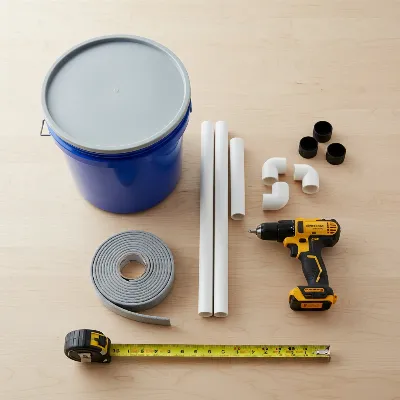 Essential materials for building a DIY shop vacuum dust separator including buckets, pipes, and fittings.
Step-by-Step Guide: Crafting Your Own Cyclone Dust Separator
Building a functional cyclone dust separator for your shop vacuum is a straightforward process that can be completed in a weekend. This guide outlines the steps for a common and effective design using a collection vessel (like a trash can or bucket) and PVC piping.
Step 1: Prepare Your Collection Vessel Lid
The lid is the brain of your dust separator, housing the crucial inlet and outlet ports. Begin by placing the lid (either a stock bucket lid or a custom-cut plywood top) on a stable surface.
- Mark Hole Locations: Using one of your pipe connectors (e.g., a 1.5-inch straight connector), trace its inside edge onto the lid in two distinct locations. One hole should be positioned centrally, and the other near the outside edge, approximately ¾ inch from the perimeter. These will be for your shop vacuum’s connection (center) and the tool connection (outer).
- Cut the Holes: Use a drill with a step bit or a hole saw to carefully cut out these two marked circles. For plastic lids, a step bit offers a clean cut. For plywood, a hole saw or jigsaw is appropriate. Ensure the holes are snug for your pipe fittings.
Step 2: Assemble the Inlet and Outlet Pipes
The angle and position of your pipes are critical for creating efficient cyclonic action.
- Assemble the Outlet (Vacuum) Pipe: Take one 1.5-inch pipe section (e.g., 1 3/8 inches long) and push it firmly onto a straight pipe connector. Insert this assembly into the center hole of your lid. From the inside of the lid, attach another straight connector onto the pipe to secure it. This pipe will connect directly to your shop vacuum.
- Assemble the Inlet (Tool) Pipe: Take another 1.5-inch pipe section and push it onto a straight pipe connector. Insert this into the outer hole of your lid. Now, connect a 90-degree elbow to this pipe from the top of the lid. To this 90-degree elbow, attach a 45-degree elbow. Crucially, rotate the 45-degree fitting so its opening is angled downwards and slightly offset from the 90-degree fitting’s lines, aiming to direct airflow tangentially along the inside wall of your collection vessel. This angle is key to creating the cyclonic spin. Secure these fittings together.
Step 3: Secure Pipes and Seal the System
A robust and airtight connection is essential for preventing air leaks and maintaining suction.
- Install Rubber Caps: Place the 2-inch rubber pipe caps over the pipe connectors on the top side of your lid. Tighten the metal hose clamps on the rubber caps with a screwdriver. The shop vac hose will connect to the center cap, and the tool hose to the outer cap.
- Stabilize Fittings (Optional but Recommended): For added stability, especially with the angled inlet pipe, you can create a small brace from scrap plywood. Measure the distance from the lid edge to the pipe fitting and cut a piece of scrap wood to secure the fitting’s position. Attach this brace to the lid with flat metal screws, ensuring it holds the pipe firmly in place against the inside wall of your collection vessel.
- Apply Seal Tape: To ensure a perfect seal between your lid and the collection vessel, apply foam window seal tape along the outside edge of the lid. This will prevent any air from escaping, maximizing the separator’s efficiency.
Step 4: Final Assembly and Connection
With the lid prepared and pipes secured, it’s time to put it all together.
- Attach Lid to Collection Vessel: Carefully place the sealed lid onto your 5-gallon bucket or trash can, ensuring a tight fit. If using a trash can, a custom plywood base ring with a dado for the can’s lip can provide an extra secure connection.
- Connect Hoses: Attach your shop vacuum hose to the center rubber cap (the outlet). Connect a separate hose from the outer rubber cap (the inlet) to your woodworking tools or other dust-generating equipment. Ensure all hose connections are secure to prevent leaks.
Your DIY dust separator is now ready to significantly improve your workshop’s dust collection capabilities!
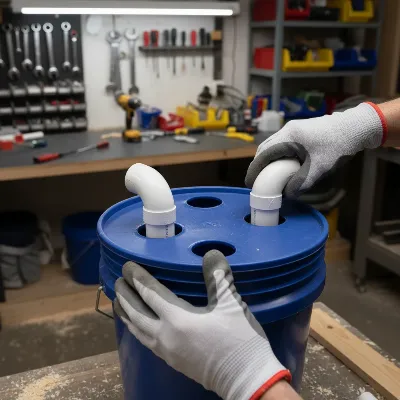 Assembling a DIY cyclone dust separator for a shop vacuum with pipes and a bucket.
Maximizing Performance: Tips for Using and Maintaining Your DIY Dust Separator System
Building your dust separator is the first step; using and maintaining it correctly ensures you get the most out of your investment in a cleaner workshop.
Operation Best Practices
To get the best performance from your new dust separator, consider these operational tips:
- Ensure Air-Tight Seals: The efficiency of your cyclonic separator hinges on maintaining airtight connections. Regularly check the seal between your lid and the collection bucket/can. Any leaks will reduce the cyclonic action and allow more dust to reach your shop vacuum’s filter. If using foam tape, inspect it periodically for wear and replace if necessary.
- Strategic Hose Placement: Connect your shop vacuum’s hose to the outlet port of the separator (the one that goes straight down or is positioned centrally). The hose from your tool should connect to the inlet port (the one angled tangentially). Proper connection ensures the cyclonic flow is generated effectively.
- Manage Hose Lengths: While flexibility is good, excessively long or narrow hoses can reduce suction power. Aim for the shortest practical hose lengths between your tools, separator, and shop vacuum. Consider adding a pressure release valve if your sealed system is so tight it causes the collection drum to collapse, a known issue with extremely strong seals. [cite: 4 (from search result)]
Longevity and Care
A well-maintained dust separator will serve your workshop for years.
- Regular Emptying: The primary advantage of a dust separator is collecting the bulk of debris in an easily accessible container. Don’t wait until the collection bucket or trash can is overflowing. Empty it regularly to maintain optimal performance and prevent debris from being re-entrained into the airflow.
- Inspect for Blockages: Occasionally check the inlet and outlet pipes for any blockages, especially if you notice a sudden drop in suction. Larger wood chips or debris can sometimes get caught.
- Shop Vacuum Filter Checks: While the separator drastically reduces filter clogging, it doesn’t eliminate the need to clean your shop vacuum’s filter entirely. Periodically check your shop vac filter and clean it as needed, though you’ll find this task is required far less frequently now.
Troubleshooting Common Issues
Even with the best build, you might encounter minor hiccups.
- Loss of Suction: This is often the most common issue. First, check the collection vessel to see if it’s full. Next, inspect all hose connections and the lid-to-vessel seal for leaks. Even a small leak can compromise performance. Also, check for any clogs in the piping.
- Poor Dust Separation: If too much dust is still reaching your shop vacuum, re-examine the inlet pipe’s angle and position. It should direct air tangentially to create a strong vortex. Ensure the internal baffle (if using a Thien baffle design) is correctly positioned and free of obstructions.
Conclusion
Building your own shop vacuum dust separator is an empowering and practical project that fundamentally upgrades your workshop’s dust management capabilities. By diverting the vast majority of debris into a separate, easily emptied container, you’ll experience longer filter life for your shop vacuum, consistent and powerful suction, and a noticeably cleaner working environment. This DIY solution offers a cost-effective alternative to expensive, dedicated dust collection systems, proving that a little ingenuity can go a long way in protecting your tools, your health, and your sanity. Take the leap, gather your materials, and transform your dusty workspace into a more efficient and enjoyable place to create. What improvements will you notice first in your newly dust-controlled workshop?
Frequently Asked Questions
How does a dust separator actually work to remove dust?
A dust separator primarily works through cyclonic action. Incoming dusty air enters the collection vessel tangentially, creating a swirling vortex. Heavier dust particles are flung outwards by centrifugal force, lose momentum, and fall to the bottom of the collection container due to gravity, while cleaner air is drawn upwards and out to the shop vacuum.
What size collection bucket or trash can is best for a DIY dust separator?
The ideal size depends on your anticipated volume of debris. A standard 5-gallon bucket is popular for smaller workshops and occasional use, offering portability. For more extensive woodworking or tasks generating large amounts of chips, a 20-gallon trash can provides significantly more capacity, reducing how often you need to empty it.
Can any shop vacuum be used with a homemade dust separator?
Yes, most wet/dry shop vacuums can be effectively paired with a DIY dust separator. The key is ensuring that your separator’s inlet and outlet ports match the diameter of your shop vacuum’s hoses to create secure, airtight connections.
How often should I empty the dust separator’s collection container?
You should empty your dust separator’s collection container whenever it appears full, or before undertaking a particularly dusty project. Regular emptying ensures optimal separation performance and prevents the accumulation of material that could hinder airflow or get drawn back into the shop vacuum.
Is a DIY dust separator as effective as a commercially manufactured one?
A well-built DIY dust separator, especially one based on established cyclone or Thien baffle designs, can be highly effective and perform comparably to many commercial units for most workshop applications. While commercial units might offer refined aesthetics or specific features, the core principle of dust separation is achievable with homemade versions, often at a fraction of the cost.
Frequently Asked Questions
How does a dust separator actually work to remove dust?
A dust separator primarily works through cyclonic action. Incoming dusty air enters the collection vessel tangentially, creating a swirling vortex. Heavier dust particles are flung outwards by centrifugal force, lose momentum, and fall to the bottom of the collection container due to gravity, while cleaner air is drawn upwards and out to the shop vacuum.
What size collection bucket or trash can is best for a DIY dust separator?
The ideal size depends on your anticipated volume of debris. A standard 5-gallon bucket is popular for smaller workshops and occasional use, offering portability. For more extensive woodworking or tasks generating large amounts of chips, a 20-gallon trash can provides significantly more capacity, reducing how often you need to empty it.
Can any shop vacuum be used with a homemade dust separator?
Yes, most wet/dry shop vacuums can be effectively paired with a DIY dust separator. The key is ensuring that your separator's inlet and outlet ports match the diameter of your shop vacuum's hoses to create secure, airtight connections.
How often should I empty the dust separator's collection container?
You should empty your dust separator's collection container whenever it appears full, or before undertaking a particularly dusty project. Regular emptying ensures optimal separation performance and prevents the accumulation of material that could hinder airflow or get drawn back into the shop vacuum.
Is a DIY dust separator as effective as a commercially manufactured one?
A well-built DIY dust separator, especially one based on established cyclone or Thien baffle designs, can be highly effective and perform comparably to many commercial units for most workshop applications. While commercial units might offer refined aesthetics or specific features, the core principle of dust separation is achievable with homemade versions, often at a fraction of the cost.
Crafting Your Own Cyclone Dust Separator
Building a functional cyclone dust separator for your shop vacuum is a straightforward process that can be completed in a weekend, significantly improving your workshop's dust collection capabilities.
Mark and cut two holes in your lid: one central for the vacuum connection and one near the edge for the tool connection. Use a step bit for plastic or a hole saw for plywood to ensure snug fits for your pipe fittings.
Insert a 1.5-inch pipe section with a straight connector into the center hole for the vacuum outlet. For the outer hole, insert another 1.5-inch pipe, then attach a 90-degree and a 45-degree elbow, rotating the 45-degree fitting to direct airflow tangentially along the vessel wall for cyclonic action.
Install 2-inch rubber pipe caps with hose clamps over the pipe connectors on the top side of the lid. Optionally, create a small plywood brace to stabilize the angled inlet pipe. Apply foam window seal tape along the lid's edge to ensure an airtight seal with the collection vessel.
Carefully place the sealed lid onto your 5-gallon bucket or trash can, ensuring a tight fit. Attach your shop vacuum hose to the center rubber cap (outlet) and a separate hose from the outer rubber cap (inlet) to your dust-generating tools, ensuring all connections are secure.

This DIY dust separator really does extend filter life like it said. I built mine for my garage cleanup, and it’s amazing how much junk it catches before it even gets to the vacuum. The only minor issue I had was finding a perfectly airtight seal for my collection vessel, but once I got that sorted, it works great. Definitely worth the effort.
I finally got around to building one of these after reading about the cyclonic principle. It’s a game-changer for my woodworking shop! My shop vac filter used to clog up so fast, especially when sanding. Now, almost all the sawdust goes into the separate bucket, and my filter stays clean. Wish I’d done this years ago.
I was skeptical about how much difference a pre-filtration system could make, but wow. My old shop vac always lost suction after just a few minutes of heavy use, especially with drywall dust. Now, with the separator, the suction stays strong, and I’m not constantly cleaning or replacing filters. It’s transformed my ordinary shop vacuum into a much more efficient unit.
The concept of capturing 99% of dust is appealing, and it does work for larger debris. However, I found that some of the finer dust still makes it through to my main vacuum filter, more than I expected. It’s definitely better than nothing, but I was hoping for a bit more complete separation for very fine particles. Still, it helps a lot with wood chips.