To optimize your shop vacuum’s performance, replace standard cartridge filters every 3 to 6 months, or annually for main filters, while HEPA filters can last from 6 months to 3 years, depending on usage and environment. The exact frequency depends on the type of debris, usage intensity, and specific filter type. Regular filter replacement prevents diminished suction, motor damage, and compromised air quality in your workspace.
What is a Shop Vacuum and Why Do You Need One?
A shop vacuum, also known as a wet/dry vacuum, is a powerful cleaning appliance designed to handle a wider range of debris than typical household vacuums. Unlike domestic models built for light dust and carpet fibers, shop vacuums are robustly constructed to suck up everything from fine construction dust, wood shavings, and metal scraps to significant liquid spills, mud, and even broken glass.
The applications for a shop vacuum are incredibly diverse. You’ll find them essential in workshops for woodworking and metalworking, on construction sites for post-build cleanup, in garages for vehicle detailing and spills, and even in homes for tackling renovation debris or accidental indoor floods. The fundamental benefit of using a shop vacuum over a standard household vacuum lies in its superior power, larger collection capacity, and specialized filtration designed for tougher, often hazardous, materials. This robust capability means household vacuums would quickly clog, suffer motor damage, or fail to adequately contain the mess, whereas a shop vacuum handles it with ease, protecting your primary cleaning tools from wear and tear.
Classifying Shop Vacuums
Shop vacuums come in various configurations, each tailored to specific needs. Understanding these classifications can help you appreciate the role of the filter within each type.
By Power
Power in shop vacuums is often measured in horsepower (HP) or air watts, influencing suction strength and capacity.
- Under 5 HP: These are typically smaller, portable units suitable for light-duty tasks, small workshops, or home DIY projects.
- 5-10 HP: This range covers most medium to heavy-duty models, ideal for larger workshops, garages, and moderate construction cleanups. They offer a good balance of power and portability.
- Over 10 HP: These high-performance industrial machines are designed for continuous, demanding use in large commercial spaces, factories, or specialized heavy-duty applications, often featuring multi-motor systems.
By Tank Capacity
The size of the collection tank directly impacts how long you can clean before needing to empty the vacuum.
- Small (2-6 Gallons): Perfect for quick cleanups, vehicle interiors, or small spills. Easy to store and transport.
- Medium (8-14 Gallons): The most common size for home workshops and general use, offering a good balance between capacity and maneuverability.
- Large (16+ Gallons): Designed for extensive cleanup jobs, such as large construction sites, industrial environments, or significant water removal, minimizing interruptions for emptying.
By Functionality
|
Our Picks for the Best Shop Vacuum in 2026
As an Amazon Associate I earn from qualifying purchases.
|
||
| Num | Product | Action |
|---|---|---|
| 1 | Shop-Vac 5985005 6 Gallon Wet/Dry Vacuum, 3.5 Peak HP, 1.25 Inch Diameter x 7 Foot Hose, 6 Foot Cord, Ideal for Home, Garage, and Workshop Cleaning |

|
| 2 | Armor All VO408S 0901 4 Gallon 3 Peak HP Stainless Steel Wet/Dry Vacuum, Orange |
|
| 3 | Armor All VBV809 0901 8-Gallon 4.5 Peak HP Wet/Dry Vacuum with Detachable Blower, Orange |
|
| 4 | Stanley - SL18129 Wet/Dry Vacuum, 4 Gallon, 4 Horsepower, Stainless Steel Tank Silver+yellow |
|
| 5 | Shop-Vac 9522205 5 Gallon 5.5 Peak HP Hangup Wet/Dry Vacuum, 1.25 Inch Diameter x 18 Foot Hose, 6 Foot Cord, Wall Mount Included, Ideal for Garage, Workshop & Home |
|
| 6 | DEWALT DXV16PA 16 Gallon Poly Wet/Dry Vac/Acc, 6.5HP Shop Vacuum Wet/Dry for Jobsite/Workshop, Yellow |
|
| 7 | Vacmaster Wet/Dry Vacuum with Detachable Blower 6 Gallon 5 Peak HP-VBVB611PF 1101 |
|
| 8 | Vacmaster VF408 4 Gallon Wet/Dry Vacuum Cleaner with 2-Stage Motor |
|
| 9 | Kärcher Shop Vacuum WD 4, 5.3 Gal, 3.8 Peak HP, 33 ft Reach, Wet Dry Vacuum Cleaner, Heavy Duty, Blower Function, Crevice Tool, Floor Nozzle, Great for DIY Projects and Workshops |
|
| 10 | Shop-Vac 5989305 Wet/Dry Vacuum, 5 Gallon, 4.5 Peak HP Stainless Steel Vacuum, 1.25 Inch Diameter x 7 Foot Hose, 6 Ft Cord Length, Ideal for Jobsite, Garage, Car & Workshop |
|
Shop vacuums are primarily distinguished by their ability to handle wet or dry debris, and some offer specialized filtration for very fine particles.
- Dry-Only Vacuums: Optimized exclusively for dry debris like dust, wood chips, and dirt. These often have pleated cartridge filters.
- Wet/Dry Vacuums: The most versatile type, capable of handling both dry materials and liquids. These require specific foam filters for wet use to protect the motor.
- Fine Dust Filtration (HEPA/ULPA): Some models incorporate high-efficiency filters (HEPA or ULPA) for capturing microscopic particles, critical for environments with hazardous dust like lead, asbestos, or very fine drywall dust.
By Power Source
Depending on mobility and power requirements, shop vacuums can be corded or cordless.
- Corded: The most common type, offering continuous power and usually higher suction. They require access to an electrical outlet.
- Cordless: Battery-powered units provide maximum portability, ideal for jobs where outlets are scarce or for quick, small cleanups. Their runtime and power are limited by battery capacity.
Key Factors to Consider When Buying a Shop Vacuum (Buying Guide)
Choosing the right shop vacuum requires careful consideration of several factors to match the machine to your specific cleaning demands.
Suction Power and Airflow
These two metrics are crucial indicators of a shop vacuum’s cleaning efficiency.
- Air Watts (AW): A more accurate measure that combines both airflow (CFM) and sealed suction (inches of water lift). Higher air watts generally mean better cleaning performance.
- Cubic Feet per Minute (CFM): Indicates how much air the vacuum can move. Higher CFM is better for picking up large volumes of light debris like sawdust.
- Sealed Suction (inches of water lift): Measures the maximum suction power at the hose opening. Higher lift is crucial for heavy debris and liquids.
Tank Capacity
As discussed, capacity dictates how often you’ll need to empty the tank. Consider the scale of your typical projects. For frequent large-scale cleanups, a larger tank will save time and effort.
Filtration System (HEPA, ULPA, etc.)
The filter is the unsung hero of your shop vac.
- Standard Cartridge Filters: Good for general dry debris.
- Foam Filters: Essential for wet pickup, protecting the motor from moisture.
- HEPA Filters: (High-Efficiency Particulate Air) Filters capture 99.97% of particles 0.3 microns or larger. They are vital for maintaining superior air quality, especially when dealing with fine dust, allergens, or hazardous materials.
- ULPA Filters: (Ultra-Low Penetration Air) Offer even higher filtration efficiency than HEPA, capturing 99.999% of particles 0.12 microns or larger, typically used in highly controlled environments.
Noise Level
Shop vacuums can be notoriously loud. Look for models with decibel ratings (dB) if noise is a concern, especially if you’ll be using it indoors or for extended periods. Quieter models often feature insulated motor housings.
Durability and Material Quality
Given the harsh environments shop vacuums often operate in, robust construction is paramount.
- Tank Material: Stainless steel tanks are more durable and resistant to corrosion than plastic, though plastic tanks are lighter.
- Hose and Attachments: Look for crush-resistant hoses and sturdy, well-fitting attachments that can withstand heavy use.
Additional Features
Many modern shop vacuums come with features designed for convenience and enhanced performance.
- Built-in Drain: Simplifies emptying liquids.
- Blower Port: Allows the vacuum to be used as a leaf blower or for clearing debris from surfaces.
- Filter Cleaning Systems: Some advanced models include manual or automatic filter shakers or reverse flow systems to dislodge trapped dust, extending filter life and maintaining suction.
- Remote Control: For easy on/off operation when working away from the unit.
- Tool-Activated Power Outlets: Allows the shop vac to turn on automatically when a connected power tool is used.
Price and Warranty
Invest in a shop vacuum that balances your budget with your needs. Reputable brands often offer better warranties and readily available replacement parts, which is a significant factor in long-term ownership.
How Often Should You Replace Your Shop Vacuum Filter?
This is a question I get constantly, and frankly, there’s no single “magic number.” The lifespan of your shop vacuum filter is influenced by several critical factors. Typically, manufacturers recommend replacing standard cartridge filters every 3 to 6 months or annually for main filters, while HEPA filters can last from 6 months to 3 years, depending on usage and environment. For specific guidance, always consult your owner’s manual.
Here’s a breakdown of what truly dictates filter replacement frequency:
1. Frequency and Type of Use
- Heavy Usage: If you use your shop vacuum daily for demanding tasks like construction cleanup, woodworking, or tackling fine dust, your filter will accumulate debris much faster. In such scenarios, quarterly or even monthly checks and replacements might be necessary.
- Light Usage: For occasional home DIY projects or garage tidying, a filter might last significantly longer, potentially up to a year.
> “In our industrial settings, where vacuums run almost continuously, we’ve learned that constant exposure to material means filter media often needs replacement every few months to maintain peak performance and prevent motor strain.” – The ReviewEliza.com Team, Industrial Vacuum Filtration Experts
2. Type of Debris
The material you’re vacuuming has a direct impact on filter life.
- Fine Dust (e.g., drywall dust, concrete dust, sanding dust): These particles clog filters rapidly, reducing airflow and necessitating more frequent cleaning or replacement. For these materials, using a high-efficiency filter (HEPA) is crucial, and it will likely need more frequent attention.
- General Debris (e.g., wood chips, sawdust, larger particles): While these can fill the collection tank quickly, they don’t necessarily clog the filter media as densely as fine dust, potentially extending the filter’s working life.
- Wet Materials: When vacuuming liquids, you should always use a foam filter (or remove the dry filter if your vacuum requires it for wet use). Foam filters are designed to shed water and protect the motor, but they should be cleaned and dried thoroughly after each wet use. They are generally reusable but eventually degrade and need replacement.
3. Filter Type
Different filter materials and designs have varying lifespans and maintenance requirements.
- Standard Cartridge Filters (Pleated Paper/Synthetic): These are common for dry applications. They can often be cleaned by tapping out dust or using compressed air, but their efficiency diminishes over time. Replace every 3-6 months with regular use.
- Foam Filters/Sleeves: Primarily for wet pickup. They are washable and reusable but should be replaced if they show signs of tearing, crumbling, or permanent discoloration.
- HEPA Filters: Designed for superior fine particle filtration. While more expensive, they can last longer than standard filters if properly maintained and if upstream filters (like bags) are used. Expect replacement every 6 months to 2 years, depending on the environment and how much fine dust they capture.
- Paper Collection Bags: In systems that use them as a pre-filter, these should be replaced when 2/3 to 3/4 full to maintain suction and prevent over-straining the main filter. Using bags can significantly extend the life of your main cartridge or HEPA filter.
4. Environmental Factors
- Allergies/Asthma: If you or others in the workspace suffer from allergies or asthma, more frequent filter replacement is vital to ensure maximum allergen capture and prevent their recirculation into the air.
- Polluted/Dusty Environments: Operating in inherently dusty environments will naturally accelerate filter clogging.
5. Washable vs. Non-Washable Filters
Many shop vacuums feature washable filters, which can extend their life. However, even washable filters will eventually break down and lose their effectiveness after multiple cleanings. Rinse washable filters with clean water and allow them to air dry completely before reinstalling. For non-washable filters, gentle tapping or brushing can remove loose debris, but they cannot be fully restored once heavily clogged.
Signs It’s Time to Replace Your Filter
Beyond a set schedule, your shop vacuum will tell you when its filter needs attention:
- Reduced Suction Power: This is the most common indicator. A clogged filter restricts airflow, making the motor work harder and reducing its ability to pick up debris effectively.
- Visible Dirt or Damage: Inspect the filter regularly. If it’s heavily layered with dust, discolored, or shows tears or holes, it’s time for a new one.
- Unpleasant Odors: A filter clogged with mold, mildew, or certain types of debris can cause the vacuum to emit foul smells.
- Increased Dust Emission from Exhaust: If you notice fine dust escaping the vacuum’s exhaust, the filter is likely compromised or completely saturated, failing to trap particles.
- Motor Overheating or Unusual Noises: A motor straining against a clogged filter can overheat or make abnormal sounds. This is a serious warning sign that could lead to permanent motor damage.
Comparison of Popular Shop Vacuum Brands
When considering shop vacuums, several brands consistently stand out for their performance, durability, and range of features. Here’s a general comparison:
| Feature/Brand | Ridgid | Shop-Vac | DeWalt | Craftsman |
|---|---|---|---|---|
| Power Range (HP) | 3.0 – 6.5+ | 1.0 – 6.5+ | 5.0 – 6.5+ | 2.5 – 6.5+ |
| Tank Capacity (Gallons) | 3 – 16+ | 2.5 – 20+ | 6 – 16 | 2.5 – 20+ |
| Filter System | Standard, HEPA, Foam (often interchangeable) | Wide range of cartridge, foam, HEPA (brand-specific) | Cartridge, HEPA (often fine dust rated) | Standard, HEPA, Foam (often proprietary) |
| Noise Level | Generally moderate to high, some quieter models | Varies by model, can be loud | Often engineered for quieter operation in workshop settings | Moderate |
| Durability | High, known for robust construction | Good for general use, wide range of quality | Excellent, built for job site conditions | Good, reliable |
| Price Point | Mid-range to high-end | Entry-level to mid-range | Mid-range to high-end | Entry-level to mid-range |
| Key Advantage | Powerful motors, sturdy build, popular accessory ecosystem | Economical, wide availability, basic functionality | Job site tough, strong suction, tool-activated options | Affordable, decent performance for DIYers |
| Consideration | Can be bulky, filters sometimes proprietary | Filters might need frequent replacement on cheaper models | Heavier, less ideal for light home use | Accessory compatibility can be specific to Craftsman |
Top Shop Vacuum Filter Recommendations
Choosing the right filter is as important as choosing the right shop vacuum. Here are some top filter types that receive high praise for their performance and suitability for various tasks:
1. Ridgid VF5000 Fine Dust Filter
- Detailed Review: The Ridgid VF5000 is a highly regarded filter specifically designed for capturing fine particles like drywall dust, cement dust, and sawdust. Its pleated design offers a large surface area for efficient filtration, greatly reducing the amount of fine airborne dust in your workspace. It’s built for both wet and dry pickup, eliminating the need to constantly switch filters.
- Pros: Excellent for fine dust, easy to install and remove, durable, good value.
- Cons: Can clog quickly with extremely heavy fine dust loads if a pre-filter bag isn’t used.
- Best Suited For: Woodworkers, DIY enthusiasts, and contractors dealing with fine particulate matter.
2. Shop-Vac Ultra-Web Cartridge Filter
- Detailed Review: The Shop-Vac Ultra-Web filter (various types like ‘X’ or ‘V’) features a robust material that provides enhanced filtration for fine dust and debris. This filter excels in trapping microscopic particles that often escape standard filters, improving air quality significantly. It’s a premium upgrade for many Shop-Vac models and offers good longevity.
- Pros: Superior filtration for fine dust, durable construction, extends vacuum life.
- Cons: Higher initial cost compared to standard filters, not ideal for wet pickup without additional foam sleeve.
- Best Suited For: Users with allergies, those working in dusty environments, and anyone needing higher air quality.
3. DeWalt DXVA19-4201 HEPA Filter
- Detailed Review: DeWalt’s HEPA-rated filters, such as the DXVA19-4201, are engineered for the toughest job site conditions. They meet HEPA efficiency standards, capturing 99.97% of particles as small as 0.3 microns. This makes them indispensable for applications involving hazardous dusts or when stringent air quality standards are required. Their rugged design ensures they can handle the demanding use often associated with DeWalt tools.
- Pros: True HEPA filtration, robust and reliable, excellent for critical dust containment.
- Cons: Premium price point, can be specific to DeWalt’s larger capacity vacuums.
- Best Suited For: Professional contractors, renovators, or anyone regularly handling lead paint dust, asbestos (with proper safety protocols), or other fine, hazardous particulates.
Tips for Using and Maintaining Your Shop Vacuum Filter
Proper usage and maintenance are key to maximizing your filter’s lifespan, ensuring optimal performance, and protecting your investment.
How to Use Your Shop Vacuum Safely and Effectively
- Select the Right Filter for the Job: Always use a dry filter for dry debris and a foam filter (or remove the dry filter as per manufacturer instructions) for wet pickups. Using the wrong filter can damage your vacuum.
- Use Filter Bags for Fine Dust: For very fine dust like drywall or concrete, use a disposable filter bag inside the collection tank. This acts as a pre-filter, capturing the bulk of the dust before it reaches your main cartridge filter, significantly extending the life of the more expensive cartridge or HEPA filter.
- Empty the Tank Regularly: Don’t wait until the tank is overflowing. An overly full tank, especially with dry debris, can put unnecessary strain on the filter and motor. For wet pickups, empty the tank promptly to prevent mold or mildew growth.
- Secure the Filter Properly: Ensure the filter is correctly seated and sealed according to your vacuum’s instructions. A poorly installed filter can allow debris to bypass it, leading to motor damage and reduced filtration efficiency.
- Wear PPE: When dealing with fine or hazardous dust, always wear appropriate personal protective equipment, including a respirator and safety glasses, even with a HEPA-filtered shop vacuum.
How to Clean and Maintain Your Shop Vacuum Filter to Extend Its Life
While filters need eventual replacement, proper cleaning can significantly extend their usable life.
- Unplug the Vacuum: Always disconnect the power before performing any maintenance on your shop vacuum.
- Clean in a Well-Ventilated Area: When cleaning dry filters, do so outdoors or in a well-ventilated space to avoid inhaling dust.
- Tap or Brush Dry Filters: For dry cartridge filters, gently tap the filter against the inside of a trash can to dislodge loose dust. A soft brush can also be used to clear debris from the pleats. Some filters can be cleaned with compressed air, blowing from the inside out to dislodge particles.
- Rinse Washable Foam Filters: For washable foam filters, rinse them under running water until the water runs clear. You can use mild soap if necessary, but avoid harsh chemicals that might damage the material.
- Allow Filters to Dry Completely: This is crucial, especially for foam filters used in wet applications. Reinstalling a damp filter can lead to mold, mildew, or damage to your vacuum’s motor.
- Regular Visual Inspections: Make it a habit to visually inspect your filter every time you empty the tank or after a major cleanup. Look for visible damage, excessive clogging, or discoloration.
Common Issues and How to Troubleshoot Them
- Loss of Suction: First, check and clean or replace the filter. Then, check for blockages in the hose, nozzles, or collection tank. Ensure the tank lid is securely latched.
- Dust Escaping Exhaust: This almost always indicates a compromised or improperly installed filter. Replace the filter immediately and ensure it’s seated correctly.
- Motor Overheating: A severely clogged filter is a common culprit. Clean or replace the filter. Also, check for sustained blockages in the hose or attachments that might be overworking the motor.
- Unusual Noises: Could be a sign of a blockage, a damaged impeller (fan), or a motor straining due to a clogged filter. Address the filter first, then check for blockages.
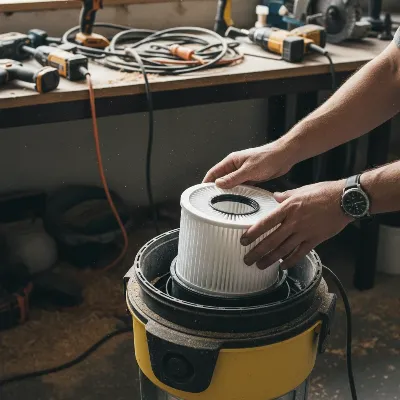 A technician replacing a shop vacuum filter in a dusty workshop setting, emphasizing good airflow and clean filtration
Conclusion
As someone who has worked intimately with hundreds of shop vacuums over the past decade, I can tell you that understanding and diligently maintaining your filter is not just about extending your machine’s life—it’s about maximizing its performance and, crucially, safeguarding your health. By following manufacturer recommendations, paying attention to the type of debris you’re tackling, and conducting regular inspections and cleaning, you can ensure your shop vacuum remains a reliable workhorse for years to come. Remember, a small investment of time in filter care translates into significant savings on repairs and a much cleaner, healthier workspace.
What are your biggest challenges when it comes to maintaining your shop vacuum filter?
Frequently Asked Questions
What is the difference between a dry filter and a wet filter for a shop vacuum?
A dry filter, typically a pleated cartridge, is designed to trap fine particles and dust. A wet filter, usually a foam sleeve, is designed to protect the motor from water and can be rinsed and reused. Using a dry filter for wet pickup will ruin it, and using a wet filter for dry fine dust is ineffective.
Can I wash a shop vacuum filter?
Some shop vacuum filters, particularly foam filters, are washable and reusable. However, many pleated paper cartridge filters are not designed to be washed and can lose their filtration efficiency or integrity if exposed to water. Always check your vacuum’s owner’s manual to determine if your specific filter type is washable.
How can I tell if my shop vacuum filter is clogged without taking it out?
The most obvious signs of a clogged filter include a noticeable decrease in suction power, the vacuum motor sounding louder than usual (straining), or visible dust being expelled from the exhaust port. These are clear indicators that your filter needs attention.
Do HEPA filters for shop vacuums last longer than standard filters?
HEPA filters generally have a longer lifespan than standard cartridge filters if they are properly maintained and protected by upstream filtration like disposable filter bags. However, their lifespan is still heavily dependent on the type and volume of debris collected. Regular cleaning of associated pre-filters can help extend a HEPA filter’s life, but they will still need replacement periodically to maintain their high efficiency.
Is it really necessary to use a filter bag in my shop vacuum?
While not always strictly “necessary” for operation, using a filter bag (especially with fine dust) is highly recommended. It acts as a pre-filter, capturing the majority of debris and significantly extending the life of your main cartridge or HEPA filter. This reduces how often you need to clean or replace the more expensive primary filter, saving you time and money.
Maintain Your Shop Vacuum Filter for Extended Life
Proper usage and maintenance are key to maximizing your filter's lifespan, ensuring optimal performance, and protecting your investment. Follow these steps to keep your shop vacuum filter in top condition.
Always use a dry filter for dry debris and a foam filter for wet pickups. Using the wrong filter can damage your vacuum and reduce its effectiveness. Consult your manufacturer's instructions for specific filter requirements.
For very fine dust like drywall or concrete, use a disposable filter bag inside the collection tank. This acts as a pre-filter, capturing the bulk of the dust before it reaches your main cartridge filter, significantly extending the life of the more expensive cartridge or HEPA filter.
Unplug the vacuum and clean dry cartridge filters outdoors or in a well-ventilated area. Gently tap the filter against the inside of a trash can to dislodge loose dust, or use a soft brush to clear debris from the pleats. Some filters can be cleaned with compressed air, blowing from the inside out.
For washable foam filters, rinse them under running water until the water runs clear. You can use mild soap if necessary, but avoid harsh chemicals that might damage the material. Allow filters to air dry completely before reinstalling to prevent mold or mildew.
Make it a habit to visually inspect your filter every time you empty the tank or after a major cleanup. Look for visible damage, excessive clogging, or discoloration. Replace the filter if it shows signs of tears, holes, or heavy saturation.

I appreciate the info on filter types. I’ve been using my shop vac for a lot of wet spills lately, and my filter seems to get gunked up really fast. I wish there was a clearer guide on how often to clean or replace filters specifically for wet use, as the general advice for dry debris doesn’t quite fit my situation. Still, good reminder to check it more often.
This was super helpful! I never really thought about how different types of debris affect filter life. I’m constantly picking up wood shavings and metal scraps in my workshop, and my old filter was definitely struggling. Knowing that regular replacement prevents motor damage is a huge motivator for me to stay on top of it. My shop vac is running much better now.
I used to just bang out my old filter, but after reading about how often to replace them, I finally bought a new HEPA filter for my shop vac. What a difference! The air quality in my garage is noticeably better, especially after woodworking projects. It’s definitely worth the investment to keep the dust down and protect my lungs.
I’ve always wondered about the lifespan of these filters. My old shop vac was definitely losing suction, and I realized I hadn’t changed the standard cartridge filter in probably a year. Swapped it out and it’s like a brand new machine. I’ll be sticking to that 3-6 month recommendation now, especially with all the drywall dust I create.