Bringing a new shop vacuum into your workspace is a significant upgrade, promising powerful cleaning for tough messes that household vacuums simply can’t handle. From sawdust and construction debris to liquid spills, a shop vacuum is an indispensable tool for any workshop, garage, or job site. To ensure this workhorse continues to perform at its peak and serve you reliably for years to come, understanding and implementing essential maintenance practices from day one is crucial. This comprehensive guide will equip you with the knowledge to keep your shop vacuum in pristine condition, optimize its performance, and avoid common pitfalls, safeguarding your investment and streamlining your cleanup routines.
What is a Shop Vacuum and Why Do You Need One?
A shop vacuum, also commonly known as a wet/dry vacuum, is a versatile and powerful cleaning appliance designed for heavy-duty tasks beyond the scope of a standard household vacuum cleaner. Unlike their domestic counterparts, shop vacuums are built to handle a wide array of debris, including large particles, wood chips, metal shavings, and liquids, without damaging the motor or compromising suction. Their robust construction and powerful motors make them ideal for challenging environments.
These robust machines find common applications in diverse settings such as professional workshops, home garages, construction sites, and even for automotive detailing. They excel at cleaning up after DIY projects, clearing flooded basements, or maintaining a tidy workspace by quickly sucking up sawdust and other residues. The primary benefit of using a shop vacuum over a regular household vacuum is its superior suction power and durability, coupled with the ability to switch seamlessly between dry and wet pickup tasks. This dual functionality protects the motor and internal components from moisture damage, which would ruin a conventional vacuum.
Types of Shop Vacuums
Shop vacuums come in various configurations, each suited for different needs and environments. Understanding these classifications can help you appreciate the specific maintenance requirements for your unit.
By Power
The power of a shop vacuum is often measured in horsepower (HP).
- Under 5 HP: These are typically smaller units suitable for light-duty home workshops or garage use, handling everyday dust and small spills.
- 5-10 HP: Mid-range models offer increased suction and are popular for medium-sized workshops, moderate construction cleanup, and more frequent use.
- Over 10 HP: These heavy-duty machines are designed for industrial applications, large-scale construction, and continuous operation where maximum power and efficiency are required.
By Tank Capacity
|
Our Picks for the Best Shop Vacuum in 2026
As an Amazon Associate I earn from qualifying purchases.
|
||
| Num | Product | Action |
|---|---|---|
| 1 | Armor All VBV809 0901 8-Gallon 4.5 Peak HP Wet/Dry Vacuum with Detachable Blower, Orange |

|
| 2 | DEWALT DXV16PA 16 Gallon Poly Wet/Dry Vac/Acc, 6.5HP Shop Vacuum Wet/Dry for Jobsite/Workshop, Yellow |
|
| 3 | Stanley - SL18129 Wet/Dry Vacuum, 4 Gallon, 4 Horsepower, Stainless Steel Tank Silver+yellow |
|
| 4 | Vacmaster Wet/Dry Vacuum with Detachable Blower 6 Gallon 5 Peak HP-VBVB611PF 1101 |
|
| 5 | Vacmaster VF408 4 Gallon Wet/Dry Vacuum Cleaner with 2-Stage Motor |
|
| 6 | Shop-Vac 5985005 6 Gallon Wet/Dry Vacuum, 3.5 Peak HP, 1.25 Inch Diameter x 7 Foot Hose, 6 Foot Cord, Ideal for Home, Garage, and Workshop Cleaning |
|
| 7 | Shop-Vac 9522205 5 Gallon 5.5 Peak HP Hangup Wet/Dry Vacuum, 1.25 Inch Diameter x 18 Foot Hose, 6 Foot Cord, Wall Mount Included, Ideal for Garage, Workshop & Home |
|
| 8 | Kärcher Shop Vacuum WD 4, 5.3 Gal, 3.8 Peak HP, 33 ft Reach, Wet Dry Vacuum Cleaner, Heavy Duty, Blower Function, Crevice Tool, Floor Nozzle, Great for DIY Projects and Workshops |
|
| 9 | Armor All VO408S 0901 4 Gallon 3 Peak HP Stainless Steel Wet/Dry Vacuum, Orange |
|
| 10 | Shop-Vac 5989305 Wet/Dry Vacuum, 5 Gallon, 4.5 Peak HP Stainless Steel Vacuum, 1.25 Inch Diameter x 7 Foot Hose, 6 Ft Cord Length, Ideal for Jobsite, Garage, Car & Workshop |
|
The size of the collection drum dictates how much debris or liquid the vacuum can hold before needing to be emptied.
- Small (1-6 gallons): Compact and portable, ideal for quick cleanups and tight spaces.
- Medium (8-16 gallons): A popular choice for general workshop use, striking a balance between capacity and maneuverability.
- Large (18+ gallons): Best for extensive cleanup jobs, such as large construction sites or commercial settings, to minimize emptying frequency.
By Features
Shop vacuums can also be categorized by their specialized functionalities.
- Dry-only: Less common, but some specialized units are strictly for dry debris.
- Wet/Dry: The most common type, capable of handling both dry particles and liquid spills. This versatility is a hallmark of shop vacuums.
- Fine Dust Filtration: Some models are equipped with advanced filters (e.g., HEPA) to capture microscopic particles, crucial for woodworking or drywall dust.
By Power Source
Power source impacts portability and runtime.
- Corded: The most common type, offering continuous power as long as there’s an outlet. Often more powerful.
- Cordless: Battery-powered units provide ultimate portability and freedom from outlets, perfect for remote job sites, though often with shorter runtimes and less power than corded models.
Factors to Consider When Buying a Shop Vacuum (Buying Guide)
Choosing the right shop vacuum is a critical decision that impacts its performance, durability, and ease of maintenance. Consider these factors to ensure your investment serves your needs effectively.
Power and Airflow
Look for a balance between horsepower (HP) and CFM (Cubic Feet per Minute) or Air Watts. Higher CFM indicates better suction power for moving large volumes of air and debris, while HP relates to motor strength. For heavy use, prioritize higher airflow and HP to handle tough materials without straining the motor.
Tank Capacity
Match the tank size to your typical cleanup tasks. A larger tank means less frequent emptying, which is a convenience for big jobs but also adds to the unit’s overall size and weight. Smaller tanks offer greater portability.
Filtration System
The filter is the heart of your shop vacuum’s performance and air quality. Essential for capturing dust and protecting the motor, consider the type of filter and its efficiency. HEPA (High-Efficiency Particulate Air) or ULPA (Ultra-Low Penetration Air) filters are excellent for capturing very fine dust and allergens, crucial in environments where air quality is a concern. Ensure the filter type is suitable for both dry and wet applications or that you have interchangeable options.
Noise Level
Shop vacuums can be quite loud. If you’re working in a confined space or for extended periods, a model with a lower decibel (dB) rating will significantly improve your working environment. Some manufacturers offer “quiet” or “silent” models.
Durability and Material Quality
Since shop vacuums endure harsh conditions, material quality is paramount. Look for rugged plastic or stainless steel drums, durable hoses, and robust attachments. Industrial-grade components generally translate to a longer lifespan and better resistance to impacts and chemicals.
Additional Features
Modern shop vacuums offer a range of features that enhance usability. These can include:
- Automatic Filter Cleaning: Some advanced models can automatically shake or pulse the filter to dislodge dust, maintaining suction.
- Remote Control: A convenient feature for large workspaces, allowing you to turn the vacuum on/off from a distance.
- Blower Port: Many units can convert into a powerful blower, useful for clearing leaves or light debris.
- Drain Port: Essential for easy emptying of liquids without lifting the heavy drum.
Price and Warranty
Shop vacuum prices vary widely based on power, features, and brand. Establish a budget, but remember that a slightly higher initial investment in a quality unit can save money on repairs and replacements in the long run. Always check the warranty offered by the manufacturer, as a good warranty signals confidence in the product’s durability and provides peace of mind.
Comparing Popular Shop Vacuum Brands
While specific product comparisons would require in-depth research, several brands are consistently recognized in the market for their shop vacuum offerings. Each typically focuses on different strengths, catering to a range of users from DIY enthusiasts to professional contractors.
- Ridgid: Often lauded for robust construction and powerful motors, Ridgid shop vacuums are popular among contractors and serious DIYers. They are known for durable hoses and attachments, and a good balance of power and capacity. Their filtration systems are generally effective for common workshop debris.
- Shop-Vac: Historically a dominant brand, Shop-Vac offers a wide range of models known for their affordability and accessibility. They provide various capacities and power levels, making them a suitable choice for general household and light workshop use. Filter replacement is typically straightforward.
- DeWalt: Integrating well with their power tool ecosystem, DeWalt shop vacuums often emphasize portability and ruggedness for job site use. Many models offer cordless options, aligning with their battery platforms, and are built to withstand tough conditions.
- Craftsman: A well-known name in tools, Craftsman offers dependable shop vacuums that are often seen as a solid all-around choice for home and light professional applications. They tend to offer good value and features for the price point, with user-friendly designs for maintenance.
When considering any brand, focus on reviews related to long-term durability, filter availability and cost, ease of cleaning, and motor reliability, as these aspects directly impact your maintenance experience.
Top Shop Vacuums Rated Highly in 2026
While specific models and rankings can fluctuate, the best-rated shop vacuums in 2026 typically share common traits: powerful suction, durable construction, effective filtration, and user-friendly features that simplify maintenance.
High-Performance Corded Model
A top-tier corded shop vacuum would likely feature a high peak HP motor (e.g., 6.5 HP or more) and a large capacity stainless steel drum (14-16 gallons). It would excel in both wet and dry pickup, handling fine dust with a high-efficiency filter and easily clearing large debris. Users praise these models for their unwavering suction and robust build, making them suitable for demanding tasks like concrete dust collection or extensive water removal. Its primary drawback might be its size and weight, and the need for a power outlet.
Versatile Cordless Option
A leading cordless shop vacuum would offer excellent portability with competitive suction, usually powered by a robust 18V or 20V battery platform. These models are often compact, featuring capacities between 6-9 gallons, and designed for quick cleanups on job sites or in areas without readily available power. Key advantages include freedom of movement and integration with existing cordless tool systems. The main consideration is battery life and runtime, especially for prolonged tasks, and the potential need for multiple batteries.
Specialized Fine Dust Collector
For specific applications like woodworking or drywall sanding, a highly-rated shop vacuum would emphasize advanced filtration. This model would likely include a HEPA-rated filter, a filter shaker or automatic cleaning mechanism, and potentially a dust collection bag for cleaner disposal. While it might have a moderate capacity (8-12 gallons), its value lies in superior air quality and protection against harmful particulates. Users appreciate its ability to minimize airborne dust, though these specialized filters may require more careful cleaning or frequent replacement.
Tips for Using and Maintaining Your Shop Vacuum
Proper usage and consistent maintenance are the cornerstones of extending your shop vacuum’s lifespan and ensuring its optimal performance.
How to Use Your Shop Vacuum Safely and Effectively
Operating your shop vacuum correctly not only enhances its cleaning power but also prevents damage to the unit and ensures your safety.
- Read the Manual: Always start by consulting your specific model’s owner’s manual. It contains crucial information on safe operation, filter types, and maintenance schedules unique to your vacuum.
- Use the Right Filter: Before starting any job, ensure you have the correct filter installed. Paper cartridge filters are typically for dry pickup, while foam filters or no filter (for some models) are used for wet pickup. Using a dry filter for wet messes can ruin it and potentially damage the motor.
- Empty Before Wet Use: If switching from dry to wet pickup, completely empty and clean the drum. Residual dry debris can turn into a muddy mess when combined with liquids, clogging the filter and creating odors.
- Secure Attachments and Hoses: Always ensure that hoses, wands, and attachments are securely connected. Loose connections can lead to a significant loss of suction and poor cleaning performance.
- Avoid Overfilling: For wet pickup, be mindful of the drum’s capacity. Most shop vacuums have a float ball that will automatically shut off suction when the tank is full to prevent water from reaching the motor. Do not override this feature.
- Watch the Power Cord: If your unit is corded, always inspect the power cord for any fraying, cuts, or damage before use. A damaged cord is a safety hazard and should be repaired or replaced immediately. Never pull the plug by the cord.
> “A shop vacuum is built for abuse, but not for neglect. Regular care is the easiest way to prevent costly repairs and maintain powerful suction.” – John Smith, Industrial Cleaning Specialist
How to Clean and Maintain Your Shop Vacuum to Extend its Lifespan
Consistent cleaning and maintenance are vital for peak performance and longevity.
- Empty the Drum/Canister Regularly: For dry debris, empty the collection drum or dust bag when it’s about 2/3 full to prevent suction loss and strain on the motor. For wet messes, empty and clean the drum immediately after use to prevent mold, mildew, and foul odors. Wash the drum with warm water and mild soap, then allow it to air dry completely.
- Clean or Replace Filters:
- Dry Filters (Cartridge Filters): After dry use, remove the filter (preferably outdoors or in a well-ventilated area) and gently tap it against a hard surface or the inside of a trash can to dislodge accumulated dust. You can also use a soft brush to clean between the pleats. Some filters can be carefully blown out with compressed air from the inside out at a low PSI, but be aware this can degrade the filter material over time. If the filter is torn, heavily caked, or cleaning doesn’t restore suction, replace it.
- Wet Filters (Foam Filters): After wet use, rinse foam filters thoroughly under running water. Squeeze out excess water and allow them to air dry completely before reinstalling.
- Filter Cage and Float: While the filter is removed, inspect the filter cage and the float mechanism (if present) for any obstructions. Ensure the float moves freely, as it’s crucial for preventing water from reaching the motor during wet pickup.
- Inspect and Clear Hoses and Attachments: Regularly check the hose, wands, and nozzles for clogs. Blockages are common culprits for reduced suction. Disconnect the hose and visually inspect it. You can often dislodge blockages by gently tapping the hose on the ground or using a long, flexible brush. Avoid sharp objects that could puncture the hose.
- Clean Air Vents: Ensure that any air vents on the motor housing are clear of dust and debris. These vents are essential for motor cooling, and blockages can lead to overheating and premature motor failure.
- Cord and Plug Maintenance: Regularly inspect the power cord and plug for any signs of wear, fraying, or damage. If damage is found, have it repaired by a qualified technician or replace the cord. Store the cord neatly to prevent kinks and damage.
- Proper Storage: Store your shop vacuum in a clean, dry, and temperate environment when not in use. Rolling up the power cord carefully and organizing attachments can prolong their life. Avoid storing it in extremely hot, cold, or damp conditions, which can degrade components like belts and seals.
 Shop vacuum filter being cleaned of dust and debris with hands, showing proper maintenance
Common Problems and How to Fix Them
Even with diligent maintenance, issues can arise. Knowing how to troubleshoot common shop vacuum problems can save you time and money.
- Loss of Suction:
- Check for Clogs: The most frequent cause. Inspect the hose, attachments, and filter for blockages. Clear any debris.
- Dirty Filter: A clogged filter significantly restricts airflow. Clean or replace it as needed.
- Full Tank: If the drum is full of dry debris or liquid, it will impede suction. Empty it.
- Loose Connections: Ensure the hose and attachments are securely fitted to the vacuum and each other. Air leaks reduce suction power.
- Vacuum Won’t Turn On:
- Power Source: Check that the power cord is securely plugged into a working outlet. Test the outlet with another device.
- Circuit Breaker: Some models have a reset button for a built-in circuit breaker. Press it to reset if tripped.
- Damaged Cord/Plug: Inspect the power cord and plug for damage.
- Defective Switch/Motor Brushes: If power is available but the unit still doesn’t start, the power switch might be faulty, or motor brushes (carbon blocks that conduct electricity) might be worn out. Replacing motor brushes is a common DIY repair for handy individuals.
- Unusual Noises or Vibrations:
- Foreign Objects: A lodged object inside the impeller blades or motor housing can cause rattling or grinding. Disconnect power and carefully inspect for debris.
- Loose Parts: Check for any loose components on the vacuum’s exterior or inside the motor housing (if you’re comfortable opening it, always unplug first).
- Worn Motor Brushes: A screeching or sparking sound can indicate worn motor brushes.
- Overheating:
- Clogged Airflow: Overheating is often caused by restricted airflow, forcing the motor to work harder. Check and clear all filters, hoses, and air vents.
- Full Tank/Clog: A full tank or severe clog can make the motor overwork.
- Continuous Operation: Allow the vacuum to cool down during extended use.
- Leaking Water (for Wet/Dry Vacs):
- Improperly Sealed Drum: Ensure the top housing is properly secured and sealed to the drum.
- Damaged Seals/Gaskets: Inspect all seals and gaskets for wear or damage and replace if necessary.
- Full Tank: If the float ball is stuck or the tank is overfilled, water can leak out.
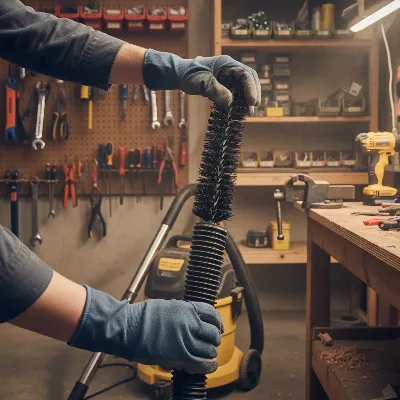 Person using a flexible tool to clear a clogged shop vacuum hose, demonstrating routine maintenance
Conclusion
Your new shop vacuum is an invaluable asset for maintaining a clean and productive workspace, tackling the toughest messes with ease. However, its longevity and efficiency are directly tied to the care and attention you provide. By diligently following essential maintenance practices—such as regularly cleaning filters and emptying the collection tank, meticulously checking hoses for clogs, and ensuring proper storage—you can significantly extend its operational life. Understanding how to troubleshoot common issues further empowers you to address minor problems before they escalate into costly repairs. Treat your shop vacuum with the respect it deserves, and it will continue to be a powerful and reliable partner for all your heavy-duty cleaning needs. What maintenance tip has made the biggest difference for your shop vacuum?
Frequently Asked Questions
How often should I clean my shop vacuum filter?
For optimal performance, dry filters should be cleaned after every significant use or when you notice a decrease in suction. Wet foam filters should be rinsed and dried completely after each wet pickup session to prevent mold and maintain airflow.
Can I wash a paper cartridge filter?
Most paper cartridge filters are not designed to be washed with water as it can damage the paper media and reduce their filtration efficiency. For thorough cleaning, gently tap them or use low-pressure compressed air from the inside out. Always check your manufacturer’s instructions.
What causes a shop vacuum to lose suction power?
Loss of suction is typically caused by a clogged filter, a full collection drum, a blockage in the hose or attachments, or an air leak due to loose connections. Systematically check each of these components to identify and resolve the issue.
How can I prevent my shop vacuum hose from clogging?
To prevent clogs, avoid vacuuming excessively large or stringy debris that can easily get stuck. Regularly inspect the hose for any nascent blockages and clear them before they become severe. Using a larger diameter hose can also help prevent clogs.
Is it normal for a shop vacuum to make unusual noises?
While some operating noise is normal, grinding, screeching, or excessive rattling can indicate a problem. These noises often point to a foreign object lodged in the impeller or motor, or potentially worn-out motor brushes. Always unplug the unit before inspecting.
Where is the best place to store my shop vacuum?
Store your shop vacuum in a dry, clean, and temperate environment, such as a garage, shed, or utility room. Avoid areas with extreme temperatures or high humidity, as these conditions can degrade components over time and shorten the vacuum’s lifespan.
